
L’Eglise Grecque Melkite au Councile (The Melkite Greek Church at the Council) was the original title of this book, first published in French in 1967. Then as now, twenty-five years later, it would be difficult to imagine a book of this title about the role of any other Eastern Catholic Church at Vatican II. At that time no other Eastern Church in communion with Rome had as yet played any significantly “Eastern” leadership role in the wider Catholic Church. In the case of the Ukrainian and Romanian Catholic Churches, this was prevented by persecution. In the case of other Churches, their insignificant numbers or the vagaries of their history rendered any such corporate role unlikely, though outstanding individual bishops from these Churches, such as Ignatius Ziade, Maronite Archbishop of Beirut, and Isaac Ghattas, Coptic Catholic Bishop of Luxor-Thebes, gave eloquent voice to the aspirations of these Churches too. But if size or persecution explains why other Churches played no notable corporate role at Vatican II, this does not explain why the Melkite Church did.

To what, then, can one attribute the remarkable role of the Melkite Greek Catholic Church at the Council? In his Preface to the 1967 French edition of this volume, Patriarch Maximos IV attributes it, first, to the fact that the Catholic Melkites had never lost contact with their Orthodox roots, and thus never became closed in on themselves. This allowed them to discern what is essential (i.e., Catholic) from what is contingent (i.e., Latin) in Catholicism, enabling them at Vatican II to witness to a pensee complementaire, another, complementary way of seeing things, as a counterbalance to Latin Catholic unilateralism. Maximos IV also offers a second reason: the synodal cohesion of the Melkite hierarchy (at that time the patriarch with sixteen bishops and four general religious superiors) in its pre-conciliar discussions preparatory to Vatican II, and the consequent unity of its voice at the Council. We see this exemplary Eastern conciliarity from the start, in the letter of August 29, 1959, accompanying the first Melkite response to the Preparatory Commission of the Council: “We have believed it more useful to give our proposals together, in common…” This was collegiality ante factum, long before the later work of the Council had made this ecclesiology common coin.
With the advantages of hindsight, I would suggest adding to Maximos’ list three other reasons that facilitated Melkite leadership at Vatican II: 1) education; 2) courageous, intelligent, innovative leadership; 3) imaginative and universal vision. None of these can be considered traditional clerical virtues. By training and tradition, the clergy are more inclined to conservatism, obedience, regularity, stability, the attributes of any social organization, where too much imagination is a liability, and routine is prized above initiative.
First, education – All of us are at once the beneficiaries as well as the victims of our background and training. Eastern Catholicism is often criticized, sometimes exaggeratedly, for its “Westernization,” an accusation, every honest person must admit, that contains some truth. This Westernization has brought with it obvious disadvantages, specifically a certain erosion of the Eastern heritage.
But every coin has two sides, and contact with the “West,” a term some Orthodox writers use like a “four-letter word,” has also had decided advantages. It is “Western” culture that invented “modernity” with its traditional values of pluralism, civility, respect for individuals and their rights, and an intellectual, artistic and cultural life that strives to be free of outside restraint or manipulation, and seeks to be objective, even-handed, and fair. These ideals may not always be realized, but in the West they are at least ideals, and one cannot always say the same for the Christian East, where it is not uncommon even for representatives of the intellectual elite to engage in the most grotesque caricatures of the Christian West. But from that same bugaboo one can learn the “Western” secular values of intellectual honesty, coherence, consistency, self-criticism, objectivity, fairness, dialogue; moderation and courtesy of tone and language even when in disagreement; and a reciprocity which, eschewing all “double-standard” criticism, applies the same criteria and standards of judgment to one’s interlocutor and his thought and actions that one applies to one’s own. Such “Western” values lead to cultural openness and the desire to know the other. Just look at the endless list of objective, positive, sympathetic—yes—”Western” studies and publications on the Christian East, its Fathers, its spirituality, its liturgy, its monasticism, its theology, its history. How preferable this is to the ghetto-like insularity, the smug self-satisfaction of those convinced they have nothing to learn from anyone else!
So a dose of the “West” can be good medicine for the East, and Melkite bishops at Vatican II, imbued with what was best in the superb postwar French Catholic intellectual tradition, speaking French fluently and thus accessible to personal contacts and dialogue, were enabled to understand and appreciate what was happening in the Catholic Church in a way they never could have done with a simplistic caricature-image and paranoid rejection of the “West.” That is why the Melkites at Vatican II were repeatedly called a “bridge” between East and West: they knew both sides of the river and could mediate between them. Those who would deny this should remember that it is a question here of the lived experience of the Catholic Church, and only Catholics can judge that. So if Eastern Catholics at Vatican II were not a bridge between Orthodoxy and Rome—and only the Orthodox can decide that—Catholics experienced them to be a bridge that allowed the voice of the East to be heard at the Council sessions.
Of the other qualities, courageous, intelligent, innovative leadership was not proper to the Melkite bishops alone but shared by all the great progressive leaders of Vatican II, to the discomfiture of the conservative minority and the astonished admiration of the rest of the world. Peculiar to the Melkites, however, was the disproportion between their conciliar leadership and their numbers, a patriarch and a mere sixteen bishops awash in a Latin sea.
Equally unique to the Melkite Council Fathers as a group was the truly remarkable imaginative and universal vision they showed. Altogether too often, Eastern Christians think only within their own frame of reference, address only their own problems, protest only against injustices done to them, further only their own interests. Not so the Melkites. In addition to being among the first to state categorically that the Council should avoid definitions and condemnations, the list of important items of general import on the Vatican II and post-conciliar agenda that the Melkite bishops first proposed is simply astonishing: the vernacular, eucharistic concelebration and communion under both species in the Latin liturgy; the permanent diaconate; the establishment of what ultimately became the Synod of Bishops held periodically in Rome, as well as the Secretariat (now Pontifical Council) for Christian Unity; new attitudes and a less offensive ecumenical vocabulary for dealing with other Christians, especially with the Orthodox Churches; the recognition and acceptance of Eastern Catholic communities for what they are, “Churches,” not “rites.”
But for the Melkites, perhaps none of the above qualities would have “worked” without the audacious yet unfailingly courteous courage of Maximos IV and his close collaborators. I first encountered this in 1959, I think it was, just after returning from three years teaching in Baghdad. I was doing Russian studies at Fordham University in New York, preparing for theological studies and ordination in the Byzantine-Slavonic Rite. With barely repressible glee the late Father Paul Mailleux, S.J., then superior of the Byzantine Jesuit Community of the Russian Center at Fordham, showed me a copy of a letter Maximos IV had sent to an American cardinal. For some time the Byzantine Rite Jesuits of that community had, on occasion, been following the lead of the U.S. Melkites in celebrating the Byzantine Divine Liturgy in English, in accordance with the age-old principle of the Byzantine Churches to use whatever language, vernacular or not, was deemed pastorally most suitable in the circumstances. The cardinal had written Patriarch Maximos to challenge this practice, surely not because of any special concern for the East, but, as with the issue of married clergy, from fear of “contamination.” This was before the vernacular debate at Vatican II, and if U.S. Catholics were exposed to Eastern Catholic Eucharists, especially in their own parish churches on the dies orientales or “Oriental Days” held in those years to acquaint Western Catholics with the East, they might be led to the ineluctable conclusion that vernacular liturgy was not only possible, but a good thing.
Here as elsewhere, Melkite attitudes and usage were prophetic, and the cardinal’s fears real. Maximos IV, fully conscious of being an Eastern patriarch and not some curial dependent, responded with dignity and courtesy, but with great firmness and unambiguous clarity, that the liturgical languages of the Byzantine Church were none of His Eminence’s business. It is of such stuff that leaders are made. And prophets too. For it is thus that in North America, Melkites and others, celebrated Catholic Eucharistic liturgies in English long before anyone ever heard of Vatican II.
But Maximos IV did not stand alone at Vatican II. He was the first to acknowledge the synodal, collegial nature of the Melkite enterprise, and other major Melkite council figures like Archbishops Elias Zoghby, Neophytos Edelby, Peter Medawar, and our own Archbishop Joseph Tawil, also made the trenchant and eloquent “Voice of the East” heard at Vatican II.
In this same context I must mention one of my own heroes, Archimandrite Oreste Kerame (+1983), who, though not a bishop, was a major source of Melkite thought at Vatican II. A former Jesuit, he left the order in 1941, in the name of a higher fidelity, when it was not so easy to be a member of a Latin religious order and at the same time a convinced ecumenist totally dedicated to preserving and living the traditions of the Christian East. In long conversations in French with him in his later years, I had confirmed what had always been a guiding principle of my own double vocation as an Eastern Rite member of a Latin religious order: whenever there is a conflict, real or apparent (i.e., so perceived by superiors), between the demands of my rite and those of the order, the rite, an ecclesial reality superior to the contingent customs of any religious order, congregation, or monastery, must always take precedence. Fortunately, the problem has never arisen for me in any substantive way, for times have changed since the early 1940s. The December 25, 1950, letter and decree of the Jesuit General John Baptist Janssens, Pro ramo orientali Societatis Iesu (On The Eastern Branch of the Society of Jesus), can be considered the Magna Carta of Eastern-Rite Jesuits. It legislates explicitly that they are to live their rite in its integrity, and elements of the Jesuit Institute that by nature pertain to the Latin Rite do not apply to them. Kerame, whose love for the Society of Jesus never lessened in spite of the painful choice he was forced to make, not only lived long enough to witness this greater openness in the Catholic Church. His life and thought prepared for it.
But when all is said and done, our basic point of reference will always remain the great figure of Patriarch Maximos IV and the role he played in his own and the broader Church during the twenty critical years (October 30, 1947-November 5, 1967) of his historic patriarchate. Among the dozen or so most quoted Council Fathers in the published histories of Vatican II, he gave from the start a hitherto unimaginable importance to the Eastern Catholic minority at the Council by the content and elan of his interventions. The legendary Xavier Rynne first brought him to the attention of Americans in his gripping account of Session I serialized in The New Yorker, awakening the Western mass-media to the importance of this hitherto ignored minority. Rynne described Maximos as “the colorful and outspoken Melchite patriarch, His Beatitude Maximus IV Saigh, of Antioch,” and spoke of His Beatitude’s conciliar interventions as “laying the cards squarely on the table as was his custom, and speaking in French, as was also his habit.”
At Session I of the Council, Maximos’ electrifying opening speech on October 23, 1962, set the tone for the Melkite onslaught on the one-sided, Latin vision of the Church. He refused to speak in Latin, the language of the Latin Church, but not, he insisted, of the Catholic Church nor of his. He refused to follow protocol and address “Their Eminences,” the cardinals, before “Their Beatitudes,” the Eastern patriarchs, for in his ecclesiology patriarchs, the heads of local Churches, did not take second place to cardinals, who were but second-rank dignitaries of one such communion, the Latin Church. He also urged the West to allow the vernacular in the liturgy, following the lead of the East, “where every language is, in effect, liturgical.” And he concluded, in true Eastern fashion, that the matter at any rate should be left to the local Churches to decide. All this in his first intervention at the first session! No wonder numerous Council Fathers, overcoming their initial surprise, hastened to congratulate him for his speech. And no wonder it hit the news. That was a language even journalists impervious to the torturous periods of “clericalese” could understand. Maximos spoke simply, clearly, directly—and he spoke in French.
Has the post-conciliar Melkite Church lived up to its promise at Vatican II?
Indeed, have any of us? Ideals always have a head start on reality—that is why we call them ideals, something not yet fully attained, that towards which we strive. So it is natural that certain Melkite ideas advanced at the Council remain undeveloped and unrealized in the Catholic Church: the principle that collegiality should be operative not just among bishops, but on the diocesan level, between the bishop and his presbyterate; that the laity, especially women, should be given their proper dignity and role in church life; that adequate hierarchical provision be made, as a pastoral right and not as a concession dependent on the good will of anyone, for the pastoral care of Eastern Catholics in the diaspora; that a more supple, nuanced view, like that of the Orthodox Churches, be allowed regarding the remarriage of unjustly abandoned spouses; that the problem of the date of Easter be resolved in ecumenical agreement with other Churches; that the Roman Curia assume its proper place within a healthy ecclesiology, no longer operating as a substitute for the apostolic college of bishops, or pretending to possess and exercise incommunicable powers which belong by divine right to the supreme pontiff alone, and cannot be delegated to or arrogated by anyone else.
As for the Melkite Church itself, there can be no denying that Melkites, like many others, are often better at giving speeches and making proposals than at observing them. Even before the Council, Melkite rhetoric and Melkite reality have often been miles apart.
So much work remains to be done. May this welcome translation of an historic book be a stimulus to getting on with it.
Robert F. Taft, S.J.
Pontifical Oriental Institute
Rome
1992
Notes
Cited in “Vatican II: 25 ans apres,” Le Lien 55.1-2 (janvier-avril 1990) 37.
Further documentation in N. Edelby, “The Byzantine Liturgy in the Vernacular,” in Maximus IV Sayegh (ed.), The Eastern Churches and Catholic Unity (New York: Herder & Herder 1963) 195-218.
X. Rynne, Letters from Vatican City (London: Faber & Faber 1963) 26, 85.
Ibid., 102-5.

THE MELKITES AND VATICAN I
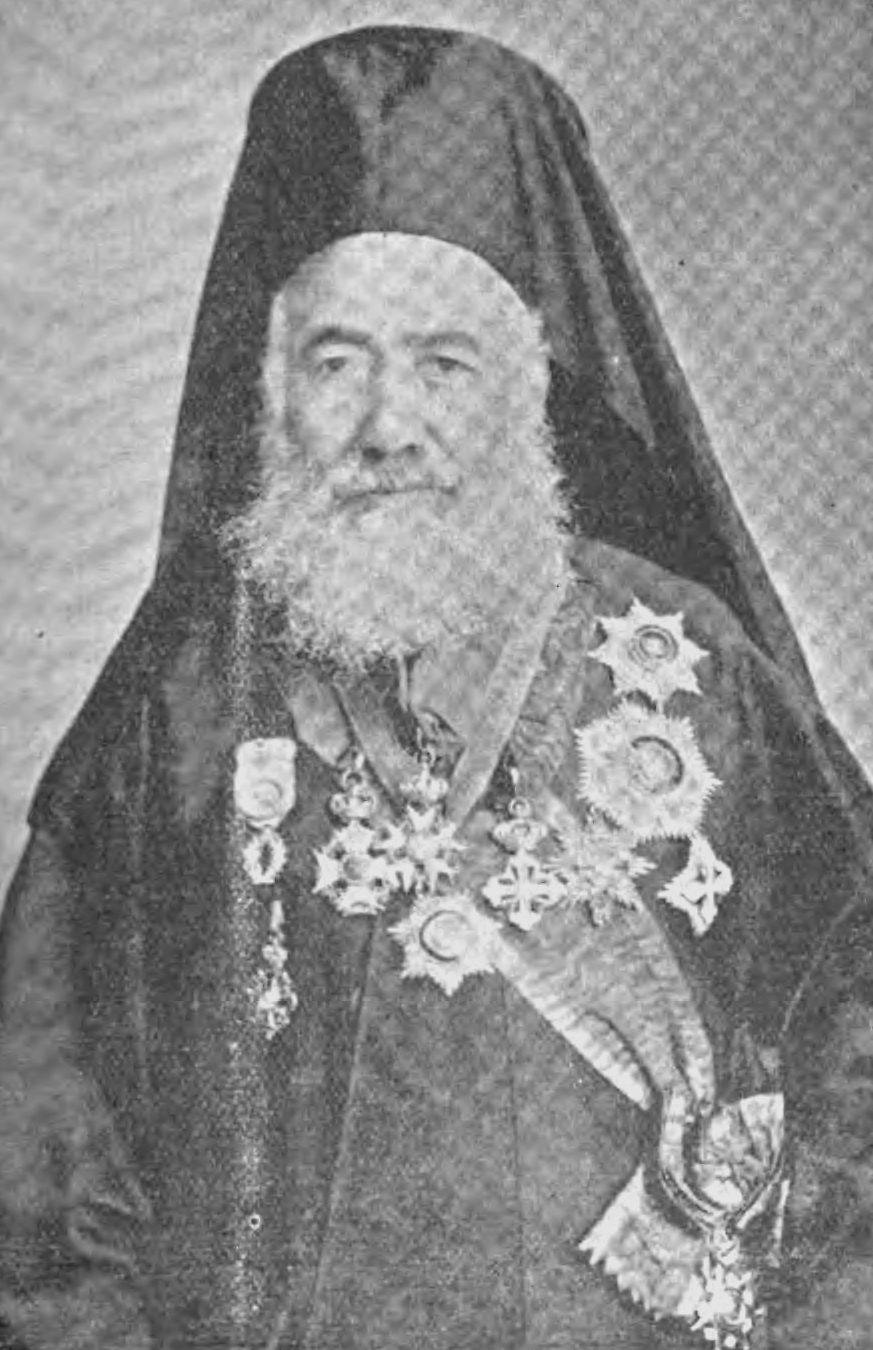
Patriarch Gregory II Youssef,
my source
also known as Gregory II Hanna Youssef-Sayour (October 17, 1823 – July 13, 1897), was Patriarch of the Melkite Greek Catholic Church from 1864 to 1897. Gregory expanded and modernized the church and its institutions[1] and participated in the First Vatican Council, where he championed the rights of the Eastern Catholic Churches.
Gregory is remembered as a particularly dynamic patriarch of the Melkite Church. He is recognized as one of the forerunners of interconfessional dialogue and as an advocate for preserving the traditions and autonomy of the Melkites.
In 1847, Pope Pius IX (1846–1878), reinstituted the Latin Patriarchate of Jerusalem in the person of the young, 34 year old, zealous Giuseppe Valerga (1813–1872), whom the indigenous hierarchs nicknamed "The Butcher" because of his fierce opposition to the Eastern Orthodox churches of the Holy Land. When he arrived in Jerusalem in 1847, there were 4,200 Latin Catholics and when he died in 1872, the number had doubled.
Under pressure from the Roman curia to adopt Latin Church practices, Patriarch Clement Bahouth introduced the Gregorian calendar used by the Latin and Maronite Churches in 1857; that act caused serious problems within the Melkite church, resulting in a short-lived schism.[16] Conflicts in the Melkite church escalated to the point where Clement abdicated his position as patriarch.
Clement's successor, Patriarch Gregory II Youssef (1864–1897) worked to restore peace within the community, successfully healing the lingering schism. He also focused on improving church institutions. During his reign Gregory founded both the Patriarchal College in Beirut in 1865 and the Patriarchal College in Damascus in 1875 and re-opened the Melkite seminary of Ain Traz in 1866. He also promoted the establishment of Saint Ann's Seminary, Jerusalem, in 1882 by the White Fathers for the training of the Melkite clergy.
Following the Hatt-ı Hümayun of 1856, decreed by Sultan Abdülmecid I, the situation of Christians in the Near East improved. This allowed Gregory to successfully encourage greater participation by the Melkite laity in both church administration as well as public affairs.
Gregory also took an interest in ministering to the growing number of Melkites who had emigrated to the Americas. In 1889 he dispatched Father Ibrahim Beshawate of the Basilian Salvatorian Order in Saida, Lebanon to New York in order to minister to the growing Syrian community there. According to historian Philip Hitte, Beshawate was the first permanent priest in the United States from the Near East from among the Melkite, Maronite, and Antiochian Orthodox Churches.
Gregory was also a prominent proponent of Eastern ecclesiology at the First Vatican Council. In the two discourses he gave at the Council on May 19 and June 14, 1870 he insisted on the importance of conforming to the decisions of the Council of Florence, of not creating innovations such as papal infallibility, but accepting what had been decided by common agreement between the Greeks and the Latins at the Council of Florence, especially with regard to the issue of papal primacy. He was keenly aware of the disastrous impact that the dogmatic definition of papal infallibility would have on relations with the Eastern Orthodox Church and emerged as a prominent opponent of the dogma at the Council.
He also defended the rights and privileges of the patriarchs according to the canons promulgated by earlier ecumenical councils. Speaking at the Council on May 19, 1870, Patriarch Gregory asserted:
After the First Vatican Council concluded an emissary of the Roman Curia was dispatched to secure the signatures of the patriarch and the Melkite delegation. Patriarch Gregory and the Melkite bishops subscribed to it, but with the qualifying clause of the used at the Council of Florence attached: "except the rights and privileges of Eastern patriarchs.".
He earned the enmity of Pius IX for this; during his next visit to the pontiff Gregory was cast to the floor at Pius' feet by the papal guard while the pope placed his foot on the patriarch's head. Despite this, Patriarch Gregory and the Melkite Catholic Church remained committed to their union with the Church of Rome.
Relationships with the Vatican improved following the death of Pius IX and the subsequent election of Leo XIII as pontiff. Leo's encyclical Orientalium Dignitas addressed some of the Eastern Catholic Churches' concerns on latinization and the centralizing tendencies of Rome. Leo also confirmed that the limitations placed on the Armenian Catholic patriarch by Pius IX's 1867 letter Reversurus would not apply to the Melkite Church; further, Leo formally recognized an expansion of Patriarch Gregory's jurisdiction to include all Melkites throughout the Ottoman Empire.

Background
From a Melkite Greek Catholic press release (September 1996):
"The holy Synod of the Melkite Greek Catholic Church met in Rabweh, Lebanon, July 22-27, 1996 and, after studying the question of unity within the Patriarchate of Antioch, declared that communicatio in sacris = worship in common is possible today and that the ways and means of its application would be left to the joint decisions of the two Antiochian Church Synods - Melkite Greek Catholic and Greek Orthodox. The Synod of thirty-four bishops and four general superiors under the presidency of Patriarch Maximos V (Hakim) deliberated extensively on the topic of church unity particularly within the Antiochian Patriarchate which has been divided since 1724, and issued a document titled, Reunification of the Antiochian Patriarchate. This document is part of the official minutes of the Synod and was made public on August 15, 1996 in the Middle East....
"The Melkite Synod sees that the church of the first millennium could be the model for unity today. The Synod strongly affirms its full communion with the Apostolic See of Rome and that this communion would not be ruptured. The Fathers offered their thanks to the International Theological Commission as well as the Joint Synodal Commissions recently reestablished by Patriarch Maximos V and Orthodox Patriarch Ignatius IV."
Key to this initiative was the profession of faith made by the Melkite Greek Catholic Archbishop Elias Zogby:
"They offer special thanks to Archbishop Elias Zoghby whose 1995 Profession of Faith was the major force for reopening dialogue with the Orthodox brothers. Zoghby, the former archbishop of Baalbek and a long-time leader among the Melkite bishops, offered this brief statement in 1995 and it was subscribed to by 24 of the 26 bishops present at the 1995 Holy Synod:
1. I believe everything which Eastern Orthodoxy teaches.
2. I am in communion with the Bishop of Rome as the first among the bishops, according to the limits recognized by the Holy Fathers of the East during the first millennium, before the separation."
In October, 1996 the Holy Synod of the Antiochian Orthodox Patriarchate issued a statement which included these concerns on the Melkite proposal:
"In this regard, our Church questions the unity of faith which the Melkite Catholics think has become possible. Our Church believes that the discussion of this unity with Rome is still in its primitive stage. The first step toward unity on the doctrinal level, is not to consider as ecumenical, the Western local councils which the Church of Rome, convened, separately, including the First Vatican Council.
"And second the Melkite Catholics should not be obligated to accept such councils. Regarding inter-communion now, our Synod believes that inter-communion cannot be separated from the unity of faith. Moreover, inter-communion is the last step in the quest for unity and not the first."
In a letter to the Antiochian Archdiocese of North America, Metropolitan Philip also said:
"Please be advised that, while we pray for unity among all Christians, we cannot and will not enter into communion with non-Orthodox until we first achieve the unity of faith. As long as this unity of faith is not realized, there cannot be intercommunion. We ask you to adhere to the instructions which you receive from our office and hierarchs."
Next is the text of the letter with Rome's commentary on the Melkite Initiative. It has been translated from the French by Ken Guindon. It was reviewed by His Grace Bishop Nicholas Samra (who made a few corrections) and permission was given to publish this in English:
Congregation for the Eastern Churches
Prot. No. 251/75
June 11, 1997
His Beatitude
Maximos V HAKIM
Greek-Melkite Catholic Patriarch of Antioch and of all the East,
of Alexandria and of Jerusalem.
Your Beatitude,
The news of the project for "rapprochement" between the Greek-Melkite Catholic Patriarchate and the Orthodox Patriarchate of Antioch has given rise to various echoes and comments in the public opinion.
The Congregation for Doctrine of the Faith, the Congregation for the Eastern Churches, and the Pontifical Council for Christian Unity have made an effort to study and closely examine the areas which fall within their competence in this domain; and the heads of these Dicasteries have been charged by the Holy Father to express some considerations to Your Beatitude.
The Holy See is greatly interested in and encourages initiatives which favor the road to a complete reconciliation of the Christian Churches. She appreciates the motivation behind the efforts undertaken for several decades by the Greek-Melkite Catholic Patriarchate, which is trying to hasten the coming of this full communion so greatly desired. The Code of Canons of the Eastern Churches recognizes the duty for every Christian (Can. 902), which becomes for the Eastern Catholic Churches a special duty (munus) (Can. 903), whose exercise will be governed "through special norms of particular law while the Roman Apostolic Church functions as the moderator for the universal church" (Can. 904).
This is all the more true for two communities which see themselves as being closely united because of the ties of common origin and common ecclesiastical tradition, as well as by a long experience of common initiatives which no doubt place them into a privileged situation of proximity.
The Church's desire is to find adequate ways and means to progress further along the road of brotherly understanding and, to encourage new structures which further such progress towards full communion.
Pursuing such goals, Your Patriarchate is motivated by a sensibility and a knowledge of the situation and an experience which are peculiarly its own. The Holy See desires to contribute to this process by expressing some considerations which she believes will eventually help the future progress of this initiative.
The Dicasteries involved appreciate very much that common pastoral initiatives are undertaken by Catholics and Orthodox, according to the instructions found in the Directory for the application of the principles and norms for Ecumenism, especially in the areas of Christian formation, of education, a common effort in charity, and for the sharing of prayer when this is possible.
As to experiences of a theological nature, it is necessary to labor patiently and prudently, without precipitation, in order to help both parties to travel along the same road.
The first level in this sharing concerns the language and the categories employed in the dialogue: one must be very careful that the use of the same word or the same concept is not used to express different points of view and interpretations of a historical and doctrinal nature, nor lends itself to some kind of oversimplification.
A second level of involvement necessitates that the sharing of the content of the dialogue not be limited only to the two direct participants: the Patriarchates of the Catholic Greek-Melkites and the Orthodox of Antioch, but that it involve the Confessions with whom the two Patriarchates are in full communion: the Catholic communion for the former and the Orthodox for the latter. Even the Orthodox ecclesiastical authorities of the Patriarchate of Antioch have brought forth a similar preoccupation. This global implication also will permit averting the risk that some initiatives, meant to promote the full communion at the local level, might give rise to a lack of understanding or suspicions beyond the generosity of the intentions.
Now we consider the elements contained in the profession of faith of his Excellency Kyr Elias Zoghby, Greek-Melkite Catholic Archbishop emeritus of Baalbek, signed in February 1995, and to which numerous hierarchs of the Greek-Melkite Catholic Synod have adhered.
It is clear that this Patriarchate is an integral part of the Christian East whose patrimony it shares. As to the Greek-Melkite Catholics declaring their complete adhesion to the teaching of Eastern Orthodoxy, it is necessary to take into account the fact that the Orthodox Churches today are not in full communion with the Church of Rome, and that this adhesion is therefore not possible as long as there is not a full correspondence in the profession and exercise of the faith by the two parties. Besides, a correct formulation of the faith necessitates a reference not only to a particular Church, but to the whole Church of Christ, which knows no frontiers, neither in space nor in time.
On the question of communion with the Bishops of Rome, we know that the doctrine concerning the primacy of the Roman Pontiff has experienced a development over time within the framework of the explanation of the Church's faith, and it has to be retained in its entirety, which means from its origins to our day. One only has to think about what the first Vatican Council affirmed and what Vatican Council II declared, particularly in the Dogmatic Constitution Lumen Gentium Num. 22 and 23, and in the Decree on ecumenism Unitatis Redintegratio Number 2.
As to the modalities for exercising the Petrine ministry in our time, a question which is distinct from the doctrinal aspect, it is true that the Holy Father has recently desired to remind us how "we may seek--together, of course--the forms in which this ministry may accomplish a service of love recognized by all concerned" (Ut unum sint, 95); however, if it is legitimate to also deal with this on a local level, it is also a duty to do this always in harmony with a vision of the universal Church. Touching this matter, it is appropriate to be reminded that in any case, "The Catholic Church, both in her praxis and in her solemn documents, holds that the communion of the particular Churches with the Church of Rome, and of their Bishops with the Bishop of Rome, is--in God's plan--an essential requisite of full and visible communion" (Ut unum sint, 97).
As to the various aspects of communicatio in sacris, it is necessary to maintain a constant dialogue in order to understand the meaning of the current regulation in force, in the light of underlying theological presuppositions; premature, unilateral initiatives are to be avoided, where the eventual results may not have been sufficiently considered, they could produce serious consequences for other Eastern Catholics, especially for those living in the same region.
In summary, the fraternal dialogue undertaken by the Greek-Melkite Catholic Partriarchate will be better able to serve the ecumenical dialogue to the degree that it strives to involve the entire Catholic Church to which it belongs in the maturing of new sensitivities. There is good reason to believe that the Orthodox in general so share the same worry, due also to the obligations of communion within their own body.
The Dicasteries involved are ready to collaborate in order to further the exchange of verifications and echoes; they express their satisfaction for these meetings which have been held on this subject with the representatives of the Greek-Melkite Catholic Church, and they hope and wish that these meetings continue and intensify in the future.
Not doubting at all that Your Beatitude would want to share these ideas, we beg you to accept the expression of our fraternal and cordial greetings.
Joseph Card. Ratzinger, Achille Card. Silvestrini, Edward Card. Cassidy
For more information about this topic please contact the Melkite Church in America
Copyright © 1998 http://www.byzcath.org - Last modified 1/18/98 16:30
FINALLY, THIS IS A COMMENTARY ON THE VATICAN I DOGMATIC DECREES BY A MELKITE CATHOLIC THAT IS SO GOOD, THE BEST I HAVE SEEN, SOMETHING I COULD NEVER EQUAL:

Under pressure from the Roman curia to adopt Latin Church practices, Patriarch Clement Bahouth introduced the Gregorian calendar used by the Latin and Maronite Churches in 1857; that act caused serious problems within the Melkite church, resulting in a short-lived schism.[16] Conflicts in the Melkite church escalated to the point where Clement abdicated his position as patriarch.
Clement's successor, Patriarch Gregory II Youssef (1864–1897) worked to restore peace within the community, successfully healing the lingering schism. He also focused on improving church institutions. During his reign Gregory founded both the Patriarchal College in Beirut in 1865 and the Patriarchal College in Damascus in 1875 and re-opened the Melkite seminary of Ain Traz in 1866. He also promoted the establishment of Saint Ann's Seminary, Jerusalem, in 1882 by the White Fathers for the training of the Melkite clergy.
Following the Hatt-ı Hümayun of 1856, decreed by Sultan Abdülmecid I, the situation of Christians in the Near East improved. This allowed Gregory to successfully encourage greater participation by the Melkite laity in both church administration as well as public affairs.
Gregory also took an interest in ministering to the growing number of Melkites who had emigrated to the Americas. In 1889 he dispatched Father Ibrahim Beshawate of the Basilian Salvatorian Order in Saida, Lebanon to New York in order to minister to the growing Syrian community there. According to historian Philip Hitte, Beshawate was the first permanent priest in the United States from the Near East from among the Melkite, Maronite, and Antiochian Orthodox Churches.
Gregory was also a prominent proponent of Eastern ecclesiology at the First Vatican Council. In the two discourses he gave at the Council on May 19 and June 14, 1870 he insisted on the importance of conforming to the decisions of the Council of Florence, of not creating innovations such as papal infallibility, but accepting what had been decided by common agreement between the Greeks and the Latins at the Council of Florence, especially with regard to the issue of papal primacy. He was keenly aware of the disastrous impact that the dogmatic definition of papal infallibility would have on relations with the Eastern Orthodox Church and emerged as a prominent opponent of the dogma at the Council.
He also defended the rights and privileges of the patriarchs according to the canons promulgated by earlier ecumenical councils. Speaking at the Council on May 19, 1870, Patriarch Gregory asserted:
The Eastern Church attributes to the pope the most complete and highest power, however in a manner where the fullness and primacy are in harmony with the rights of the patriarchal sees. This is why, in virtue of and ancient right founded on customs, the Roman Pontiffs did not, except in very significant cases, exercise over these sees the ordinary an immediate jurisdiction that we are asked now to define without any exception. This definition would completely destroy the constitution of the entire Greek church. That is why my conscience as a pastor refuses to accept this constitution.Patriarch Gregory refused to sign the Council's dogmatic declaration on papal infallibility. He and the seven other Melkite bishops present voted non placet at the general congregation and left Rome prior to the adoption of the dogmatic constitution Pastor Aeternus on papal infallibility.[23] Other members of the anti-infallibilist minority, both from the Latin church and from other Eastern Catholic churches, also left the city.
After the First Vatican Council concluded an emissary of the Roman Curia was dispatched to secure the signatures of the patriarch and the Melkite delegation. Patriarch Gregory and the Melkite bishops subscribed to it, but with the qualifying clause of the used at the Council of Florence attached: "except the rights and privileges of Eastern patriarchs.".
He earned the enmity of Pius IX for this; during his next visit to the pontiff Gregory was cast to the floor at Pius' feet by the papal guard while the pope placed his foot on the patriarch's head. Despite this, Patriarch Gregory and the Melkite Catholic Church remained committed to their union with the Church of Rome.
Relationships with the Vatican improved following the death of Pius IX and the subsequent election of Leo XIII as pontiff. Leo's encyclical Orientalium Dignitas addressed some of the Eastern Catholic Churches' concerns on latinization and the centralizing tendencies of Rome. Leo also confirmed that the limitations placed on the Armenian Catholic patriarch by Pius IX's 1867 letter Reversurus would not apply to the Melkite Church; further, Leo formally recognized an expansion of Patriarch Gregory's jurisdiction to include all Melkites throughout the Ottoman Empire.
Patriarch Gregorios III
The Melkite Church owes its character to its triple loyalty to:
- first Seven Ecumenical Councils
- the Byzantine traditions
- communion with Rome
THE MELKITE INITIATIVE WITH THE ANTIOCHIAN ORTHODOX CHURCH
my source: ByzCath.orgBackground
From a Melkite Greek Catholic press release (September 1996):
"The holy Synod of the Melkite Greek Catholic Church met in Rabweh, Lebanon, July 22-27, 1996 and, after studying the question of unity within the Patriarchate of Antioch, declared that communicatio in sacris = worship in common is possible today and that the ways and means of its application would be left to the joint decisions of the two Antiochian Church Synods - Melkite Greek Catholic and Greek Orthodox. The Synod of thirty-four bishops and four general superiors under the presidency of Patriarch Maximos V (Hakim) deliberated extensively on the topic of church unity particularly within the Antiochian Patriarchate which has been divided since 1724, and issued a document titled, Reunification of the Antiochian Patriarchate. This document is part of the official minutes of the Synod and was made public on August 15, 1996 in the Middle East....
"The Melkite Synod sees that the church of the first millennium could be the model for unity today. The Synod strongly affirms its full communion with the Apostolic See of Rome and that this communion would not be ruptured. The Fathers offered their thanks to the International Theological Commission as well as the Joint Synodal Commissions recently reestablished by Patriarch Maximos V and Orthodox Patriarch Ignatius IV."
Key to this initiative was the profession of faith made by the Melkite Greek Catholic Archbishop Elias Zogby:
"They offer special thanks to Archbishop Elias Zoghby whose 1995 Profession of Faith was the major force for reopening dialogue with the Orthodox brothers. Zoghby, the former archbishop of Baalbek and a long-time leader among the Melkite bishops, offered this brief statement in 1995 and it was subscribed to by 24 of the 26 bishops present at the 1995 Holy Synod:
1. I believe everything which Eastern Orthodoxy teaches.
2. I am in communion with the Bishop of Rome as the first among the bishops, according to the limits recognized by the Holy Fathers of the East during the first millennium, before the separation."
In October, 1996 the Holy Synod of the Antiochian Orthodox Patriarchate issued a statement which included these concerns on the Melkite proposal:
"In this regard, our Church questions the unity of faith which the Melkite Catholics think has become possible. Our Church believes that the discussion of this unity with Rome is still in its primitive stage. The first step toward unity on the doctrinal level, is not to consider as ecumenical, the Western local councils which the Church of Rome, convened, separately, including the First Vatican Council.
"And second the Melkite Catholics should not be obligated to accept such councils. Regarding inter-communion now, our Synod believes that inter-communion cannot be separated from the unity of faith. Moreover, inter-communion is the last step in the quest for unity and not the first."
In a letter to the Antiochian Archdiocese of North America, Metropolitan Philip also said:
"Please be advised that, while we pray for unity among all Christians, we cannot and will not enter into communion with non-Orthodox until we first achieve the unity of faith. As long as this unity of faith is not realized, there cannot be intercommunion. We ask you to adhere to the instructions which you receive from our office and hierarchs."
Next is the text of the letter with Rome's commentary on the Melkite Initiative. It has been translated from the French by Ken Guindon. It was reviewed by His Grace Bishop Nicholas Samra (who made a few corrections) and permission was given to publish this in English:
Congregation for the Eastern Churches
Prot. No. 251/75
June 11, 1997
His Beatitude
Maximos V HAKIM
Greek-Melkite Catholic Patriarch of Antioch and of all the East,
of Alexandria and of Jerusalem.
Your Beatitude,
The news of the project for "rapprochement" between the Greek-Melkite Catholic Patriarchate and the Orthodox Patriarchate of Antioch has given rise to various echoes and comments in the public opinion.
The Congregation for Doctrine of the Faith, the Congregation for the Eastern Churches, and the Pontifical Council for Christian Unity have made an effort to study and closely examine the areas which fall within their competence in this domain; and the heads of these Dicasteries have been charged by the Holy Father to express some considerations to Your Beatitude.
The Holy See is greatly interested in and encourages initiatives which favor the road to a complete reconciliation of the Christian Churches. She appreciates the motivation behind the efforts undertaken for several decades by the Greek-Melkite Catholic Patriarchate, which is trying to hasten the coming of this full communion so greatly desired. The Code of Canons of the Eastern Churches recognizes the duty for every Christian (Can. 902), which becomes for the Eastern Catholic Churches a special duty (munus) (Can. 903), whose exercise will be governed "through special norms of particular law while the Roman Apostolic Church functions as the moderator for the universal church" (Can. 904).
This is all the more true for two communities which see themselves as being closely united because of the ties of common origin and common ecclesiastical tradition, as well as by a long experience of common initiatives which no doubt place them into a privileged situation of proximity.
The Church's desire is to find adequate ways and means to progress further along the road of brotherly understanding and, to encourage new structures which further such progress towards full communion.
Pursuing such goals, Your Patriarchate is motivated by a sensibility and a knowledge of the situation and an experience which are peculiarly its own. The Holy See desires to contribute to this process by expressing some considerations which she believes will eventually help the future progress of this initiative.
The Dicasteries involved appreciate very much that common pastoral initiatives are undertaken by Catholics and Orthodox, according to the instructions found in the Directory for the application of the principles and norms for Ecumenism, especially in the areas of Christian formation, of education, a common effort in charity, and for the sharing of prayer when this is possible.
As to experiences of a theological nature, it is necessary to labor patiently and prudently, without precipitation, in order to help both parties to travel along the same road.
The first level in this sharing concerns the language and the categories employed in the dialogue: one must be very careful that the use of the same word or the same concept is not used to express different points of view and interpretations of a historical and doctrinal nature, nor lends itself to some kind of oversimplification.
A second level of involvement necessitates that the sharing of the content of the dialogue not be limited only to the two direct participants: the Patriarchates of the Catholic Greek-Melkites and the Orthodox of Antioch, but that it involve the Confessions with whom the two Patriarchates are in full communion: the Catholic communion for the former and the Orthodox for the latter. Even the Orthodox ecclesiastical authorities of the Patriarchate of Antioch have brought forth a similar preoccupation. This global implication also will permit averting the risk that some initiatives, meant to promote the full communion at the local level, might give rise to a lack of understanding or suspicions beyond the generosity of the intentions.
Now we consider the elements contained in the profession of faith of his Excellency Kyr Elias Zoghby, Greek-Melkite Catholic Archbishop emeritus of Baalbek, signed in February 1995, and to which numerous hierarchs of the Greek-Melkite Catholic Synod have adhered.
It is clear that this Patriarchate is an integral part of the Christian East whose patrimony it shares. As to the Greek-Melkite Catholics declaring their complete adhesion to the teaching of Eastern Orthodoxy, it is necessary to take into account the fact that the Orthodox Churches today are not in full communion with the Church of Rome, and that this adhesion is therefore not possible as long as there is not a full correspondence in the profession and exercise of the faith by the two parties. Besides, a correct formulation of the faith necessitates a reference not only to a particular Church, but to the whole Church of Christ, which knows no frontiers, neither in space nor in time.
On the question of communion with the Bishops of Rome, we know that the doctrine concerning the primacy of the Roman Pontiff has experienced a development over time within the framework of the explanation of the Church's faith, and it has to be retained in its entirety, which means from its origins to our day. One only has to think about what the first Vatican Council affirmed and what Vatican Council II declared, particularly in the Dogmatic Constitution Lumen Gentium Num. 22 and 23, and in the Decree on ecumenism Unitatis Redintegratio Number 2.
As to the modalities for exercising the Petrine ministry in our time, a question which is distinct from the doctrinal aspect, it is true that the Holy Father has recently desired to remind us how "we may seek--together, of course--the forms in which this ministry may accomplish a service of love recognized by all concerned" (Ut unum sint, 95); however, if it is legitimate to also deal with this on a local level, it is also a duty to do this always in harmony with a vision of the universal Church. Touching this matter, it is appropriate to be reminded that in any case, "The Catholic Church, both in her praxis and in her solemn documents, holds that the communion of the particular Churches with the Church of Rome, and of their Bishops with the Bishop of Rome, is--in God's plan--an essential requisite of full and visible communion" (Ut unum sint, 97).
As to the various aspects of communicatio in sacris, it is necessary to maintain a constant dialogue in order to understand the meaning of the current regulation in force, in the light of underlying theological presuppositions; premature, unilateral initiatives are to be avoided, where the eventual results may not have been sufficiently considered, they could produce serious consequences for other Eastern Catholics, especially for those living in the same region.
In summary, the fraternal dialogue undertaken by the Greek-Melkite Catholic Partriarchate will be better able to serve the ecumenical dialogue to the degree that it strives to involve the entire Catholic Church to which it belongs in the maturing of new sensitivities. There is good reason to believe that the Orthodox in general so share the same worry, due also to the obligations of communion within their own body.
The Dicasteries involved are ready to collaborate in order to further the exchange of verifications and echoes; they express their satisfaction for these meetings which have been held on this subject with the representatives of the Greek-Melkite Catholic Church, and they hope and wish that these meetings continue and intensify in the future.
Not doubting at all that Your Beatitude would want to share these ideas, we beg you to accept the expression of our fraternal and cordial greetings.
Joseph Card. Ratzinger, Achille Card. Silvestrini, Edward Card. Cassidy
For more information about this topic please contact the Melkite Church in America
Copyright © 1998 http://www.byzcath.org - Last modified 1/18/98 16:30
FINALLY, THIS IS A COMMENTARY ON THE VATICAN I DOGMATIC DECREES BY A MELKITE CATHOLIC THAT IS SO GOOD, THE BEST I HAVE SEEN, SOMETHING I COULD NEVER EQUAL:
Full regard for the Official Relatio as well as a contextual reading of the Vatican 1 Decrees demonstrates that, contrary to the Absolutist Petrine excesses:1) "Papal infallibility" cannot be separated from the infallibility of the Church, but is actually merely a unique exercise of the infallibility of the Church itself (explicitly stated in the definition itself).2) "Papal infallibility" cannot be exercised at merely the Pope's discretion, but always in response to the needs of the Church through the solicitude of the bishops of the Church (explicitly stated in the historic Proem).3) "Papal infallibility" does not permit the Pope to proclaim new doctrine (explicitly stated in the historic Proem).4) The Rule of Faith which is Apostolic Canon 34 applies even to the definitions of the Pope ex cathedra (explicitly stated in the Official Relatio).5) Papal primacy does not impede the authority of the local bishop (explicitly stated in the Decree itself).6) The Pope is not above an Ecumenical Council (affirmed by the Official Relatio).
We have explained the strong Orthodox influence in Vatican II and the way such words like "theosis" and "synergy" have become commonplace, and how "eucharistic ecclesiology" has become the main paradigm in our understanding of the Church, by speaking of the great influence that the group of French "ressourcement" theologians had on the Council, especially as Wojtylla and Ratzinger joined them and became their chief interpreters after the Council. They had practised their theology in contact with the Orthodox theologians who had gone to Paris as refugees from the Russian Revolution. Although I frequently heard of Patriarch Maximos IV during the Council and knew that he was one of the great figures of the Council, I did not know the extent of his influence and of that of his fellow Melkite bishops until I read Fr Robert Taft's Introduction above.
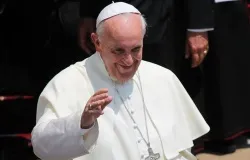
I believe that it demonstrates how much Pope Francis is in continuation with Vatican II and with his predecessors when he looks to the Orthodox tradition to help us with the pastoral care of the divorced, and he believes that the Orthodox doctrine of "sobornost" has so much to teach us about authority as it is exercised at a local, regional and world-wide level. He is merely "breathing with both lungs", as Pope John Paul II put it. We can also learn how problems that were suppressed by the misuse of Pope Pius IX's authority haven't gone away because they are dimensions of Tradition of which the pope is the servant and not the master, as Pope Benedict has taught us in relation to liturgy.


.jpg)




_0314_-_Reazioni.jpg)


 Posts
Posts

