EXPAND YOUR READING!!

"Today the concept of truth is viewed with suspicion, because truth is identified with violence. Over history there have, unfortunately, been episodes when people sought to defend the truth with violence. But they are two contrasting realities. Truth cannot be imposed with means other than itself! Truth can only come with its own light. Yet, we need truth. ... Without truth we are blind in the world, we have no path to follow. The great gift of Christ was that He enabled us to see the face of God".Pope Benedict xvi, February 24th, 2012

The Church is ecumenical, catholic, God-human, ageless, and it is therefore a blasphemy—an unpardonable blasphemy against Christ and against the Holy Ghost—to turn the Church into a national institution, to narrow her down to petty, transient, time-bound aspirations and ways of doing things. Her purpose is beyond nationality, ecumenical, all-embracing: to unite all men in Christ, all without exception to nation or race or social strata. - St Justin Popovitch

Thursday, 3 December 2015

SAINT AUGUSTINE ON MONASTICISM by Fr Hugh Feiss

Augustine on Monasticism
Fr. Hugh Feiss

Introduction

St. Benedict's sources were varied. Through Cassian and the Rule of the Master Benedict learned much from Eastern monasticism about monastic discipline and training, much about humility, obedience and asceticism. However, he also learned much from the wider Patristic tradition and from St. Augustine. From the latter he learned the importance not just of community, but of patient, self-forgetful love among the members of a community. This legacy is summed up in the next to the last chapter of the Rule of Benedict, which is devoted to "the good zeal that monks ought to have":

The monks should practice this zeal with the warmest love: "Let them strive to be the first to honor one another" (Rom 12.10). They should bear each other's weaknesses of both body and character with the utmost patience. They must compete with one another in obedience. No one should pursue what he judges advantageous to himself, but rather what benefits others. They must show selfless love to the brothers. Let them fear God out of love. They should love their abbot with sincere and humble charity. Let them prefer absolutely nothing to Christ1 , and may he lead us all together to everlasting life.

Augustine's Monastic Life

Augustine was always interested in community and in friendship, though we must be careful not to confuse the two. As a young professor living in Milan, he and his intellectual friends tried to start a community based on the search for truth (which the philosophers thought involves avoiding pursuit of wealth, honor and sexual pleasure).

Many of my friends and I were greatly exercised in mind as we talked together and shared our loathing of the annoying upheavals inseparable from human life; and we almost made up our minds to live a life of leisure, far removed from the crowds. We would set up this place of leisurely retirement in such a way that any possessions we might have would be made available to the community and we would pool our resources in a single fund. The sincerity of our friendship should ensure that this thing should not belong to one person, and that to another.... But some of us were already married and others hoped to be, and as soon as we began to consider whether our womenfolk would consent to these arrangements the whole elaborate plan fell apart....2

This reminds one of St Francis' provisions for the friars: they were to have an opportunity to spend time in prayerful retreat at a hermitage. Some would devote themselves exclusively to prayer, while others, acting as their "mothers," would take care of the group's physical needs. In any case, after the experiment with his friends in Milan, Augustine realized that lasting community life with the sharing of goods was not possible without celibacy.

When Augustine returned to Africa, he lived with some friends and relatives on his family property at Tagaste: 388-391. They prayed, studied the Bible, discussed, and wrote. Already there was dispossession of private property. There seem to have been four key components to Augustine's monastic use of time in this Tagaste monastery: labor, reading, prayer, and study of Scripture. The emphasis on learning may be in part Augustine's own personal contribution to the monastic tradition. Some have claimed that this community was not a Christian monastery, but a philosophical community. However, it does seem to have been a monastery occupied by the "servants of God" (servi Dei) or a "society of brothers" (societas fratruum), two words Augustine preferred for describing what others called "monastics."

Then Augustine moved to Hippo where he became a priest. He talked his bishop into letting him form a monastic community near the cathedral: the Garden Monastery. This was a community of laymen, some of whom came from the monastery in Tagaste. Augustine asked for some time to prepare himself for preaching. During the time granted him, he wrote some biblical commentaries. In the City of God he wrote: "We should not so surrender ourselves to the leisure of contemplation that we forget to help our neighbors; nor should we become so immersed in activity that we lose our longing to contemplate God in recollection" (CD 19.19). This seems to have been his unswerving practice, and it was the ideal of most medieval religious writers as well as a dictate of common sense.

Augustine was consecrated a bishop in 396. He decided he could not still live with the monks in the Garden monastery, so probably at this time he wrote the Rule we have today (Praeceptum = Letter 211) to guide the community after he moved next door. Then he asked his clergy to live the common life with him, another monastic effort. Not all of the clergy were anxious to join him, and he left the choice up to each.

All of this makes clear Augustine's dedication to Christian community. Like St. Basil in the Eastern church, Augustine converted to Christianity and became a monk almost simultaneously. One factor in his conversion was the example of the Eastern monks whom he heard of through two friends who had been to Trier:

A man named Ponticianus, who held an important post at court, came to our house to visit Alypius and me..... He began to tell us about the monk Antony of Egypt, whose name was illustrious and held in high honor among your servants, though we had never heard it until this moment.... We were stupefied as we listened to the tale of the wonders you had worked within the true faith of the Catholic Church, especially as they were more firmly attested by recent memory and had occurred so near to our own times.... His discourse led on from this topic to the proliferation of monasteries, the sweet fragrance rising up to you from the lives of monks, and the fecund wastelands of the desert. We had known nothing of all this. There was even a monastery full of good brothers at Milan, outside the city walls, under Ambrose's care, yet we were unaware of it.

Ponticianus went on to tell about an incident that happened when he was with the imperial court at Trier. He and three colleagues went out for a walk. Two of them came across "a cottage where some servants of yours were living, men poor in spirit, the kind to whom the kingdom of heaven belongs." There they found the Life of Antony. They were so moved by what they read that they left the court and became monks. Their fiancées likewise dedicated their virginity to you."3

Monastic Writings

Augustine's Rule, the Praeceptum, is short. It says little about the form of common prayer. He also wrote a treatise called "The Work of Monks." He encourages monks to try to support themselves and to serve as spiritual guides. In Letter 48 he tells some monks not to refuse holy orders when church the needs them.

The Praeceptum deals with a few points at length. It seems to be a set of rules written down as needed. The main theme is sounded in the first chapter: that monks or nuns are to live together in love; that is the reason they come together. The rest of chapter one deals with sharing of goods, an expression of the basic theme. There follow six chapters on various topics, before the conclusion in ch. 8, about love again.

The Praeceptum begins: "The chief motivation for your sharing life together is to live harmoniously in the house and to have one heart and one soul seeking God (in deum)." Augustine's ideal of Christian community echoes the picture of the earliest Christians given in Acts 4.32-35: "The community of believers was of one heart and mind, and no one claimed that any of his possessions was his own but they had everything in common." Oddly enough, Augustine first interpreted "one mind and one soul" to be a reference to the individual's personal integration because of the Resurrection (an interpretation which had Plotinian overtones). By the time he wrote his rule he understood the phrase properly. As he says elsewhere, one cannot be one with the Trinity unless the Spirit makes us one with each other. This oneness comes from seeking God together (in deum).

In his treatise on The Work of Monks he deals with the problem of having both former aristocrats and poor people in the monastery. The former aristocrats may not be capable of the same level of asceticism as the aristocrats. Hence, the need for mutual love and support. To each what he needs.

In a reverse of his early misinterpretation of Acts 4.32 he says that the psalm which says "Behold how good and how pleasant it is that brethren should dwell together as one" refers to monks. The word for "one" is monos, which means alone; hence, monks are those who form a community is which all are one alone, that is perfectly united with each other.

Another section of the Rule urges the monks to look out for each other and warn each other if one sees another slipping into a fault. The warning should first be given privately, then with others, then to the superior (Mt 18: 15-18). Nothing vindictive is involved.

Then the end of the Praeceptum is a prayer:

The Lord grant you the grace to observe these precepts with love as lovers of spiritual beauty, exuding the fragrance of Christ in the goodness of your lives; you are no longer slaves under the law, but a people living in freedom under grace.

Augustine mentions grace, freedom, and spiritual beauty. Beauty reveals itself to us.4 The monks are to be like smoke from the incense bowl which is Christ. Augustine's vision is one of freedom under grace; not of ciphers.

Finally, in his book On Christian Doctrine, which he began about the time he finished the Confessions, Augustine says that those who are not capable of mastering what he has written need not worry, for "the form of one's life says as much as an abundance of words" (quasi copia dicendi forma vivendi: De doct. Christ. 4.29) We are all to be imitators of Christ who is the Word of God. As such our lives are an expression, a rhetoric, of God. In his notion of community he drew on classical forms: philosophical community, Ciceronian friendship, Neoplatonism. Here he draws on classical rhetoric; monasticism has a rhetoric, is a discourse about God by Christians. Hence, in the middle chapters of the Praeceptum, Augustine worries about public conduct and good example. In the conclusion quoted above, Augustine links ideas of love with way of life (conversatio): which is like incense, a Christ-centered life proclaims the gospel. The monastic life manifests, love, unity, rest in God, thankfulness, dwelling in Christ.

In an interesting article, Willemien Otten argues that about the same time he wrote the Confessions, Augustine articulated his views on the relationship between consecrated celibacy, monasticism in a broad sense, and marriage. He taught that marriage is a great human good, a bond of friendship, which is nourished by intercourse and nourishes children, though celibacy is abstractly considered a higher gift, and martyrdom higher than either (for which both may qualify). Both the celibate and the married should imitate Christ and walk in his path. Monks can fit their feet in his footsteps more easily. He wants monks to work so that they are not too isolated from the Christian community. There is, he said, only one Christian commonwealth.

I would like to conclude this brief overview of Augustine's contribution to the monastic tradition with three related bits of evidence.

Possidius's Life of Augustine

Possidius was a disciple of Augustine for 40 years and was present at his master's deathbed. Possidius joined Augustine's monastery at Hippo early in the 390s, became a priest and moved to the clerical monastery, and finally became a bishop. After Augustine died, Possidius made a complete list of Augustine's works, called the Indiculum. Then, in the decade after Augustine's death in 430, he wrote a life of his saintly mentor.

A summary of his Life recapitulates what we have said above. He describes Augustine's conversion, evidently to emphasize the fact that Augustine's turn to monastic life was a concomitant of his baptismal conversion, not a holdover from his Manichean days. Then, Possidius says Augustine went to Tagaste with some friends and lived for three years with some friends on his home estate, which had been turned over to religious use. According to the most compelling interpretation of Possidius' text, they devoted themselves to fasting, prayers and good works and studied the Bible. It was a community of monks. Some scholars think that Augustine's friend, Alypius, wrote a rule for this community. We will return to that Rule, which is called the Ordo Monasterii and is different from the Rule of Augustine we discussed earlier.

Augustine was then ordained and moved to Hippo. There, as we know, he started another monastery within the precincts of the Cathedral, called "The Garden Monastery." Possidius tells us that there was a strong emphasis on living the apostolic life (cf. Acts 4) and holding all goods in common so that they might be shared according as each had need. In his description, Possidius seems to quote Augustine's own Rule. Possidius goes on to describe how members of "The Garden Monastery" came to be ordained. About ten of them became bishops, and some of their clergy also became bishops, so that the influence of the monastery spread very widely.

Next, Possidius describes how Augustine was made bishop. Augustine then moved into the episcopal residence, because, as Augustine said in a Sermon (356.3), a bishop must extend hospitality to all who arrive, and that would not be fitting in a monastery. This strikes someone familiar with the Benedictine tradition as a bit odd, but it is conceivable that the stream of guests coming to visit a bishop in those days would simply have overwhelmed a small monastery. Anyway, Augustine, the bishop, now established yet another monastery, this time for willing members of his clergy.

This suggests that clerical and monastic vocations were very intertwined in the North African Church. Firmus, for example, joined one of Augustine's monasteries--probably The Garden monastery--after hearing him preach. After having served several times as a messenger between Augustine and Jerome (who was in Palestine) Firmus later became a priest.

When Possidius became a bishop himself, he had great difficulties with the Donatists, a schismatic, rigorist group, with whom Augustine himself also fought. Possidius is particularly hard on the Donatists' Circumcellions, who seem to have been the Donatist equivalent of monks. They may have called themselves "monachi," thereby giving the word a bad name.

Possidius says that in Augustine's final, episcopal monastery, the monks wore modest, adequate clothes--nothing fancy, nothing tattered. The same was true of food: frugal, but adequate. They had meat, herbs and vegetables sometimes, out of consideration for guests, and also some wine. They were very hospitable. Augustine was more interested in reading and discussion than in eating. He had carved on the table: "Whoever slanders the name of an absent friend, may not as guest at this table attend." Possidius thus makes it clear that Augustine's asceticism was not marred by any Manichean disparagement of material creation. This text implies both reading and conversation at the episcopal monastery, whereas the Preceptum 3.2 indicates only reading (at the Garden monastery).

Finally, on his deathbed, Augustine performed the only miracle narrated by Possidius. A sick person asked to be cured by having Augustine lay his hand upon him. Augustine said that if he had such powers he would apply them to himself. He did lay his had on the man, and the man was cured. Augustine was very reserved about miracles. This contrasts sharply with early Eastern monasticism and suggests that Augustine was not much influenced by Eastern monastic precedents.

Alypius' Ordo Monasterii

This brief rule used to be known as the Regula Secunda. A great modern scholar of Augustine, Luc Verheijen, concluded that it was written by Augustine's friend Alypius for the Hippo monastery after Augustine was made a bishop. Before that, at least one scholar had attributed this rule to St. Benedict. The rule contains only 379 words. Its first line captures the essence of Augustine's monastic vision: "Before all else, dearest brothers, let us love God and then our neighbor also, because these are the weightiest of the commandments given to us." It is an interesting sidelight of history that many monasteries who followed the Rule of St. Augustine (Preceptum) added this line at the beginning of the rule.

Then in short, crisp sections, the Ordo Monasterii lays down the rules for the divine office. What takes St. Benedict many chapters is dealt with in a single paragraph, in part because the author doesn't spell out the psalms for each hour of each day of the week.

Then come some succinct mostly one-line regulations about property ("we desire to live the apostolic life"), murmuring, obedience, silence at table, business outside the monastery (go out in pairs), restraint in speech, and discipline: those who are not living the rule should be warned again and again, and if of the right age, flogged. The rule ends with the promise: "Observing these things in the name of Christ faithfully and piously, you will advance and we will have no little happiness over your salvation."

Augustine's Commentaries on Psalm 132 and 99.

Augustine wrote a feminine version of his Rule in Letter 211. In these two psalm commentaries he reflects on the monastic calling of men and women respectively.

Augustine preached his commentary on Psalm 132 in 407 AD in his Cathedral. Monasteries, he says, have their origin in the church which originates from Christ. Christ is invincibly bound to the church. The Spirit animates the devout fraternity (fraternitas pi) which is the monastery. Monks emulate the martyrs: their life is a continual dying to oneself, to be understood in the light of the cross and its redemptive value. Grace makes the monk's life in Christ possible. Both those in monasteries and other Christians are to manifest the love and unity described in Acts 4. Sadly, there are people who do not live up to their callings in both categories of Christians.

In his sermon on Psalm 99 he notes that just as some clergy are unworthy, so there are nuns who are devoid of discipline and are busybodies or proud. Yet, one should not for that reason censure the consecrated life. The goal--Augustine's dream--is of the one Christ, head and members, joined in love.

Conclusion

Returning to the Rule of St. Benedict where we started, we might note that the places where Augustine is echoed in the Rule of St. Benedict are those which deal with community of goods, conduct in the oratory, the dictum "let mind and voice be in harmony," receiving gifts from relatives, serving the brothers without murmuring, the superior striving to be loved rather than feared and remembering that he has to render an account of those entrusted to him, gyrovagues (Augustine's words refer to the Circumcellions), loving the brother but hating the sin, seeking to profit rather than to preside, spending appointed time in work or reading and thus avoiding idleness. But Augustine's main contribution is not in details: it is in the vision of the monastery as a Christian community of people who love one another as Christ loves them.

Augustine was a pioneer in uniting monasticism and scholarship, monastic asceticism and community life, and monastic life and priestly service.

For oblates, the lesson of Augustine is his vision of Christian community. Community is a very difficult task for Americans at the beginning of the 21st century. Our culture has pushed individualism to what one hopes are its outer limits. As a result, people find themselves very alone and without a vision of what community should be. This affects our families, our parishes, our monasteries, our cities, nation, and our attitudes toward other nations. No more than Augustine will we be able to achieve perfect harmony or a perfect reflection of Beauty Absolute. But like him we hunger for community, and like him and St. Benedict,we can honor one another and bear one another's burdens.

Tuesday, 1 December 2015

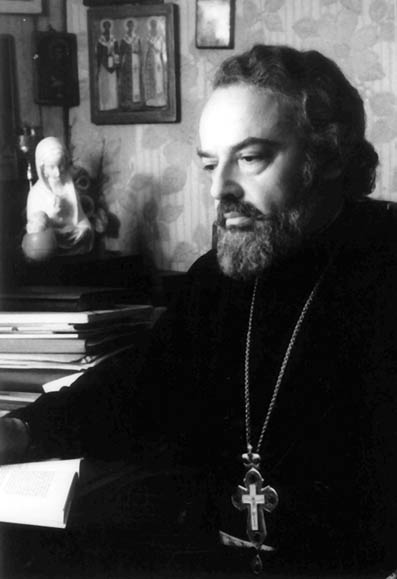
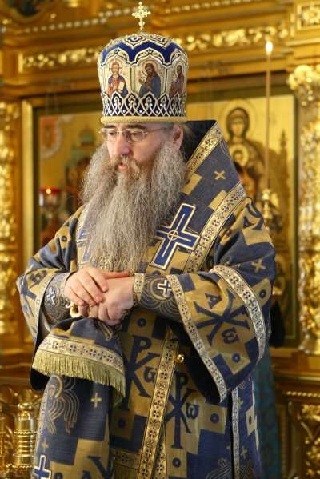
A TIME OF PREPARATION: ON THE BEGINNING OF THE NATIVITY FAST by ARCHPRIEST ALEXANDER MEN & AN EPISTLE FOR THE BEGINNING OF THE NATIVITY FAST by METROPOLITAN LONGIN OF SARATOV AND VOLSK


In the Name of the Father, and of the Son, and of the Holy Spirit!

Once St. Gregory the Theologian, praying in the church in Constantinople on the feast of the Nativity of Christ, addressed the people with an enthusiastic speech that began with these words: “Christ is born! Come out to meet Him! Christ descends from Heaven in order to raise us up!”

St. Gregory was not only a great theologian of the Church, but also a great poet and composer of church hymns. His words: “Christ is born! Come out to meet Him” was so beloved by the inhabitants of Constantinople, that each time they repeated them, and even created from them a hymn that precedes the feast of the Nativity of Christ. From this Sunday we have already begin to chant these irmosoi: “Christ is born! Glorify Him! Christ is from heaven; go and meet Him.” The Nativity Fast has begun, and we are preparing ourselves for the Feast of the Nativity of Christ.

We should not think that the feast is just a pleasant time when we can rejoice, congratulate one another, and be comforted in our sorrows! No, the Feast of the Nativity of Christ is a reminder that the Lord came to earth to die and suffer along with us, so that each one of us would receive eternal life, so that each one of us might join in salvation. And this feast is a day of choice: some accept it, and others reject it.

For us, who have received the Word of Christ, preparing for the feast is a preparation for encountering the Lord Himself! Yes, He Himself as it were comes anew to earth in order to visit you in your life, to ask you how you lived, that you might bring out the treasure of your heart and your deeds. Christ is born, go out to meet Him, prepare yourself for Him!

The Lord Himself, in various parables, spoke of how people should prepare for this encounter. In Holy Scripture, in the Prophet Amos, there are these fearsome words: “Prepare to meet thy God” (Amos 4:12). This does not mean that we need to prepare ourselves only for God’s Last Judgment, but that the Lord comes here and now to each one of us. He comes and requires of us an account, just as the master required of those to whom he had given the talents. We should not think that the Lord’s parables contain anything superfluous: in them, each words counts.

Let us recall the parable of the ten virgins. They were to await the bridegroom; they should have stood on guard. But he lingered, and they fell asleep. So it is with us: it may be that the Lord will linger to reveal Himself, and we sleep spiritually while we should be on guard. Always be ready – always, at any moment, because He can require an accounting from us. This encounter will only be joyous if we have at least done something, if we have at lest somehow prepared. When you await a special guest, how sad it is, how embarrassing it is, if he comes suddenly, before you have had a chance to clean house, if you have not prepared the table. So it is with man. But when we await the Lord Himself, Who will visit us, bless us, and enlighten us with His Holy Spirit – how must we prepare our “house,” that is, our soul and our heart! How must we cleanse it! How can the bright guest – Christ, Who is born – enter into the dirty habitation of our soul that has not been cleansed?!

And now, my dear ones, I would like that the Nativity Fast be for you not just a time of abstinence, but a time of preparation, that you would believe and hope that, on the Feast of the Nativity of Christ, you might all feel His real coming, His closeness, and His grace-filled power!

Let us prepare and cleanse our hearts through prayer, repentance, and tirelessly delving into the Word of God, Holy Scripture. Let us battle with all that is unclean in our hearts and in our actions, laboring for one another, and preparing to attend to the Lord. And each Sunday we will hear sound forth the words that remind us of the proximity of the holy day: “Christ is Born! Glorify Him! Christ is from heaven; go and meet Him!” Prepare to meet Him: our Lord is coming!

Amen.

An Epistle for the Beginning of the Nativity Fast
METROPOLITAN LONGIN OF SARATOV AND VOLSK | 28 NOVEMBER 2012

Dear brothers and sisters!
We have entered the days of the Nativity Fast, that period of preparation for one of the greatest feasts of the Orthodox Church: the radiant and joyful day of the Nativity of Christ. In his daily life, modern man is immersed in his usual earthly deeds, cares, and concerns. It can be difficult for him to put aside all earthly things and turn to the heavenly, eternal, and Divine. The law of the Gospel is known and accessible to all, but man in his weakness often stumbles and commits sin. The more his soul is burdened, clinging to the earth, the more difficult it becomes for him to perceive the spiritual.

The Church, therefore, has wisely established a time of fasting for Christians: a time of penitential introspection, of work on oneself, and of conforming oneself to the traditions, foundations, and rules of the Church, including the ecclesiastical canons. In this regard, modern society’s attitude towards the fast is no exception: one hears questions about whether it is necessary, about whether one can forego, mitigate, or shorten it. But it is characteristic of the true Christian to be completely obedient to the Mother Church, accepting that which it has established and which has been observed by its faithful children for centuries.

People with an inadequate conception of church life often perceive the fasts as being concerned exclusively with limitation in food, in both quantity and quality. But fasting is primarily a spiritual matter. Today the spirit of sacrifice and the capacity for self-denial are dying out. Fasting is the best means of reviving this spirit, through restraining the flesh and resisting its insistent demands.

Yet it should go without saying that bodily fasting alone, such as abstaining from foods of animal origin, is incomplete and incorrect. Spiritual fasting is essential: the rejection of entertainments, amusements, and of everything that in ordinary, non-fasting, times might sting a Christian’s conscience. In order to understand the fast’s essence, its true content, one should spend as much time as possible in church throughout the duration of the fast and be more diligent in fulfilling one’s personal rule of prayer. During this time it is especially important to live to the fullest possible extent within the mysteriological, grace-filled life of the Church by approaching the Mysteries of Confession and Communion more frequently.

I know well how difficult fasting can be for Christians living amidst the world. They often meet with incomprehension from friends and colleagues – and not only incomprehension, but rejection and even ridicule. This sometimes causes the cowardly desire to abandon the fast, so as not to appear strange in people’s eyes or to stand out from their surroundings. But it should be firmly understood that the steadfast observance of church rules by Christians, although it might seem unusual to non-churchgoers, will command their involuntary respect. Our fasting itself can become a wordless sermon for many, reminding them of our faith and of that great and majestic event for which we are preparing by means of this fast.

I sincerely wish you to complete the course of this fast with spiritual profit, peering attentively into your souls and hearts during these days in order to cleanse them of everything that could hinder God – Who became Man for our sake and our salvation by descending from heaven to earth – from entering and making His abode in them. We will render to the Lord only the small labor of abstinence that is within our powers, and He will grant us His great and incomparable spiritual joy – the joy of the living knowledge that God has appeared unto us in order to be with us always, never leaving those who have put their trust in Him, through the joy of Christ’s radiant Nativity.

The humble LONGIN,

By the mercy of God, Bishop of Saratov and Volsk,

2003


POPE BENEDICT, FATHER JEAN DANIELOU, AND ADVENT


Rome, Italy, Feb 15, 2015 / 05:05 pm (CNA/EWTN News).- Theological giants Benedict XVI and one of his heroes – 
the controversial Cardinal Jean Danielou – have been hailed for illuminating through their respective works the ever-relevant answer to a modern world in crisis: Jesus Christ.

“If you want to be modern, you have to look at Jesus,” Rome-based theology professor Father Giulio Maspero told CNA Feb. 13.

And through the writings of the late French cardinal in particular, he noted, the Christian claim in today's world is infinitely superior “than what you can find by thinking that everything is relative.”  

Fr. Maspero, a professor in Dogmatic Theology at the Pontifical University of Santa Croce in Rome, helped to organize a Feb. 12-13 conference titled: “Study days: Danielou-Ratzinger before the Mystery of History.”

Held at the University of Santa Croce, the conference explored the great continuity between Cardinal Danielou and Benedict XVI, who are both known for placing a historical frame around their theological writings.

Originally from Neuilly-sur-Seine, France, Cardinal Danielou was a Jesuit, and is considered one of the greatest theologians of the 20th century. He is known for his clarity in explaining profound concepts in a comprehensible way for the unlearned reader.

Danielou was highly criticized following the Second Vatican Council, a false interpretation of which he faulted for the crisis in religious life and the increase in secularization which ensued.

In a controversial interview with Vatican Radio in 1972, the cardinal stressed that “Vatican II declared that human values must be taken seriously. It never said that we should enter into a secularized world in the sense that the religious dimension would no longer be present in society.”

“It is in the name of a false secularization that men and women are renouncing their habits, abandoning their works in order to take their places in secular institutions, substituting social and political activities for the worship of God,” he said.

Cardinal Danielou also faulted “a false conception of freedom” that devalued religious constitutions and “an erroneous conception of the changing of man and the Church” for many of the crisis that unfolded after the Vatican council.


However, despite the criticism directed at the French cardinal, then-Bishop Josef Ratzinger was an avid supporter of Danielou, and placed great value on his stance and writings.

The two maintain numerous similarities in their theological writings, beginning with their historical gaze at theology, their emphasis on scripture and turning to the Church Fathers.

Danielou and now-retired pope Benedict XVI, or “Father Benedict” as he wishes to be called, also place a great emphasis on the liturgy and, perhaps most importantly, the idea of mission.

“In one word I can say that for them the meaning of our world is Christ,” Fr. Maspero said.

For them, “if you read the Gospel, if you pray, if you go to church and receive the sacraments, your sight changes and you are able to see that below the surface there is the presence of God, of Jesus Christ not only in the time we are living but also within the matter we are living with,” the priest said.

Because of the emphasis that both place on the relationship between being and history, they are “very modern” in the sense that they address one of the key concerns in contemporary society.

In the midst of a world in crisis where man is searching and can’t seem to find what he is looking for, Danielou and Benedict XVI step into the middle of “this puzzle” with the answers provided by scripture, which are enlightened by the Church Fathers.

“What they wrote is wonderful and I think it can show a way out of this crisis situation that we are living in now,” Fr. Maspero said, noting how both dug into the past with the goal of finding meaning for their present time.

One contemporary issue the theologians can shed light on is that of homosexuality, the priest said, pointing specifically to Cardinal Daneilou – whose brother, Alain, was a prominent Buddhist and gay author.

“This is the typical point where we can see the crisis of our time because we are not able to manage differences. We have tried to find a solution saying ‘ok, we have no differences,’ but you always have differences,” Fr. Maspero explained.

“If you have homosexuality, you have to manage the difference between homosexual and heterosexual. You cannot erase all the differences.”

Both of the theologians found the solution to the problem of differences by looking to the way Jesus dealt with them in the Gospels, the priest noted, saying that before doing anything else Christ accepted the people who came to him.

Cardinal Danielou embodied this in the way that he encountered his brother. After finding out that Alain was same-sex attracted, his shocked family threw him out, and they went through a lot of suffering, the priest observed.

However, Cardinal Danielou had the opposite reaction and dedicated his life to praying for his brother, and accepted his different ideas while remaining open to him. Alain, Fr. Maspero said, “recognized this love of his brother.”

“We are living in the world where everybody has the perception that they must change in order to be ‘right,’ (but) Jesus’ answer is that you are right just as you are, because you are mine, because I created you,” the priest explained.


Jesus Christ, he said, “told us to love everybody, so I think it’s a big problem now when we are talking about Catholicism that the topics of homosexuality (and) abortion are just moral topics.”

Although we are all sinners, we are all “right” by nature because we have been created in the image of God, he noted, and stressed that because of this a homosexual person can never be considered a problem.

In the priest's view, the problem lies with today's gay rights movement at large, as he believes it reduces the individual to a definition. “Life is more complex.”

“We have to learn from each other and at the same time to keep our ideas,” Fr. Maspero said, adding that we have been given the freedom to maintain different beliefs, which must be accepted with respect for the other person.

Each person has the freedom to believe there is a wrong way of doing things and to promote a different method, he said, stressing that the Church, in her teachings, “is not imposing a behavior on anybody.”

People, the priest said, should believe what they want, but emphasized that “there is a truth,” and history will tell who was right and who was wrong.

One of the reasons why Cardinal Jean Denielou is so little known outside the French Catholic circles is because he died suddenly, of a heart attack, while visiting the house of a prostitute. The fact was used by the French secular press to imply the “hypocrisy” of the Jesuit’s moral life.

Alain, as famous an author in the Agnostic circles as his brother was in the Catholic one, wrote after the death of the French Cardinal:

“His death and the scandal provoked by it, when he had become one of the leading figures of the Church, was a sort of posthumous vendetta, one of those favors that the gods bestow on those whom they love. If he had died just a little while sooner or later, or if he had been visiting a lady of the sixteenth arrondissement (an expensive neighborhood in Paris) under the pretext of works of charity, instead of bringing the revenue of his theological writings to a poor and needy woman, there would have been no scandal.”

“Jean had always dedicated himself to disregarded people. For a certain period he had celebrated a Mass for the sake of homosexuals. He tried to help prisoners, criminals, troubled young people, prostitutes. I deeply admired this ending of life similar to that of the martyrs, whose fragrance rises to heaven amid the opprobrium and sarcasm of the crowd.”

According to Vatican analyst Sandro Magister, since 2012, when the first conference on Jean Danielou was held in Rome, “the quarantine has ended for this Cardinal.”

ADVENT WITH POPE BENEDICT

HOMILY OF HIS HOLINESS BENEDICT XVI

St Peter's Basilica
Saturday, 1st December 2007


Dear Brothers and Sisters,

Advent is, par excellence, the season of hope. Every year this basic spiritual attitude is reawakened in the hearts of Christians, who, while they prepare to celebrate the great Feast of Christ the Saviour's Birth, revive the expectation of his glorious second coming at the end of time. The first part of Advent insists precisely on the parousia, the final coming of the Lord. The antiphons of these First Vespers are all oriented, with different nuances, to this perspective. The short Reading from the First Letter to the Thessalonians (5: 23-34) refers explicitly to the final coming of Christ using precisely the Greek term parousia (cf. v. 23). The Apostle urges Christians to keep themselves sound and blameless, but above all encourages them to trust in God, who "is faithful" (v. 24) and will not fail to bring about this sanctification in all who respond to his grace.

This entire Vespers liturgy is an invitation to hope, pointing on the horizon of history to the light of the Saviour who comes: "on that day a great light will appear" (Antiphon 2); "the Lord will come with great might" (Antiphon 3); "his splendour fills the whole world" (Magnificat Antiphon). This light, which shines from the future of God, was already manifest in the fullness of time; therefore, our hope does not lack a foundation but is supported by an event situated in history, which at the same time exceeds history: the event constituted by Jesus of Nazareth. The Evangelist John applies to Jesus the title of "light": it is a title that belongs to God. Indeed, in the Creed we profess that Jesus Christ is "God from God, Light from Light".

I wanted to dedicate my second Encyclical, which was published yesterday, to the theme of hope. I am pleased to offer it in spirit to the entire Church on this First Sunday of Advent, so that, during preparation for Holy Christmas, the communities and individual faithful can read and meditate upon it to rediscover the beauty and depth of Christian hope. This, in fact, is inseparably bound to knowledge of the Face of God, the Face which Jesus, the Only-Begotten Son, revealed to us with his Incarnation, his earthly life and his preaching, and especially with his death and Resurrection. True and steadfast hope is founded on faith in God Love, the Merciful Father who "so loved the world that he gave his Only Son" (Jn 3: 16), so that men and women and with them all creatures might have life in abundance (cf. Jn 10: 10). Advent, therefore, is a favourable time for the rediscovery of a hope that is not vague and deceptive but certain and reliable, because it is "anchored" in Christ, God made man, the rock of our salvation.

From the outset, as becomes clear in the New Testament and especially in the Letters of the Apostles, a new hope distinguishes Christians from those who live in pagan religiosity. In writing to the Ephesians, St Paul reminds them that before embracing faith in Christ, they had "no hope and [were] without God in the world" (2: 12). This appears an especially apt description for the paganism of our day: in particular, we might compare it with the contemporary nihilism that corrodes the hope in man's heart, inducing him to think that within and around him nothingness prevails: nothing before birth and nothing after death. In fact, if God is lacking, hope is lacking. Everything loses its "substance". It is as if the dimension of depth were missing and everything were flattened out and deprived of its symbolic relief, its "projection" in comparison with mere materiality. At stake is the relationship between existence here and now and what we call the "hereafter": this is not a place in which we end up after death; on the contrary, it is the reality of God, the fullness of life towards which every human being is, as it were, leaning. God responded to this human expectation in Christ with the gift of hope.

Man is the one creature free to say "yes" or "no" to eternity, that is, to God. The human being is able to extinguish hope within him, eliminating God from his life. How can this be? How can it happen that the creature "made for God", intimately oriented to him, the creature closest to the Eternal One, can deprive himself of this richness? God knows the human heart. He knows that those who reject him have not recognized his true Face, and so he never ceases to knock at our door like a humble pilgrim in search of hospitality. This is why the Lord grants humanity new time: so that everyone may manage to know him! This is also the meaning of a new liturgical year which is beginning: it is a gift of God, who once again wishes to reveal himself to us in the mystery of Christ, through the Word and the Sacraments. He wants to speak to humanity and to save the people of today through the Church. And he does so by going out to meet them in order "to seek and to save the lost" (Lk 19: 10). In this perspective, the celebration of Advent is the answer of the Church-Bride to the ever new initiative of God the Bridegroom, "who is and who was and who is to come" (Rv 1: 8). God offers to humanity, which no longer has time for him, further time, a new space in which to withdraw into itself in order to set out anew on a journey to rediscover the meaning of hope.

Here, then, is the surprising discovery: my, our hope is preceded by the expectation which God cultivates in our regard! Yes, God loves us and for this very reason expects that we return to him, that we open our hearts to his love, that we place our hands in his and remember that we are his children. This attitude of God always precedes our hope, exactly as his love always reaches us first (cf. I Jn 4: 10). In this sense Christian hope is called "theological": God is its source, support and end. What a great consolation there is in this mystery! My Creator has instilled in my spirit a reflection of his desire of life for all. Every person is called to hope, responding to the expectations that God has of him. Moreover, experience shows us that it is exactly like this. What keeps the world going other than God's trust in humankind? It is a trust reflected in the hearts of the lowly, the humble, when they strive daily to do their best through difficulties and labours, to do that little bit of good which is nonetheless great in God's eyes: in the family, in the work place, at school, in the various social contexts. Hope is indelibly engraved in the human heart because God our Father is life, and for eternal life and beatitude we are made.

Every child born is a sign of trust in God and man and a confirmation, at least implicit, of the hope in a future open to God's eternity that is nourished by men and women. God has responded to this human hope, concealing himself in time as a tiny human being. St Augustine wrote: "We might have thought that your Word was far distant from union with man, if this Word had not become flesh and dwelt among us" (Conf. X, 43, 69, cited in Spe Salvi, n. 29). Thus, let us allow ourselves to be guided by the One who in her heart and in her womb bore the Incarnate Word. O Mary, Virgin of expectation and Mother of hope, revive the spirit of Advent in your entire Church, so that all humanity may start out anew on the journey towards Bethlehem, from which it came, and that the Sun that dawns upon us from on high will come once again to visit us (cf. Lk 1: 78), Christ our God. Amen.


© Copyright 2007 - Libreria Editrice Vaticana


ADVENT WITH FR JEAN DANIELOU
"Without a doubt the master-key to Christian theology, which distinguishes it utterly from all rational theodicy," the French Jesuit Jean Daniélou (1905-74) wrote in God and the Ways of Knowing, "is contained in the statement that the Trinity of Persons constitutes the structure of Being, and that love is therefore as primary as existence." This "master-key" was the object of study and love for Daniélou, whose scholarly and popular writings contemplated the depths of Trinitarian love and its salvific work in human history. (my source: Carl Olsen)

my source
 From the writngs of Cardinal Jean Danielou, S.J. (Le Mystere de L’avent, 126-126-128)
my source:Dom Donald's Blog

Who is yet to come?
The mystery which we are now living in the world is the mystery of Christ’s gradual coming to every soul and every nation. Christ has indeed come, but he remains always the one who is yet to come. Come he has, but not completely. Thouh the expectation of Israel has been fulfilled, Israel is still waiting. We are for ever in the season of Advent, awaiting the coming of the Messiah. The Messiah has come, but he is not yet fully manifested either in our individual souls or in the human race as a whole. Just as Jesus was born according to the flesh in Bethle­hem of Judea, so he must be born according to the spirit in the soul of each one of us. The whole mystery of the spiritual life lies in the continual birth of Jesus within us. We must be always transforming ourselves into him, making our own the sentiments of his heart and the judgments of his mind. To be a Christian means to be gradually changed into Christ so as to be truly children of the Father.

. Similarly in regard to humankind as a whole, Jesus has not yet fully come. He has come to some peoples, but not to all. In some parts of the human race Jesus is still unborn. The mystical Christ is not yet complete; he is still imperfect, lacking mem­bers. Therefore the Church's missionary prayer is for the com­ing of Christ to the whole world, so that his body may attain its full stature.

Now what is true of the preparation for the coming of Christ in the flesh is also true of the spiritual preparation for his com­ing to our souls, and the preparation for his spiritual coming in his entire mystical body, for God's plan is an integral whole. And just as Mary played an important and altogether special role in the physical birth of Jesus, since she gave him the flesh in which he was born (here we touch the heart of the mystery of the Virgin), so Mary continues to play an important role in the preparation of each subsequent coming of Jesus. She is always
present wherever he is to come.

This applies in the first place to the souls of each one of us. We may truly say that Mary has a special part to play in our spiritual lives, because it is she who prepares for the coming of Jesus in us and who gradually forms him in our souls. But as well as her relationship to individuals, Mary also has a part to play in the coming of Christ to the peoples whom he has not yet reached. Here we touch upon the missionary aspect of the mystery of Mary. The mystery of our Lady is that she was there before Jesus was. She was in Israel before him. In her, if one may so express it, there was already a secret presence of Jesus in Israel before his actual birth, since she was already perfectly united with him and there was no part of her life that was not wholly his. She was present, then, during the time before the in­carnation, and so, since she is a figure of the Church, of human­kind redeemed by Christ, it seems as if in some way the Church must have existed before even Jesus was born. We can see, then, the part our Lady is to play among pagan peoples: the Church has not come to them, Jesus has not yet come to them, yet the Church is there, because Mary is there.

          Responsory Lk 1:45-46; Ps 66:16
Blessed are you who have believed that the Lord's promises to you would be fulfilled. And Mary said: + My soul proclaims the greatness of the Lord.
V. Come, and listen, and I will tell what great things God has done in me. + My soul proclaims, ..


Search This Blog

La Virgen de Guadalupe

La Virgen de Guadalupe

Followers

My Blog List

Fr David Bird

Fr David Bird
Me on a good day

Blog Archive