
my source:The Anchoress Daily Digest
“Gradualism is Another Word for License.” No, It’s Not.
October 15, 2014 by Elizabeth Scalia
I keep seeing these same six words all over social media:
“Gradualism is another word for license.”
Think so? Really? No possibility that it is the process of grace, working within us?
So, no grace at work, here? an atheist-turned-nun:
I was attending Mass for an entire year before I went to confession. I don’t make excuses for myself. My soul was not in the proper state to be receiving the Body and Blood of Christ, but it took time for grace to work in me in order for me to realize this. Finally, in the same way I was drawn to Jesus in the Eucharist, one day I felt an overwhelming urge to go to confession.
That’s gradualism. It gave us another religious sister.
The rest is history.
No powerful grace laboring in the step-by-step salvation of these souls?
The night I learned that the bishop had been petitioned to bar me from baptism and confirmation, and to prohibit my marriage, I called my godmother in tears. “Why are they doing this?” I wept. “It already hurts so much to leave my family and my faith…why don’t they want me to have the sacraments that they’ve had all their lives? Am I not good enough? If this is the true Church of Christ, is He saying that He doesn’t want me in it?” She reassured me, and so did my godfather, my husband, and my friends. My priest went to battle on behalf of my soul — a soul that was, even then, in mortal sin.
The truth, goodness, and beauty of the Church made me want to be a Catholic. But it was the love and patience of my friends and family that carried me into the Church.
That’s gradualism, too. Those people who were so intent on protecting the church from baptizing this sinner nearly amended the story of a soul, and the formation of a strong Catholic family, including four little kids.

Saint Augustine knew something about gradualism: “Lord, make me chaste, but not yet!”
Anecdotes? Sure. True stories are anecdotes. When has hard data been required for great conversion stories to become credible and meaningful and inspiring for others? It’s not really the Catholic way, is it? We love our saint stories, and all of them are different anecdotes:

“I heard of this one guy, Francis, a real whack job, wanted to be a Crusader; then he stripped naked and claimed God told him to rebuild a church…”
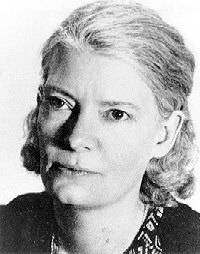
“There was this partygirl, a real intellectual, with the whole thing, the drinking, the abortion, the shacking up. She started to move along a spiritual path but it took having a baby, out of wedlock, to really bring her around…”

“There was this great English writer, Gilbert — a nominal Anglican, who wrote a masterpiece on Orthodoxy, but took another 20 years to actually come into the church…”
I’m already on record voicing my concerns about the principle of gradualism being haphazardly applied, and I meant it. The prudential judgement of a priest or bishop must be prayerfully reached. But there are a lot of hurting souls out there, who assume that if they tried to walk through the church doors, someone would be petitioning a bishop to keep them out, and someone else would be overwhelming them with law, before they’d managed to kneel down and beg for mercy.
And because they assume it to be true, they don’t even dream of ascending the steps and giving a tug on the door.

Conversion of soul is a process. As Saint Benedict of Norcia knew, conversion of manner, what we call ‘conversio‘ is also a process — one that monks and nuns and oblates work at their whole lives. Incarnation is a process.

Paul may have had his Damascus moment — and how glorious for those who make instantaneous conversions — but even the apostles only got it gradually. Thomas didn’t get it until he put his hand into Christ’s very wounds.
Let’s not be too hard on “gradualism” or disdain it as something it most definitely is not: a euphemism for “all is well; everyone keep sinning.” In truth, it is an old way of understanding how to co-operate with grace for the sake of a wary and wandering soul.

Vatican City, Oct 15, 2014 / 01:35 pm (CNA/EWTN News).- As the synod fathers' small groups continue to meet, it seems increasingly clear that the Synod of Bishops' concluding document, the 'relatio synodi', will be substantially different than the midterm relatio which was released Monday.
The relatio synodi is called to mirror the concerns and proposals raised during the small group discussions this week, in which bishops have been grouped according to language.
After the issuance of the midterm report, the synod fathers raised their concern in 41 free interventions, which highlighted the absence of the word sin, the absence of the Gospel of Family, and some perhaps naive sentences of the document which could be subject to misinterpretation.
“The issue at stake is whether the Catholic Church is going to shape the world with its teaching, the truth it reveals, or if it is going to be shaped by the world,” Archbishop Stanislaw Gadecki of Poznan, who is president of the Polish bishops' conference, shared with CNA Oct. 15.
Archbishop Zbignev Stankevics of Riga, the Latvian capital, echoed Archbishop Gadecki's words in an Oct. 14 interview with Vatican Radio.
“Currently, the family is under a very strong ideological attack. The main task of the synod fathers is not to make a poorly-defined opening, but to apply, once again for today’s situation, the teaching of the Church,” Archbishop Stankevics said.
He then added that “certainly, we should meet the contemporary challenges as much as is possible; but without losing our Catholic identity, and without renouncing the truth about marriage.”
The small groups are having lively discussions about the issues at stake, though Cardinal Lluis Martinez Sistach of Barcelona and Archbishop Joseph Kurtz of Louisville both downplayed the degree of this liveliness in a briefing with journalists on Wednesday.
“There is a climate of fraternity and pastoral care. All of our amendments have been voted by a unanimity of participants,” Cardinal Martinez said Oct. 15.
Archbishop Kurtz said that three suggestions have emerged from the discussion of his small group: emphasizing the positive value of Christian families; ensuring the Church's words are welcoming and heartfelt; and guaranteeing that pastoral care is rooted in the beauty of Church teaching and of scripture.
In an chat with CNA held under condition of anonymity, one synod father said that his small group has “substantially re-written the introduction of the relatio,” has “cut the quote of the ‘seeds of good’, because it was out of context and could create confusion, and has asked that we place more emphasis on the positive examples of the faithful.”
“The document was too clerical in our view,” the source maintained.
Archbishop Salvatore Fisichella, president of the Pontifical Council for Promoting the New Evangelization, underscored in a briefing with journalists that his small group “also discussed topics which had not been properly discussed in the synod hall.”
“We proposed that the processes for the declaration of nullity be free of any charge, since it must never be said that the Church is paid for a declaration of nullity: it drives the faithful to think that nullity can be obtained when it is paid for,” Archbishop Fisichella said.
The archbishop also stressed that “there is little acknowledgement of the natural methods of family planning: there is almost a form of boycott to educate about natural family planning.”
Also, the bishops of Africa raised their concern for some ‘missing hotspots’ in the synod’s midterm report.
Bishop Nicolas Djomo Lola of Tshumbe, in the Democratic Republic of the Congo, listed among the missing hotspots “the attention for the children without family because of war.”
The list of proposals generated by the small groups will be given to the General Secretariat for the Synod, and then the relator of each small group will report on the outcomes of their groups.
After that, there will be a free discussion, and during the afternoon the General Secretary of the Synod, the General Rapporteur, the Special Secretary, and the committee of six will meet to collect all the interventions and draft the relatio synodi.
Cardinal Donald Wuerl of Washington, a member of the committee of six, told CNA that the bishops “seem to be basically satisfied from the major outline of the midterm report,” which is “going in the right direction: it’s pastoral, it’s inviting, it’s based on our doctrine, and it is rooted in the Sacred Scriptures.”
According to Cardinal Wuerl, the synod’s final report will deal with “how to make pastoral applications, how to be inviting, how to be welcoming.”
The final report will collect all the issues at stake and will be voted on by the synod fathers, and then given to the Pope, who will decide whether or not to make it public.
Graduality at the Synod
Michael Sean Winters | Oct. 16, 2014
Distinctly Catholic
Synod on the Family
All of us in the Church commentary biz are, understandably, transfixed by the Relatio that came out Monday and by some of the reactions to it. In a frenzied state, sometimes it is easiest to miss what is actually the most important, to overlook the obvious. In this case, the text’s statements about graduality or gradualness seem to be the key hermeneutic for the entire text, arguably for the entire papacy.
It is easy to miss because, at one level, it is so obvious. The self-revelation of God in Jesus Christ does not happen all at once, but in fits and starts. St. Peter, at whose tomb the synod fathers are gathered and whose successor leads the meetings, is portrayed in the Scripture as capable of deep, penetrating understandings and, the very next minute, totally misunderstanding the significance of the Master and His life. The Hebrew Scriptures are a long, slow, revelation of God’s love and mercy to His chosen people Israel, who follow the call of the covenant at one moment, then make a golden calf the next, follow Moses out of Egypt, then complain about being in the wilderness, are banished from Israel and sent into exile, only to be called back.
The law of graduality is also obvious to anyone who has ever been a pastor – or even a good friend. Teenagers ask questions and they will not be satisfied when a parent says merely, “We can’t talk about that” or “That question is out of bounds.” Even as adults, the path of discipleship is a crooked one for all but the saints - and even the saints have their moments of doubt and face the challenge of sin. We muddle along and pray that God will draw straight lines with our crooked humanity. There is nothing unduly lacking in rigor, still less saccharine, about the law of gradualism. It does not mean that our path lacks direction: Christ is the Alpha and the Omega, we begin with Him, His self-revelation is the lens through which we must judge everything in our own lives, and we will, by His grace, return to Him. But, the road has many twists and turns, some detours that might yield an unsought and even previously unknown vista of spectacular beauty, some side paths that turn out to be dead ends, sometimes the road gets narrow and there is only room for one person to pass at a time, and other times the road widens and we get to walk together. In any event, there is no avoiding the road, the path, even if we all know where it leads or accept, as accept we must, on the Church’s testimony, that our path as a Christian starts and ends with the empty tomb of Jesus Christ and the revelatory promise of salvation contained therein.
Similarly, the law of graduality says something about our relationship to the Church’s tradition. There is no denying that Pope Francis’ approach to governance of the universal Church differs from that of his two immediate predecessors. He is a pastor first and last. John Paul II brought his great philosophic sensibilities to the task. Benedict XVI was possessed of great theological vision, arguably the most penetrating post-conciliar theological vision. But, Francis is smart as a whip and he wishes to make all his philosophic and theological inclinations serve the pastoral needs of the Church, most especially the need to evangelize. I spent much of the eight years of the papacy of Benedict XVI trying to point out the beauty of Benedict’s theological vision to my friends on the left. I met with some success and some failure. I am not shy about claiming some measure of moral authority in inviting my conservative friends to do the same with Pope Francis. But, the key point is this: Pope Francis, the Synod Fathers, all of us, stand on the shoulders of giants. Still, we are called to walk.
In his interview with Catholic World Report, Cardinal Raymond Burke said this:
I was not present at the blessed event, but I am guessing that when Cardinal Burke was born, he was not clutching a copy of the Code of Canon Law. He, too, experienced the law of graduality he now denounces. He says that the law of graduality is presented in a “confused” manner, that it is not defined. Actually, I think pastors knew exactly what the law of graduality means and did not need it to be precisely defined.
That said, Cardinal Burke has a point. Life is messy and if the Church is to accompany the living, rather than withdraw into the canon law library, it must accompany the people of God – and all people – in all the messiness of our lives. Pope Francis has called for precisely this, time and again, and encouraged us all not to be intimidated by that messiness. A friend, whom I affectionately call “the fons” likes to quote Peguy on Kant: “Kant’s hands were clean because he had no hands.” That is, Kant’s devotion to his categories kept him from the realities of life.
Something similar is at work in the synod hall. The choice is not between truth and falsehood or between zeal and “moderation,” The choice is between categories and people. I am not a theologian but it is my understand that all our theological categories, all our pastoral plans and approaches, all our philosophic insights, exist to achieve the salvation of souls, and in this life, those souls are embodied souls, with often messy lives. We are the people of God and it is the Church’s pastors’ task to protect us, not from ever falling down, because human nature being what it is, we shall always fall down. The protection can come, can only come, by walking alongside humanity as we trip and fall, helping us back up to our feet. If the law of graduality is insufficiently precise for Cardinal Burke it is because human life is insufficiently precise.
A personal note. My life has been messy, very messy at times. Still, today, I am no saint. On the contentious issues of human sexuality, my thoughts betray me and my eyes still rove. Yet, I live my life as a single, chaste Christian as best I can. I did not arrive at this point because I was accompanied by pastors who said, “You are living in sin.” If they had, I would have run in the other direction. I arrived at this point because of pastors who accompanied me, encouraged me and, most importantly, provided an example of a life lived with Christian integrity. I believe the Church’s teachings on human sexuality need development. In some regards, they remain unpersuasive to me. But, the call to integrity caught me like an unseen hook, to borrow a phrase from Waugh, letting me wander to the ends of the earth and still to pull me back with a twitch upon the thread. That thread was the accompaniment of some wonderful, and wonderfully non-judgmental pastors – and, of course, the grace of God. The wanderings were many, the progress was gradual, and it came to me at a ninety degree angle. But, I have never been happier nor felt more liberated, precisely on these issues of human sexuality, than I did when I was not living in accordance with the Church’s teaching. Twenty years ago, I would not have predicted the path I have trod. Maybe even ten years ago, it seemed unlikely although, in retrospect, I can see that the path was moving in this direction. I hope every Christian soul will find that the Church’s teachings truly liberate us from every agenda, political and personal, as I have discovered, somewhat to my surprise. But, Pope Francis is absolutely correct that no one will ever find that sense of liberation apart from the accompaniment, not the hectoring, of the Church and Her pastors.

Vatican City, Oct 15, 2014 / 01:35 pm (CNA/EWTN News).- As the synod fathers' small groups continue to meet, it seems increasingly clear that the Synod of Bishops' concluding document, the 'relatio synodi', will be substantially different than the midterm relatio which was released Monday.
The relatio synodi is called to mirror the concerns and proposals raised during the small group discussions this week, in which bishops have been grouped according to language.
After the issuance of the midterm report, the synod fathers raised their concern in 41 free interventions, which highlighted the absence of the word sin, the absence of the Gospel of Family, and some perhaps naive sentences of the document which could be subject to misinterpretation.
“The issue at stake is whether the Catholic Church is going to shape the world with its teaching, the truth it reveals, or if it is going to be shaped by the world,” Archbishop Stanislaw Gadecki of Poznan, who is president of the Polish bishops' conference, shared with CNA Oct. 15.
Archbishop Zbignev Stankevics of Riga, the Latvian capital, echoed Archbishop Gadecki's words in an Oct. 14 interview with Vatican Radio.
“Currently, the family is under a very strong ideological attack. The main task of the synod fathers is not to make a poorly-defined opening, but to apply, once again for today’s situation, the teaching of the Church,” Archbishop Stankevics said.
He then added that “certainly, we should meet the contemporary challenges as much as is possible; but without losing our Catholic identity, and without renouncing the truth about marriage.”
The small groups are having lively discussions about the issues at stake, though Cardinal Lluis Martinez Sistach of Barcelona and Archbishop Joseph Kurtz of Louisville both downplayed the degree of this liveliness in a briefing with journalists on Wednesday.
“There is a climate of fraternity and pastoral care. All of our amendments have been voted by a unanimity of participants,” Cardinal Martinez said Oct. 15.
Archbishop Kurtz said that three suggestions have emerged from the discussion of his small group: emphasizing the positive value of Christian families; ensuring the Church's words are welcoming and heartfelt; and guaranteeing that pastoral care is rooted in the beauty of Church teaching and of scripture.
In an chat with CNA held under condition of anonymity, one synod father said that his small group has “substantially re-written the introduction of the relatio,” has “cut the quote of the ‘seeds of good’, because it was out of context and could create confusion, and has asked that we place more emphasis on the positive examples of the faithful.”
“The document was too clerical in our view,” the source maintained.
Archbishop Salvatore Fisichella, president of the Pontifical Council for Promoting the New Evangelization, underscored in a briefing with journalists that his small group “also discussed topics which had not been properly discussed in the synod hall.”
“We proposed that the processes for the declaration of nullity be free of any charge, since it must never be said that the Church is paid for a declaration of nullity: it drives the faithful to think that nullity can be obtained when it is paid for,” Archbishop Fisichella said.
The archbishop also stressed that “there is little acknowledgement of the natural methods of family planning: there is almost a form of boycott to educate about natural family planning.”
Also, the bishops of Africa raised their concern for some ‘missing hotspots’ in the synod’s midterm report.
Bishop Nicolas Djomo Lola of Tshumbe, in the Democratic Republic of the Congo, listed among the missing hotspots “the attention for the children without family because of war.”
The list of proposals generated by the small groups will be given to the General Secretariat for the Synod, and then the relator of each small group will report on the outcomes of their groups.
After that, there will be a free discussion, and during the afternoon the General Secretary of the Synod, the General Rapporteur, the Special Secretary, and the committee of six will meet to collect all the interventions and draft the relatio synodi.
Cardinal Donald Wuerl of Washington, a member of the committee of six, told CNA that the bishops “seem to be basically satisfied from the major outline of the midterm report,” which is “going in the right direction: it’s pastoral, it’s inviting, it’s based on our doctrine, and it is rooted in the Sacred Scriptures.”
According to Cardinal Wuerl, the synod’s final report will deal with “how to make pastoral applications, how to be inviting, how to be welcoming.”
The final report will collect all the issues at stake and will be voted on by the synod fathers, and then given to the Pope, who will decide whether or not to make it public.
Graduality at the Synod
Michael Sean Winters | Oct. 16, 2014
Distinctly Catholic
Synod on the Family
All of us in the Church commentary biz are, understandably, transfixed by the Relatio that came out Monday and by some of the reactions to it. In a frenzied state, sometimes it is easiest to miss what is actually the most important, to overlook the obvious. In this case, the text’s statements about graduality or gradualness seem to be the key hermeneutic for the entire text, arguably for the entire papacy.
It is easy to miss because, at one level, it is so obvious. The self-revelation of God in Jesus Christ does not happen all at once, but in fits and starts. St. Peter, at whose tomb the synod fathers are gathered and whose successor leads the meetings, is portrayed in the Scripture as capable of deep, penetrating understandings and, the very next minute, totally misunderstanding the significance of the Master and His life. The Hebrew Scriptures are a long, slow, revelation of God’s love and mercy to His chosen people Israel, who follow the call of the covenant at one moment, then make a golden calf the next, follow Moses out of Egypt, then complain about being in the wilderness, are banished from Israel and sent into exile, only to be called back.
The law of graduality is also obvious to anyone who has ever been a pastor – or even a good friend. Teenagers ask questions and they will not be satisfied when a parent says merely, “We can’t talk about that” or “That question is out of bounds.” Even as adults, the path of discipleship is a crooked one for all but the saints - and even the saints have their moments of doubt and face the challenge of sin. We muddle along and pray that God will draw straight lines with our crooked humanity. There is nothing unduly lacking in rigor, still less saccharine, about the law of gradualism. It does not mean that our path lacks direction: Christ is the Alpha and the Omega, we begin with Him, His self-revelation is the lens through which we must judge everything in our own lives, and we will, by His grace, return to Him. But, the road has many twists and turns, some detours that might yield an unsought and even previously unknown vista of spectacular beauty, some side paths that turn out to be dead ends, sometimes the road gets narrow and there is only room for one person to pass at a time, and other times the road widens and we get to walk together. In any event, there is no avoiding the road, the path, even if we all know where it leads or accept, as accept we must, on the Church’s testimony, that our path as a Christian starts and ends with the empty tomb of Jesus Christ and the revelatory promise of salvation contained therein.
Similarly, the law of graduality says something about our relationship to the Church’s tradition. There is no denying that Pope Francis’ approach to governance of the universal Church differs from that of his two immediate predecessors. He is a pastor first and last. John Paul II brought his great philosophic sensibilities to the task. Benedict XVI was possessed of great theological vision, arguably the most penetrating post-conciliar theological vision. But, Francis is smart as a whip and he wishes to make all his philosophic and theological inclinations serve the pastoral needs of the Church, most especially the need to evangelize. I spent much of the eight years of the papacy of Benedict XVI trying to point out the beauty of Benedict’s theological vision to my friends on the left. I met with some success and some failure. I am not shy about claiming some measure of moral authority in inviting my conservative friends to do the same with Pope Francis. But, the key point is this: Pope Francis, the Synod Fathers, all of us, stand on the shoulders of giants. Still, we are called to walk.
In his interview with Catholic World Report, Cardinal Raymond Burke said this:
The document lacks a solid foundation in the Sacred Scriptures and the Magisterium. In a matter on which the Church has a very rich and clear teaching, it gives the impression of inventing a totally new, what one Synod Father called “revolutionary,”teaching on marriage and the family. It invokes repeatedly and in a confused manner principles which are not defined, for example, the law of graduality.
I was not present at the blessed event, but I am guessing that when Cardinal Burke was born, he was not clutching a copy of the Code of Canon Law. He, too, experienced the law of graduality he now denounces. He says that the law of graduality is presented in a “confused” manner, that it is not defined. Actually, I think pastors knew exactly what the law of graduality means and did not need it to be precisely defined.
That said, Cardinal Burke has a point. Life is messy and if the Church is to accompany the living, rather than withdraw into the canon law library, it must accompany the people of God – and all people – in all the messiness of our lives. Pope Francis has called for precisely this, time and again, and encouraged us all not to be intimidated by that messiness. A friend, whom I affectionately call “the fons” likes to quote Peguy on Kant: “Kant’s hands were clean because he had no hands.” That is, Kant’s devotion to his categories kept him from the realities of life.
Something similar is at work in the synod hall. The choice is not between truth and falsehood or between zeal and “moderation,” The choice is between categories and people. I am not a theologian but it is my understand that all our theological categories, all our pastoral plans and approaches, all our philosophic insights, exist to achieve the salvation of souls, and in this life, those souls are embodied souls, with often messy lives. We are the people of God and it is the Church’s pastors’ task to protect us, not from ever falling down, because human nature being what it is, we shall always fall down. The protection can come, can only come, by walking alongside humanity as we trip and fall, helping us back up to our feet. If the law of graduality is insufficiently precise for Cardinal Burke it is because human life is insufficiently precise.
A personal note. My life has been messy, very messy at times. Still, today, I am no saint. On the contentious issues of human sexuality, my thoughts betray me and my eyes still rove. Yet, I live my life as a single, chaste Christian as best I can. I did not arrive at this point because I was accompanied by pastors who said, “You are living in sin.” If they had, I would have run in the other direction. I arrived at this point because of pastors who accompanied me, encouraged me and, most importantly, provided an example of a life lived with Christian integrity. I believe the Church’s teachings on human sexuality need development. In some regards, they remain unpersuasive to me. But, the call to integrity caught me like an unseen hook, to borrow a phrase from Waugh, letting me wander to the ends of the earth and still to pull me back with a twitch upon the thread. That thread was the accompaniment of some wonderful, and wonderfully non-judgmental pastors – and, of course, the grace of God. The wanderings were many, the progress was gradual, and it came to me at a ninety degree angle. But, I have never been happier nor felt more liberated, precisely on these issues of human sexuality, than I did when I was not living in accordance with the Church’s teaching. Twenty years ago, I would not have predicted the path I have trod. Maybe even ten years ago, it seemed unlikely although, in retrospect, I can see that the path was moving in this direction. I hope every Christian soul will find that the Church’s teachings truly liberate us from every agenda, political and personal, as I have discovered, somewhat to my surprise. But, Pope Francis is absolutely correct that no one will ever find that sense of liberation apart from the accompaniment, not the hectoring, of the Church and Her pastors.


 Posts
Posts

