EXPAND YOUR READING!!

"Today the concept of truth is viewed with suspicion, because truth is identified with violence. Over history there have, unfortunately, been episodes when people sought to defend the truth with violence. But they are two contrasting realities. Truth cannot be imposed with means other than itself! Truth can only come with its own light. Yet, we need truth. ... Without truth we are blind in the world, we have no path to follow. The great gift of Christ was that He enabled us to see the face of God".Pope Benedict xvi, February 24th, 2012

The Church is ecumenical, catholic, God-human, ageless, and it is therefore a blasphemy—an unpardonable blasphemy against Christ and against the Holy Ghost—to turn the Church into a national institution, to narrow her down to petty, transient, time-bound aspirations and ways of doing things. Her purpose is beyond nationality, ecumenical, all-embracing: to unite all men in Christ, all without exception to nation or race or social strata. - St Justin Popovitch

Monday, 17 March 2014

IRENA SENDLER: HEROINE

Bless the Lady Plumber
Irena Sendler
 Remember  this lady?
 Sendler, a Roman Catholic, was born in Otwock, outside Warsaw, on February 15, 1910. Her father was a physician who directed a spa hospital. Sendler remembered him as someone who taught great compassion: “If you see someone drowning, you must try to rescue them, even if you cannot swim.”

She was an administrator in Warsaw’s welfare department in 1940, when Nazi Germany occupied Poland. Nearly half a million Jews were sequestered in Warsaw’s tiny ghetto, where conditions were appalling. The Nazis ordered a stop to normal social services, such as food and health care. Charged with warding off typhus and tuberculosis, Sendler had official permission to move freely in the ghetto. She convinced Jewish parents to let her hide their children. She used an ambulance to smuggle children in burlap sacks and coffins. A dog seated next to her would sometimes bark to drown out the children’s cries. She received aid from the Zegota, the Polish Council to Aid the Jews.


Died: May 12, 2008 (aged 98)
Warsaw , Poland
my source: an e-mail
During WWII, Irena, got permission  to work in the Warsaw ghetto, as a  Plumbing/Sewer  specialist.  She had an ulterior motive.


Irena smuggled Jewish infants out  in the bottom of the tool box she  carried.  She also carried a burlap sack in the back of her truck, for larger kids


Irena kept a dog in the back that  she trained to bark when the Nazi soldiers let her in and out of  the ghetto. 

The soldiers, of course, wanted  nothing to do with the dog and the barking which covered the kids/infants noises.


 Irena Sendler of the Chasidei Umos HaOlam


by guest blogger


Yad Vashem was established in 1953 by Israel's Remembrance Authority with the stated mission of honoring the Chasidei Umos HaOlam. As part of their answer to the  dilemma of how to memorize the victims Yad Vashem established a program which honors the Righteous Among the Nations -- gentiles who put their lives at risk to rescue Jews.


Over the years Yad VaShem has honored tens of thousands of people including, in 1965, a Polish woman by the name of Irena Sendler. Sendler is credited with having saved over 3000 Jewish lives, almost two thirds more than the more well-known Oskar Schindler of "Schindler's List" renown.  


In 1999 a group of students from Kansas City  researched the events surrounding Sendler's activities, documented their findings and actually met with the then-98-year-old Sendler before creating a project "Life in a Jar" which relates the Irena Sendler story.


Irena Sendler was a young social worker in Poland when the Germans invaded in 1939. She joined the Zagota -- a Polish underground group that specialized in assisting Jews. Over the course of the first two years of the war Sendler helped forge documents and locate hiding places for Jews who were fleeing the Nazis -- accounts estimate that she helped over 500 Jews escape from the Nazis.  


In 1941 Sendler obtained false documents which identified her as a nurse. She was able to enter the Warsaw Ghetto with food and medicines but once she saw the situation in the ghetto Sendler's mission turned into what she could bring out of the ghetto rather than what she could bring in. She realized that the Nazis intended to murder the Jews and she felt that the best chance for saving lives lay in removing as many children from the ghetto as possible. Sendler began to smuggle children out of the ghetto, picking up orphans from the street and bringing them out by sedating them and ferrying them in luggage, bags, toolboxes, and even under carts filled with garbage.


Sendler then began to go door to door in the ghetto. She begged parents to allow her to take their children. This was traumatic for the parents, who had to decide where their children's best chance of survival lay, and also for Sendler herself who later told historians "I talked the mothers out of their children" Sendler described the heartwrenching scenes that she experienced, day after day, as she took children from their families. "Those scenes over whether to give a child away were heart-rending. Sometimes, they wouldn't give me the child. Their first question was, 'What guarantee is there that the child will live?' I said, 'None. I don't even know if I will get out of the ghetto alive today."


As perilous as smuggling the children out of the ghetto was -- via a secret passage through the Old Courthouse that stood on the edge of the ghetto, under tram seats and even through the sewer pipes that ran under the city -- the next part of the rescue operation was just as difficult. Sendler and her Zagota comrades had to forge documents for the children and find suitable hiding places for them. Many children were placed in convents or orphanages while others were hidden with sympathetic Polish families.


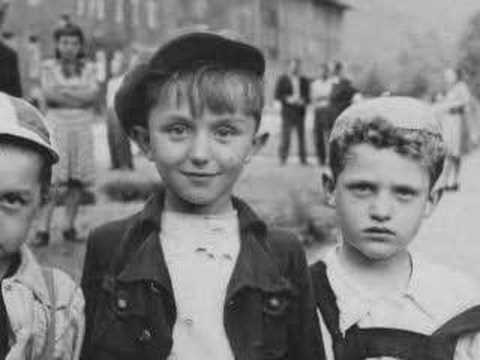
Jewish children in a Polish convent 1943
Sendler carefully recorded the names of the children on tissue paper which she then closed in glass jars and buried in her neighbor's garden. She wanted to ensure that, after the war, the children could be reunited with their families if possible or, if not, at least with their Jewish community.


In October 1943 Sendler was arrested by the Germans who interned her in the infamous Pawiak prison. Throughout the torture which included breaking  both of her legs Sendler never divulged any information about "her" children.  Zagota members obtained her release by bribing a guard just as Sendler was being led to her execution. She  lived out the rest of the war in hiding.


In addition to the 1965 Yad Vashem commemoration Sendler was honored by the Life in a Jar project run by the LMC. Life in a Jar includes a book, a website and a performance which has been viewed by audiences throughout the world.  


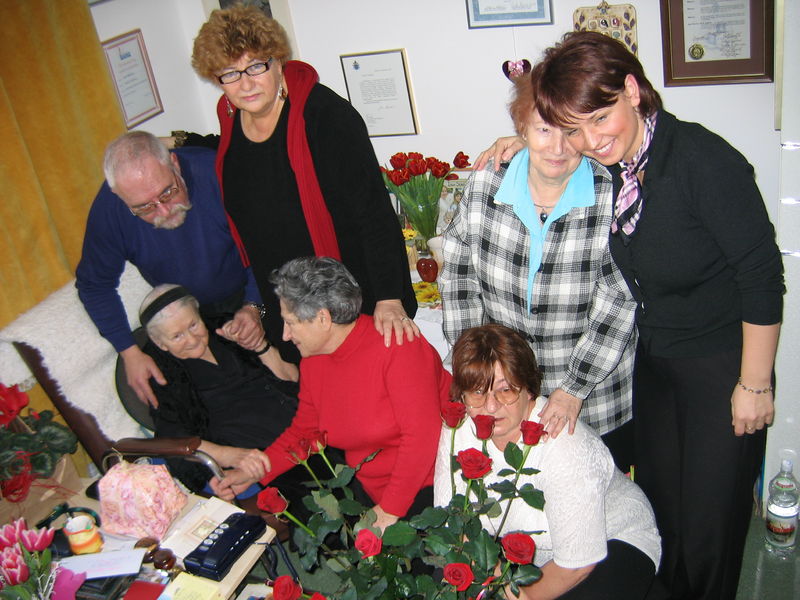
Irena Sedler with survivors


my source: the e-mail
In 2007 Irena was up for the Nobel Peace  Prize.  She was  not selected.  Al Gore won, for a slide show on Global Warming. 

Later another politician, Barack Obama, won for his work as a community organizer for ACOR

In MEMORIAM - 65 YEARS LATER
I'm doing my small part by forwarding this message.  I hope you'll consider doing the same.  It is now more than 67 years since the Second World War in Europe ended.
This e-mail is being sent as a memorial chain, In memory of the six million Jews, 20 million Russians, 10 million Christians and 1,900 Catholic priests who were murdered, massacred, raped, burned, starved and humiliated! 
   
 Now, more than ever, with Iran, and others, claiming the HOLOCAUST to be 'a myth', it's imperative to make sure the world never forgets, because there are others who would like to do it again.

This e-mail is intended to reach 40 million people worldwide!

Join us and be a link in the memorial chain and help us distribute it around the world.
Please don't just delete it.. It will only take you a minute to pass this along.

my source: NBC News


WARSAW, Poland – Elzbieta Ficowska leaned forward to place red roses on a new grave in Warsaw's Powawazki Cemetery. The 66-year-old woman also lit two votive candles. They were in memory of Irena Sendler, the person to whom she owes her very existence.

'A truly heroic act'
Ficowska was spirited out of the ghetto in a wooden carpenter's box when she was just six months old. Hidden on a truck beneath a pile of bricks – arranged to allow air to reach her – she had been drugged to prevent her from crying. With her in the box was a silver spoon engraved with her name and date of birth, probably put there by the mother she never knew.

"It was a truly heroic act for my mother to give away her baby with no guarantee it would survive," Ficowska said. "That was the painful decision my mother made." She did so because thousands of Jews were being sent each day to the gas chambers at Treblinka and other death camps in occupied Poland.

The infant girl was brought to Stanislawa Bussoldowa, a Roman Catholic midwife who also delivered the babies of Jewish women in hiding. Bussoldowa, a member of Sendler's clandestine network, adopted Ficowska and raised her as a Catholic.

The only physical trace of Ficowska's rescue is the spoon, which she keeps in a dark-blue velvet box on her mantle piece next to a photograph of her late husband, Jerzy, a poet.


But there are other reminders, she says, one of which is her life-long fear of close spaces. "That's why I think I'm so claustrophobic," she said, reflecting on having been hidden in the wooden box. "I'm always opening windows and doors wherever I go."

Professor Michael Glowinski in his Warsaw apartment.

'She saved my mother's life'

Another survivor saved by Sendler's heroic acts took a different path.

Professor Michal Glowinski, 74, always knew he was Jewish. When he was eight, he was taken out of the ghetto with his parents by a German soldier who had been bribed.

He recalls his childhood with intense clarity. "The color of the ghetto is the color of the paper that covered the corpses lying on the street before they were taken away," he wrote in his memoir, "Black Seasons." The book is a blend of two voices – that of Glowinski as a young child and as an adult.

We recently spoke in his narrow living room, the shelves crammed with books and scholarly journals. A professor of literature at the Polish Academy of Sciences in Warsaw, he described with animation how he and his mother pursued a tortuous escape route to avoid capture by the Gestapo.

Sendler eventually found his mother a job as a maid, using forged identity papers. "She saved my mother's life," Glowinski said. At the same time, Zegota, the umbrella organization of Sendler's underground railroad, arranged for him to be placed in an orphanage in eastern Poland where he was protected by impoverished nuns. Glowinski's father, meanwhile, found work as a day laborer, part of a deliberate plan to separate the family in hope of improving their individual chances of survival.


'Dominant element of my life'

In the orphanage, Glowinski said, he shut out the world that had existed before, never expecting his family to be reunited. He prepared himself only for bad news.

"I had grown deadened and indifferent," he wrote in his memoir. As a result, he did not rejoice when his mother came for him suddenly in February of 1945. His father also survived the war, and the whole family was reunited later that year. Glowinski revived the love for his parents he had smothered as a defense mechanism during the war and even dedicated his memoir, "Black Seasons," to his mother and father.

But, his experience during the Holocaust still affects him deeply.

"If one spends his life in the ghetto and then hiding, locked in a closet or in a stack of potatoes, his whole life is marked by that experience," he said. "It is the dominant element of my life that puts everything else in perspective. The childhood trauma remains the most important element of my biography."

Glowinski and Ficowska are just two of the thousands of Jews who are the beneficiaries of Sendler's heroism. Her far-reaching legacy extends to today's children.

"If she didn't save you," Ficowska's 10-year-old grandson, Karol, told his grandmother, "my mother would not be here, and I wouldn't be here either."


Don Snyder was a longtime NBC News Producer who is now retired and is a freelance writer.

Saturday, 15 March 2014

2nd SUNDAY OF LENT, celebrating the TRANSFIGURATION in the West and ST GREGORY PALAMAS in the East


THE MASS


The Mass opens with the introit of the Feast of the Transfiguration:
My heart said to You, I have sought Your countenance; I will seek Your countenance again, Lord. Do not turn Your face away from me. Ps. The Lord is my light and my salvation; whom will I fear?

All that is most authentic in Christianity takes place in the heart: the heart of Jesus in which God meets humanity, and from which eminates a love that is both divine and human; the heart of Mary which embraced the newly conceived Jesus in faith and humble obedience, from which eminates a love for Jesus and for the whole of humankind, a love which is a reflection of Jesus' love as the moon reflects the light of the sun; and, finally, the heart of each one of us,,  a temple made for Christ to live in and whom we receive in Communion. The more we seek his face in our heart, the more his presence will transform us, the more Christ's Transfiguration will become our mystery as well as His.   We seek Him through PRAYER and LECTIO DIVINA.
“Virtues are formed by prayer. Prayer preserves temperance. Prayer suppresses anger. Prayer prevents emotions of pride and envy. Prayer draws into the soul the Holy Spirit, and raises man to Heaven.” – St. Ephrem of Syria
Reading 1 GN 12:1-4A
The LORD said to Abram: “Go forth from the land of your kinsfolk and from your father’s house to a land that I will show you.  “I will make of you a great nation, and I will bless you; I will make your name great, so that you will be a blessing.  I will bless those who bless you and curse those who curse you. All the communities of the earth shall find blessing in you.”
 Abram went as the Lord directed him.

Sin has made it necessary, if we wish to receive a blessing, to detach ourselves from what we were in order to become what the Transfiguration wants us to be.   Hence, to be authentic, we need this time of Lent.  To become heirs of God's covenant with Abraham, we must answer God's command to  "Go forth from the land of your kinsfolk and from your father’s house to a land that I will show you."   The paradox is that we must become detached from this world in order to learn to love it as Christ loves it.  The more we love this world as Christ loves it, the more Christ is present in this world in and through us, the more we and the world around us share in Christ's transfiguration by Grace.  However, we cannot share in the Transfiguration without detachment, or fully share in the Paschal feast without Lent.

The call and sending forth of Abraham became a metaphor for the monastic life.   People are called by God to leave the superficial life of the "world" to go on an interior journey to find their deepest centre, the "heart" where Christ dwells.  First, they are accepted into a community of those who are called, the only real reason why they are together, and are given the benefit of experience of the community and are supported on their quest in the spirit of Abraham.   The Irish monks went even further: many of them chose to go on actual, physical pilgrimage, separating themselves from their own beloved communities and lands to seek God in a strange land. 
In the Celtic monks of Ireland the geographical pilgrimage and inner journey were more closely linked than was often the case with other wandering monks on the continent. They saw three forms of pilgrimage. Firstly, a geographical pilgrimage in body only where the spirit remains unchanged. Secondly, an inner pilgrimage, where, though the spirit and soul journey towards God, the body remains physically stable. Thirdly, the perfect pilgrimage where a man leaves his country in both body and soul and journeys in search of the absolute, the very source of being. So the ideal for the Celtic monks was both the geographical pilgrimage and the inner journey. Their pilgrimage was not a pilgrimage to a shrine and afterwards to return home, no, their ideal was the man who "for his soul's welfare abandoned his homeland for good or at least for many years." (5) The Celtic monk who withdrew "from home and kindred, even from the larger religious community" (6) to pass his life, or a period of his life, in solitude became one of the most important aspects of Irish asceticism and one of its chief legacies to later ages. 
(Celtic Monks and Thomas Merton)
 Reading 2 2 TIM 1:8B-10 

Beloved:


Bear your share of hardship for the gospel with the strength that comes from God. He saved us and called us to a holy life, not according to our works but according to his own design and the grace bestowed on us in Christ Jesus before time began, but now made manifest through the appearance of our savior Christ Jesus, who destroyed death and brought life and immortality to light through the gospel.
In the Gospel we are going to meet Christ manifesting his glory as Son of God, as God incarnate on Mount Tabor. It is the second of three theophanies in the synoptic gospels, the first being at his Baptism, and the third being his Crucifixion; and all three are inter-connected.   In fact, the first and second show us the true glory of the Crucifixion in which the faithfulness of Christ, constant to the shedding of the very last drop of his blood, manifests the faithfulness of his Father, and reveals the true Nature of the Tri-une God as self-emptying Love.   It is impossible in this world to portray the Crucifixion as glorious, even though, from God's perspective, it was: hence the need for the Baptism and Transfiguration theophanies.   Only in the Resurrection will we see the self-emptying Love of God as the source of all divine Power as Creator and Redeemer and the source of all eternal happiness.   It is also the source of all power and authority in the Church; but that will have to wait for another post.

To share in the self-emptying Love of God, the very life of the Blessed Trinity, involves us having to accept radical changes in our own lives.   Hence, in the second reading St Paul bids us: "Bear your share of hardship for the gospel with the strength that comes from God."   The hardship that comes from our striving to live in harmony with Christ who lives in us shall be borne with a strength that comes from Christ.  Our status as Christians is pure gift and is made manifest in Christ.


The Transfiguration: Law Through Moses,


Grace &Truth Through Jesus Christ 

This is an excerpt from a homily by St. Leo the Great (Sermo 51, 3-4, 8: PL 54, 310-311, 313) explaining the meaning of the Transfiguration of the Lord Jesus Christ on Mount Tabor.  Saint Leo contrasts the law, symbolized by Moses, with the grace of the gospel brought by Jesus Christ, providing a great Lenten reading used in the Roman office of readings for the 2nd second Sunday in Lent, given that the gospel of the day is the Transfiguration.

The Lord reveals his glory in the presence of chosen witnesses. His body is like that of the rest of mankind, but he makes it shine with such splendor that his face becomes like the sun in glory, and his garments as white as snow.

The great reason for this transfiguration was to remove the scandal of the cross from the hearts of his disciples, and to prevent the humiliation of his voluntary suffering from disturbing the faith of those who had witnessed the surpassing glory that lay concealed.

With no less forethought he was also providing a firm foundation for the hope of holy Church. The whole body of Christ was to understand the kind of transformation that it would receive as his gift. the members of that body were to look forward to a share in that glory which first blazed out in Christ their head.

The Lord had himself spoken of this when he foretold the splendor of his coming: Then the just will shine like the sun in the kingdom of their Father. Saint Paul the apostle bore witness to this same truth when he said: I consider that the sufferings of the present time are not to be compared to the future glory that is to be revealed in us. In another place he says: You are dead, and your life is hidden with Christ in God. When Christ, your life, is revealed, then you also will be revealed with him in glory.

This marvel of the transfiguration contains another lesson for the apostles, to strengthen them and lead them into the fullness of knowledge. Moses and Elijah, the law and the prophets, appeared with the Lord in conversation with him. This was in order to fulfil exactly, through the presence of these five men, the text which says: Before two or three witnesses every word is ratified. What word could be more firmly established, more securely based, than the word which is proclaimed by the trumpets of both old and new testaments, sounding in harmony, and by the utterances of ancient prophecy and the teaching of the Gospel, in full agreement with each other?

The writings of the two testaments support each other. The radiance of the transfiguration reveals clearly and unmistakably the one who had been promised by signs foretelling him under the veils of mystery. As Saint John says: The law was given through Moses, grace and truth came through Jesus Christ. In him the promise made through the shadows of prophecy stands revealed, along with the full meaning of the precepts of the law. He is the one who teaches the truth of the prophecy through his presence, and makes obedience to the commandments possible through grace.

In the preaching of the holy Gospel all should receive a strengthening of their faith. No one should be ashamed of the cross of Christ, through which the world has been redeemed.

No one should fear to suffer for the sake of justice; no one should lose confidence in the reward that has been promised. The way to rest is through toil, the way to life is through death. Christ has taken on himself the whole weakness of our lowly human nature. If then we are steadfast in our faith in him and in our love for him, we win the victory that he has won, we receive what he has promised.

When it comes to obeying the commandments or enduring adversity, the words uttered by the Father should always echo in our ears: This is my Son, the beloved, in whom I am well pleased; listen to him.Amen.


Light for the World: the Life of St. Gregory Palamas (1296–1359)
On the second Sunday of Great Lent, there is a great feast in the blessed city of Thessalonika, Greece. It is the feast of St. Gregory Palamas. On this day, the holy relics of the saint are taken from the Church of St. Gregory in a procession throughout the city, escorted by bishops, priests, sailors, policemen, and thousands of faithful. One wonders why his earthly remains are still held in such great veneration. How could his bones remain incorruptible more than six hundred years after his death? Indeed, St. Gregory’s life clearly explains these wondrous facts. It illustrates the inspired words of the apostles that our bodies are temples of the Holy Spirit (see 1 Corinthians 6:19) and that we are "partakers of the divine nature” (2 Peter 1:4).

A Childhood Passion for the Eternal

St. Gregory Palamas was born in the year 1296. He grew up in Constantinople (now Istanbul, Turkey) in a critical time of political and religious unrest. Constantinople was slowly recovering from the devastating invasion of the Crusades. It was a city under attack from all sides. From the west, it was infiltrated by Western philosophies of rationalism and scholasticism and by many attempts at Latinization. From the east, it was threatened by Muslim Turkish military invaders. The peace and faith of its citizens were at stake.

Gregory’s family was wealthy. His father was a member of the senate. Upon his father’s sudden death, Byzantine Emperor Andronikos II Paleologos (1282–1328), who was a close friend of the family, gave it his full financial support. He especially admired Gregory for his fine abilities and talents, hoping that the brilliant young man would one day become a fine assistant. However, instead of accepting a high office in the secular world, Gregory sought “that good part, which will not be taken away” from him (Luke 10:42).

Upon finishing his studies in Greek philosophy, rhetoric, poetry, and grammar, Gregory, at only twenty or twenty-two years of age, followed a burning passion in his heart. Like a lover who strives to stay alone forever with his loved one, Gregory was thirsty for this living water (see Revelation 22:17). Therefore, no created thing could separate him from the love of God (see Romans 8:39). He simply withdrew to Mount Athos, an already established community of monasticism. He first stayed at the Vatopedi Monastery, and then moved to the Great Lavra.

Gregory’s departure was not a surprise to the rest of his family. Many priests and monks, friends of the family, frequently visited the family home. The parents were careful to pass on to their children the “pearl of great price” (Matthew 13:46). Great wealth and high education were not a hindrance, but an excellent tool in their pursuit of salvation. As a result of their way of life and belief, Gregory’s mother, two brothers, and two sisters soon distributed all their earthly possessions to the poor and entered different monasteries.

Living the Spiritual Experience of the Church

In Athos, the novice Gregory took as his spiritual guide St. Nicodemos of Vatopedi Monastery. This holy man of prayer guided Gregory on the path of ascetic labor: prayers, vigils, fasting, continuous repentance, and monastic obedience. The young novice Gregory was especially attached to the prayer of the heart, also known as the Jesus Prayer: “Lord Jesus Christ, Son of God, have mercy on me, a sinner” (see Luke 18:38).

The experienced practice of the Jesus Prayer, requiring solitude and silence combined with physical exercises and breathing methods, is called "hesychasm" (from the Greek hesychos, meaning inner stillness, peace, or silence). Those practicing it are called "hesychasts." Inner silence of this kind makes us capable of listening to the whispers of the divine within us. "The kingdom of God is within you" (Luke 17:21). Therefore, the Jesus Prayer is the prayer of the whole person, involving the human body, mind, soul, and heart.

The hesychasts spoke and wrote about their unique experience. They taught people to pray without ceasing, as the Apostle Paul commands all Christians to do (1 Thessalonians 5:17). They explained that in prayer, man is filled from within with the eternal glory, with the divine light beheld at the Transfiguration of Christ on Mount Tabor. The hesychast Gregory explains:

For, on the day of the Transfiguration, that Body, source of the light of grace, was not yet united with our bodies; it illuminated from outside those who worthily approached it, and sent the illumination into the soul by the intermediary of the physical eyes; but now, since it is mingled with us and exists in us, it illuminates the soul from within. (Triads I. 3.38)

The Jesus Prayer is not a mantra, as in Eastern religions, and it cannot be taken as such. The prayer’s call for “mercy” involves inner repentance and change. It is also a prayer practiced within the sacramental life of the Church, a prayer combined with Holy Communion, confession, reading the Word of God, fasting, loving one’s neighbor, and so forth. Finally, it is not a prayer using “vain repetitions” or babble, but a prayer recited again and again, in persistence (Luke 18:1), from the inner heart of man reaching the divine heights of glory, confessing Christ as the Lord and Savior, in sincerity, humility, and faith.

For that prayer (the Jesus Prayer) is true and perfect. It fills the soul with Divine grace and spiritual gifts. As chrism perfumes the jar the more strongly the tighter it is closed, so prayer, the more fast it is imprisoned in the heart, abounds the more in Divine grace. . . . By this prayer the dew of the Holy Spirit is brought down upon the heart, as Elijah brought down rain on Mount Carmel. This mental prayer reaches to the very throne of God and is preserved in golden vials. . . . This mental prayer is the light which illumines man's soul and inflames his heart with the fire of love of God. It is the chain linking God with man and man with God. (Palamas, “Homily on how all Christians in general must pray without ceasing,” in E. Kadloubovsky and G. E. H. Palmer, Early Fathers of the Philokalia, London: Faber and Faber, 1981, pp. 412–415)

Such prayer was practiced from the early Christian period. The hesychasts were drawn by God's unconditional graceful love (Romans 5:15) to fill a certain human need around them. Many hesychasts abandoned their solitude to serve their brothers, “since he who loves God must love his brother also” (1 John 4:21). Some cared for the sick in hospitals, like St. Basil the Great in Caesarea; others helped the poor, like St. John the Almsgiver in Alexandria; and yet others welcomed the faithful for confession. Nevertheless, they did not abandon the Jesus Prayer and their inner silence. In this sense, all Christians are called to follow this hesychast way leading to salvation.

Let no one think, my brother Christians, that it is the duty only of priests and monks to pray without ceasing, and not of laymen. No, no; it is the duty of all of us Christians to remain always in prayer . . . every Christian in general should strive to pray always, and to pray without ceasing . . . this very name of our Lord Jesus Christ, constantly invoked by you, will help you to overcome all difficulties, and in the course of time you will become used to this practice and will taste how sweet is the name of the Lord. . . . For when we sit down to work with our hands, when we walk, when we eat, when we drink we can always pray mentally and practice this mental prayer—the true prayer pleasing to God. (“Homily on how all Christians in general must pray without ceasing”)

In addition to his spiritual practice and daily scriptural readings, St. Gregory studied the works of the great Fathers, theologians, and ascetics of the Church. Just as a scientist builds on the evidence and data provided to him by his predecessors, Gregory made a fascinating synthesis of the scriptural and patristic teaching on the prayer of the heart, combined with his personal experience.

Although the monk Gregory in his youth had diligently studied Greek philosophy, he was not influenced by its views on matter. Ancient Greek philosophy believes that the body imprisons the soul, and thus it detests matter. Christians respect the body, since Christ made the flesh a source of sanctification, and matter (water, oil, etc.) a channel of divine grace. In his writings, St. Gregory affirmed that man, united in body and soul, is sanctified by Jesus Christ, who took a human body at the Incarnation. “When God is said to have made man according to His image,” wrote St. Gregory, “the word man means neither the soul by itself nor the body by itself, but the two together.” In another place, he added:

Thus the Word of God took up His dwelling in the Theotokos in an inexpressible manner and proceeded from her, bearing flesh. He appeared upon the earth and lived among men, deifying our nature and granting us, after the words of the divine Apostle, “things which angels desire to look into” (1 Peter 1:12). (A Homily on the Dormition of the Theotokos and Ever-Virgin Mary)

Father Gregory, Teacher

His unquenched thirst for God’s sweetness experienced in prayer moved the righteous Gregory to live as a hermit in a cell outside the monastery. In the year 1326, the threat of Turkish invasions forced him, along with his Athonite brothers, to retreat to Thessalonika. There he was ordained to the holy priesthood.

As a priest, Gregory did not abandon his spiritual labor and hesychasm. He spent most of the week alone in prayer. On the weekends, he celebrated divine services and preached sermons. He cared for the youth, calling them to discuss religious issues with him. Father Gregory was not concerned about abstract problems of philosophy, but about Christian faith experienced in prayer. He wanted to preach solely about problems of Christian existence, which are more attractive and meaningful to the young.

Soon, many of his spiritual sons expressed their desire to live in a monastic setting. So in the serene area of Vereia, near Thessalonika, he established a small community of monks, which he guided for five years. In 1331 the saint withdrew to Mt. Athos and lived in solitude at the Skete of St. Sabbas. In 1333 he was appointed abbot of the Esphigmenou Monastery in the northern part of the Holy Mountain. In 1336 he returned to the Skete of St. Sabbas, where he devoted himself to theological writing, continuing with this work until the end of his life.

But amidst all this, in the 1330s events took place in the life of the Eastern Church that placed St. Gregory among the most prominent teachers of Orthodox spirituality.

The Challenge of Rationalism

Around the year 1330, a certain monk Barlaam arrived in Constantinople from Calabria, Italy. He was a famous scholar, a skilled orator, and an acclaimed Christian teacher. Barlaam visited Mt. Athos and became acquainted with hesychasm.

Barlaam valued education and learning much more than contemplative prayer. Therefore, he believed the monks on Mount Athos were wasting their time in contemplative prayer when they should be studying. He ridiculed the ascetic labor and life of the monks, their methods of prayer, and their teachings about the uncreated light experienced by the hesychasts. Countering the traditional stance of the Church that “the theologian is the one who prays,” Barlaam asked: “How can an intimate communion of man with the Divine be achievable through prayer, since the Divine is transcendent and ‘dwelling in unapproachable light’ (1 Timothy 5:16)? No one can apprehend the essential being of God!” Barlaam was convinced that God can be reached only through philosophical, mental knowledge—in other words, through rationalism.

The words of Barlaam were not merely a challenge to a few monks. They defied the experience of the Church as a whole. The West, with its rationalistic tendencies, has associated the image of God with man’s intellect. Barlaam’s mind was full of rational arguments, but his heart was cold. Certainly, life with God is not just information, but also experience. Our living God cannot be conceived and described only by study, but must be spoken about from experience. “Did not our heart burn within us while He talked with us on the road, and while He opened the Scriptures to us?” (Luke 24:32).

Journeying from Mt. Athos to Thessalonika and Constantinople, Barlaam clashed with the monks, refusing to test their way of vigils, prayer, and fasting, or to accept their spiritual experience. Unfortunately, many monks were swayed by his arguments and stood by his side. Deceived by considering the living faith as mere rational knowledge, Barlaam waged a war against the ascetics.

At the request of the Athonite monks, St. Gregory countered at first with verbal admonitions. But seeing the futility of such efforts, he put his theological arguments in writing. Thus appeared the Triads in Defense of the Holy Hesychasts in the year 1338.

The Presence of God in Prayer

In his Triads, Palamas interpreted the experience of the Church by presenting logical arguments, based on the Scripture and the writings of the Fathers. Addressing the question of how it is possible for humans to have knowledge of a transcendent and unknowable God, he drew a distinction between knowing God in His essence, or nature, and knowing God in His energies, actions, or the means by which He acts.

To elaborate more, he made a comparison between God and the sun. The sun has its rays, God has His energies (among them, grace and light). By His energies, God creates, sustains, and governs the universe. By His energies, He transforms creation and deifies it, that is, He fills the new creation with His energies as water fills a sponge. These actions or energies of God are the true revelation of God Himself to humanity. So God is incomprehensible and unknowable in His nature or essence, but knowable in His energies. It is through His actions out of His love to the whole creation that God enters into a direct and immediate relationship with mankind, a personal confrontation between creature and Creator.

Towards the year 1340 the Athonite ascetics, with St. Gregory’s assistance, compiled a general reply to the attacks of Barlaam, the so-called Hagiorite Tome. Since the heated arguments flared everywhere in the churches, a general council was held at Constantinople in the year 1341. In front of hundreds of bishops and monastics, St. Gregory Palamas held an open debate with Barlaam in the halls of the Great Church of Hagia Sophia. On May 27, 1341, the council accepted the position of St. Gregory Palamas that God, unapproachable in His essence, reveals Himself through His energies, which are directed towards the world and are able to be perceived, like the light of Tabor, but which are neither material nor created. The teachings of Barlaam were condemned as heresy, and he himself was anathematized and returned to Calabria.

Second Triumph of Orthodoxy

But the dispute between the Palamites and the Barlaamites was far from finished. Politics came into play, and the politicians used the disputed religious issue as a threatening tool against those who supported Palamas. The great turmoil led to five consecutive church councils. One of the many scholars who advocated Barlaam’s position was the Bulgarian monk Akyndinos, who wrote a series of tracts against St. Gregory. Emperor Andronikos III Paleologos (1328–1341) was Akyndinos’s friend. Fearing the emperor, Patriarch John XIV Kalekos (1341–1347) backed Akyndinos, calling St. Gregory the cause of all disorders and disturbances in the Church (1344). He had St. Gregory locked up in prison for four years. In 1347, John XIV was replaced on the patriarchal throne by Isidore (1347–1349), a friend of St. Gregory. He set St. Gregory free and ordained him archbishop of Thessalonika.

In 1351, a sixth and final council was held to settle the heated controversial issues in the church. The Council of Blachernae solemnly upheld the orthodoxy of Palamas’ teachings and anathematized and excommunicated those who refused them. The anathemas of the council of 1351 were included in the rite for the Sunday of Orthodoxy in the Triodion. This council was considered the second triumph of Orthodoxy (the first being the restoration of icons). Later on, the memory of St. Gregory Palamas came to be celebrated in the Church on the second Sunday of Great Lent.

Imprisoned by Muslims

Gregory’s suffering for Christ did not end here. Again, because of the political influence of the West in Thessalonika, its citizens were divided upon the issue proclaimed by the councils. They did not immediately accept St. Gregory as archbishop, so that he was compelled to live in various places. On one of his travels to Constantinople, the Byzantine ship on which he was sailing fell into the hands of the Turkish Muslims. They took Archbishop Gregory as a prisoner, but displayed tolerance toward him. Even in captivity, St. Gregory preached to Christian prisoners and even held many debates with his Moslem captors. His love and respect for all men made his captors admire him and treat him with reverence. A year later, St. Gregory was ransomed and returned to Thessalonika.

The Proclamation of His Sainthood

St. Gregory was a living Gospel. God gave him the gift of healing, especially in the last three years before his death. On the eve of his repose, St. John Chrysostom appeared to him in a vision. St. Gregory Palamas fell asleep in the Lord on November 14, 1359. The Virgin Mary, the Apostle John, St. Dimitrios, St. Antony the Great, St. John Chrysostom, and angels of God all appeared to him at different times. Nine years after his repose, a council in Constantinople headed by Patriarch Philotheos (1354–1355, 1362–1376) proclaimed the sainthood of Gregory Palamas. Patriarch Philotheos himself compiled the life and services for the saint.

When we hear in the Lenten Liturgy of the Presanctified Gifts, “The Light of Christ illumines all,” may we remember the call of the illumined Gregory for unceasing prayer and ascetic labor, that we be truly illumined by the light of the Resurrection.

This article originally appeared in AGAIN Vol. 27 No. 1


Tuesday, 11 March 2014

BREAKING NEWS: PAN-ORTHODOX SYNOD, 2016 plus METROPOLITAN HILARION ALFEYEV: WILL THE ECUMENICAL CHURCH SINK? plus MY COMMENTARY

Orthodox Churches Will Hold First Ecumenical Council In 1,200 Years In Istanbul
Reuters  | by  Dasha Afanasieva and Tom Heneghan
my source:   The Huffington Post


ISTANBUL, March 9 (Reuters) - Patriarchs of the world's 250 million Orthodox Christians ended a rare summit in Istanbul on Sunday calling for a peaceful end to the crisis in Ukraine and denouncing violence driving Christians out of the Middle East.

Twelve heads of autonomous Orthodox churches, the second-largest family of Christian churches, also agreed to hold a summit of bishops, or ecumenical council, in 2016, which will be the first in over 1,200 years.

The Istanbul talks were called to decide on the council, which the Orthodox have been preparing on and off since the 1960s, but the Ukraine crisis overshadowed their talks at the office of spiritual leader Ecumenical Patriarch Bartholomew.

As the prelates left a special service at Saint George's Cathedral, a woman in the crowd called out in Russian "Pray for Ukraine!" Two archbishops responded: "You pray, too!"

In their communique, the patriarchs called for "peaceful negotiations and prayerful reconciliation in the ongoing crisis in Ukraine" and denounced what they said were "threats of violent occupation of sacred monasteries and churches" there.

The Russian Orthodox Church, with 165 million members by far the largest in the Orthodox family, last month issued a statement along with Moscow's Foreign Ministry about what they said were attacks on revered historic monasteries in Kiev and Pochayiv in western Ukraine.

Russia has used the alleged threat to Russian-speakers in Ukraine, including the faithful of the Moscow-backed church there, to argue it has the right to intervene to protect them.

Closely aligned with President Vladimir Putin on Ukraine policy, the Russian church has a partner Ukrainian Orthodox Church mostly in the Russian-speaking east of the country that is loyal to the Moscow patriarchate.

There are two rival Orthodox churches mostly in western Ukraine, both meant to be Ukrainian national churches. Neither is part of the global Orthodox communion and the patriarchs' communique expressed the hope they would one day join it.


MIDDLE EAST CHRISTIANS

On the Middle East, the patriarchs denounced "the lack of peace and stability, which is prompting Christians to abandon the land where our Lord Jesus Christ was born."

They demanded the release of two prominent Syrian Orthodox archbishops kidnapped near Aleppo in April 2013.

Unrest in the Middle East over the past decade has killed or driven out large numbers of Christians, many of them Orthodox. Christians make up about 5 percent of the region's population.

Metropolitan Hilarion, head of the Russian church's foreign relations, said before the meeting that "extremist forces (are) attacking Christians, exterminating them, kidnapping priests, bishops and nuns, destroying Christian churches and doing everything to make those who believe in Christ to leave the Middle East."

One of the main questions facing the 2016 council will be how to balance relations among the Orthodox now that the Russian church, after seven decades of subjugation under communism, has reemerged as an influential voice in world Christianity.

Ecumenical Patriarch Bartholomew, who will meet Roman Catholicism's Pope Francis in Jerusalem in May, is the senior-most Orthodox leader, but his Istanbul-based church is tiny, with none of the resources the large Russian church enjoys.

Despite the prestige of his post, he has no authority over other churches, unlike the power the pope has in Catholicism, the world's largest church with 1.2 billion members.

The communique stressed that all decisions at the council would be taken by consensus, a position the Russians strongly defended in preparations for the meeting.

The 2016 council will be held in Hagia Irene, a Byzantine church building in the outer courtyard of the Ottoman sultans' Topkapi Palace. Now a museum, it has not been used as a church since the Muslim conquest of Constantinople in 1453.

Orthodox Christianity links 14 independent churches, based in Eastern Europe, Russia and the Middle East. The Damascus-based church of Antioch and the Czech and Slovak church did not attend the meeting because of disputes with other churches. (Tom Heneghan reported from Paris; Editing by Mark Trevelyan)
)
This interview took place at least eight years ago; but I don't think Metropolitan Hilarion's position has changed since then.   Just to continue the dialogue, I shall write a personal comment afterwards.- Fr David

Bishop Hilarion Alfeyev: Will the Ecumenical Ship Sink?


Q: Doesn’t membership in the World Council of Churches (WCC) obligate acceptance of its fundamental principles which contradict Orthodox ecclesiology?

Membership in the WCC does not require from any Church the recognition of all the other member churches of the WCC as churches in the literal sense of the word. This is stated in the foundational documents of the Council. If we call one Protestant community or another a “church,” which in our point of view has lost all the main traits of church-ness, then it is only because this community calls itself a church. Among the members of the WCC there are more than a few such groups, which in our view long ago lost the fundamental properties of church-ness or which never possessed them in the first place. We are speaking here of such properties as apostolic succession of the hierarchy, the mysteries, faith in the reality of the Eucharist, etc.

At the same time, the WCC is not simply a council of some charitable agencies or organizations with some church ties. This is a council of Christian communities which consider themselves churches and respect each other’s ecclesiological self-recognition. The respect Protestants hold for Orthodox ecclesiological principles is expressed in particular by the fact that the WCC does not accept church groups which, from the point of view of Orthodox, are schismatic (for example, the “Kiev Patriarchate”). The Orthodox Churches form a unified, almost autonomous group within the WCC, for whom 25% of the places in any leading organ of the Council are reserved. These 25% form a sort of “Orthodox lobby” which counteracts the non-orthodox majority. Included in the group of Orthodox member Churches in the WCC are the pre-Chalcedonian churches, which, though they are not in Eucharistic unity with the Eastern Orthodox Churches, share their theological, ecclesiological and moral positions.

Also, there are certain theological criteria in the WCC which are required for acceptance as Council member. A church group seeking membership in the WCC must confess faith in the Triune God-the Father, Son and Holy Spirit, confess Christ as God and Saviour, share the theological tenets of the Nicene-Constantinopolitan Creed. Organizations that do not meet these criteria cannot become members of the WCC. Despite all the differing positions, viewpoints, ecclesiological tenets, moral principles between Orthodox and Protestants, faith in the Holy Trinity and Jesus Christ as God and Saviour remain as the platform which unites the member churches of the WCC.

Q: What is the attitude of the Russian Orthodox Church of the Moscow Patriarchate to the “branch theory?”

The attitude of the Russian Orthodox Church towards the “branch theory” is defined in no uncertain terms in the same document “Basic Principles of Towards the Non-Orthodox,” as follows: “The Orthodox Church cannot accept the thesis that despite historical divisions, the essential, profound unity of Christians allegedly remained inviolate and that the Church must be perceived as coinciding with the entire “Christian world,” that Christian unity exists above denominational barriers and that the fragmentation of the churches is simply a result of the imperfect level of human relations. This concept states that the Church remains one, but that this unity is insufficiently apparent externally. In this model of unity, the task of Christians is not seen as re-establishing lost unity, but expressing unity which exists and cannot be taken away. This model repeats the teaching borne of the Reformation of the “unseen church.” Just as unacceptable is the concept, connected with the above idea, of the so-called “branch theory,” which supports the normalcy and even providential nature of the existence of Christianity as separate “branches.” It would be difficult add to this definition.

Q: Why has the General Assembly in Porto Alegre gone practically unnoticed by Orthodox society?

I wouldn’t say that it went unnoticed. Some Orthodox and church- focused media outlets commented. One internet site posted a photo- gallery entitled “Hot sun, warm sea, the embrace of ecumenical friends.” There was no warm sea at Porto Alegre, of course: the city is two hundred kilometres from the sea. But the sun was indeed hot. There were long hours of meetings over the course of ten days, and tense discussions, and the exhausting flights of the delegates from Europe and Latin America and back. If anyone thinks that this is all entertainment and leisure, he is deeply mistaken. This is work – difficult work, draining and thankless. It is thankless because within the “ecumenical concordance” you are considered either a retrograde or a conservative, and they quarrel with you and criticize you, while “at home,” you are accused of betraying Orthodoxy for the mere fact of participating in such an event.

The photo-gallery on that site was aimed at demonstrating a deliberately anti-Orthodox and frivolous spirit of the event. For instance, the camera photographed a normal discussion: people sitting on a chair and talking. The caption, however, reads: “Orthodox delegates during an ecumenical prayer.” Or a photograph depicting Brazilian dancing (during breaks in the meetings, in fact, local dance groups did perform). The caption reads: “Fire worship becomes a mandatory rite of ecumenism.”

It goes without saying that when the Russian Orthodox Church’s participation in inter-Christian dialogue is portrayed by the press in this manner, there is a concrete aim in mind: to spur mistrust for the hierarchy, to coax schismatic feelings. Such propaganda, as a rule, comes from the various schismatic structures: for example, the Old Calendar Greeks, or the “alternative Orthodox structures” at home. In the past, such propaganda caused no small trouble in the relationship between the Moscow Patriarchate and the Russian Orthodox Church Outside of Russia, and I am truly happy that at the present time we have the opportunity to discuss this problem face to face, in open and good-willed dialogue.

Q: Why does the ROC/MP continue to participate in the WCC?

The Moscow Patriarchate continues to participate in the WCC for a whole series of reasons. Some of them I mentioned in my previous explanation. In deciding the question of whether to remain in the WCC or withdraw, the Moscow Patriarchate is guided by the following tenets of the “Basic Principles of the Attitude Towards the Non-Orthodox,” namely: “In the matter of membership in various Christian organizations, the following criteria are to be met: the Russian Orthodox Church cannot participate in international (regional/national) Christian organizations in which a) the by-laws, rules or traditions require a rejection of the teaching or traditions of the Orthodox Church; b) the Orthodox Church does not have the opportunity to bring testament that it is the One Holy Catholic and Apostolic Church; c) the method of decision-making does not take into account the ecclesiological self-recognition of the Orthodox Church; d) the rules and procedures assume the force of “majority opinion.” The level and forms of participation of the Russian Orthodox Church in international Christian organizations must consider the internal dynamics, the agenda, priorities and character of these organizations as a whole. The scope and measure of the participation of the Russian Orthodox Church in international Christian organizations is determined by the Hierarchy based on notions of benefit to the Church.”

At the present time, the WCC does not fall under any of the four categories listed as criteria which make the participation of our Church in an international Christian organization impossible. We recognize the fact that in the period between the Harare and Porto Alegre Assemblies, the WCC did everything possible to address the wishes and demands of the Orthodox Churches with full responsibility. In this situation, withdrawal from the WCC would have been unfounded.

This does not mean that the Russian Orthodox Church will always remain members of the WCC. This organization is evolving: today it suits us more, tomorrow it may suit us less. In that case, membership will once again be an acute problem, as it was in the mid-1990′s.

I would like to share one observation I made over my ten years of participation in the WCC and other inter-Christian dialogues. Today, the Christian world is more clearly divided into two groups. On one hand is the group of Churches which insist on the need to follow Church Tradition: this group includes, mainly, the Orthodox Churches, the pre-Chalcedonian Churches and the Roman Catholic Church. On the other end of the spectrum are those Protestant communities in which following Tradition was never the norm, in which there is a rapid liberalization of doctrine, of moral principles and church practice. The latter group includes in particular, the majority of Protestant communities of the North. The chasm between the “churches of Tradition” and the churches of a “liberal bent” is now so significant, and it is widening so quickly, that it is difficult for me to foresee how this “inter-Christian collegiality” can be preserved in the near future.

The fact that our church already broke dialogue with the Episcopal Church of the USA and the Church of Sweden attests to the fact that the inter-Christian community, if you will, is “bursting at the seams.” It is difficult to doubt that other Northern Protestant Churches will follow the lead of the American Episcopalians and Swedish Lutherans, and that soon the bonds will tear on a regular basis. In this case, one fine day, “the union of Protestants and Orthodox,” as the WCC is today, will simply not bear the weight of accumulated differences, and the “ecumenical ship” will sink.

There are now two obvious essentially-differing versions of Christianity — the traditional and the liberal. The abyss that now exists divides not so much the Orthodox and Catholics, or the Catholics and Protestants, as the “traditionalists” and “liberals” (with all the conventions of such labels). Of course, there are defenders of traditional values in the Protestant camp (especially in the Southern churches, that is, Africa, Asia, Latin America). But a liberal attitude prevails among the Protestants.

In this situation, I suppose that a consolidation is needed in the efforts of those churches which consider themselves “Churches of Tradition,” that is, the Orthodox, Catholics and pre-Chalcedonians. I am not talking about the serious dogmatic and ecclesiological differences which exist between these Churches and which can be considered within the framework of bilateral dialogue. I am talking about the need to reach an agreement between these Churches on some strategic alliance, pact, union for defending traditional Christianity as such — defense from all modern challenges, whether militant liberalism, militant atheism or militant Islam. I would like to underline that a strategic alliance is my own idea, not the official position of the Moscow Patriarchate.

We do not need union with the Catholics, we do not need “intercommunion,” we do not need compromise for a doubtful “rapprochement.” What we do need, in my opinion, is a strategic alliance, for the challenge is made to traditional Christianity as such. This is especially noticeable in Europe, where de-Christianization and liberalization are occurring as persistently as the gradual and unswerving Islamization. The liberal, weakened “Christianity” of the Protestant communities cannot resist the onslaught of Islam; only staunch, traditional Christianity can stand against it, ready to defend its moral positions. In this battle, the Orthodox and Catholics could, even in the face of all the differences accumulated over the centuries, form a united front.

The strategic alliance I propose must first of all defend traditional moral values such as the family, childbirth, spousal fidelity. These values are subjected to systematic mockery and derision in Europe by liberals and democrats of all types. Instead of spousal fidelity, “free love” is promoted, same-sex partnerships are equated with the union of marriage, childbirth is opposed by “planned families.” Unfortunately, we have serious differences in these matters with most Protestants, not to speak of fundamental theological and ecclesiological character.

I will use as example a conversation with a Lutheran bishop, held within the framework of a theological dialogue with one of the Northern Lutheran churches. We tried to prepare a joint document in the defense of traditional values. We began to talk about abortion. I asked: “Can we put in the joint document that abortion is a sin?” The Lutheran bishop responded: “Well, of course, we don’t promote abortion, we prefer contraception.” Question: “But abortion is in the opinion of your church, a sin, or is it not?” Reply: “Well, you see, there are various circumstances, for example, the life of a mother or child could be in danger.” “Well, if there is no threat to either the mother or the child, then is abortion a sin, or not?” And the Lutheran bishop could not concede that abortion is a sin.

What is there to talk about then? Abortion is not a sin, same-sex marriage is fine, contraception-wonderful. There it is, liberal Christianity in all its glory. Besides Orthodox Christians, only the Catholics preserve the traditional view of family values in Europe, and in regard, as in many others, they are our strategic partners.

Q: In your opinion, what forms of ecumenism are acceptable, and which are utterly unacceptable in church life?

Intercommunion is unacceptable, the performance of “ecumenical services” together with churches with which we do not have Eucharistic communion is unacceptable, the “branch theory” is unacceptable, unacceptable are any compromises in theological, ecclesiological or moral matters. Unacceptable is theological syncretism, when the foundations of the Christian doctrine are diluted, when the fundamental postulates of the Orthodox faith are questioned.

Allowable, and necessary, are those forms of inter-Christian dialogue which give the Orthodox Church the possibility of freely witnessing the truth in the face of the non-orthodox world. One shouldn’t forget what the “Basic Principles” states: “Witness cannot be a monologue, since it assumes the existence of listeners and therefore of communication. Dialogue implies two sides, a mutual openness to communication, a willingness to understand, not only an “open mouth,” but also a “heart enlarged” (II Cor. 6:11).

Source: The Official Website of the Synod of Bishops of the Russian Orthodox Church Outside of Russia.


Leaving to one side what Metropolitan Hilarion says about the relationship between the Moscow Patriarchate and the World Council of Churches, and concentrating on what he says about its relationship with the Catholic Church, it is not hard to see that  there is an approach that differs considerably from that of Metropolitan John Zizioulas of the Greek Orthodox Church.   He reflects the alarm of Patriarch Kiril of  and his hierarchy about the way the theological conversations are going.The Russian Holy Synod rejects the Ravenna document where Catholics and Orthodox have reached considerable agreement.   Instead, he proposes a strategic alliance between "the churches of Tradition" against the forces of secular liberalism, militant atheism and militant Islam.   Speaking positively, we should join forces to coordinate our energies in the "new evangelisation" of society.

He writes:
We do not need union with the Catholics, we do not need “intercommunion,” we do not need compromise for a doubtful “rapprochement.” What we do need, in my opinion, is a strategic alliance, for the challenge is made to traditional Christianity as such. This is especially noticeable in Europe, where de-Christianization and liberalization are occurring as persistently as the gradual and .unswerving Islamization.
The difference between Zizioulas and Alfeyev is expressed in the phrase, "We do not need union with the Catholics."   The Russian Orthodox authorities are putting this on hold.   Why?


  1. There is the reason given by Metropolitan John Zizioulas, that any authority recognised in the Pope would have to ceded to the Patriarch of Constantinople as " first among equals", and the two patriarchates are rivals. However, the only alternative to the papacy that is on offer is the rather unedifying spectacle of two patriarchates jostling for first place.   However, caritas urget nos to look for a better explanation.
  2. My problem is that I have no way into the minds of the Patriarch and of Metropolitan Hilarion; but I can put myself in their shoes and ask what would alarm me, from an Orthodox hierarch's perspective, whether I favoured communion with Rome or not.
  3. What would alarm me is that these talks may well succeed within a life time; and nothing would be worse than abandonment of Orthodox - Catholic relations, except for a premature agreement before the two churches are ready for it.   About a thousand years ago, Metropolitan Hilarion has said, both sides agreed that it had no need for the other.   Until both Churches realise in their guts that they need each other, enough to forgive past wrongs, enough to change the perspective that each has of the other, an agreement would work havoc on the unity of both Churches, especially in  the Orthodox Church.   You only have to read what the abbots of Mount Athos have to say about Catholicism or remember the protests by monks in Rhodes to realise that there is a long way to go.   However much you disagree with them, however xenophobic they may be, they are Orthodox too; and the first task of a bishop is to nurture the unity of the Church and oppose anything that might endanger that unity.   

  4. Also, these conversations are happening just at a time when the Russian Orthodox Church needs to direct all its energies and all its personel to the re-conversion of Russia.   For the first time since 1917, the State is supporting them, the people are willing, lots of good will but  an appalling ignorance of things Christian among the majority of the population.   It would be a terrible tragedy if the upheaval brought about by a Christian Unity that only some want would interfere with this golden opportunity to evangelise.

  5. The solution is not to abandon the search for Orthodox - Catholic unity, but to let the search for doctrinal unity take second place and to look for areas where, whatever the attitude to that unity, all can agree that Orthodox and Catholics need each other.   Metropolitan Hilarion suggests that opposing the advancing secularism and re-converting people in the New Evangelisation are tasks too big for either Church alone.  Hopefully, as long as each side respects the rules for churches not in communion, no one will feal his identity threatened by this collaboration, and all, little by little, will come to realise how much we need each other.   When, from needing each other we come to love each other, then will be the time for the theologians to take over. 
This requires patience from those Catholics and Orthodox who love each other already.   It also requires humility because both sides believe they are already living the fullness of Catholicity and know that the other side is lacking.   
Personally, I believe both positions are true, because the fullness of Catholicism comes from the participation on both sides in the sacramental life of the Church and that the Christ of the sacraments IS the fullness of Catholicism; and our lack comes from the fact that we are lungs that should be breathing together but are, in fact, breathing separately.  

We look at each other and see the other´s faults very clearly.   A papacy without synodality (a horrible word - I prefer the Russian word "sobornost") would not be acceptable to any Orthodox; but it is argued by some Orthodox that, for synodality to work, there is need of a "protos" to call it and to be a focus of its unity.   If "sobornost" is of the essence of the Church, based on its eucharistic nature, then it is of the essence of the Church that there be a "protos" wherever "sobornost" manifests itself, whether at a local, regional or world-wide level.   This justifies their rejection of the papacy that wished to exercise its Petrine authority independently of synod, but accepts a papacy, even by divine right,  that works within the context of the world-wide communion of bishops whose unity is also divinely willed.      This view coincides with the desire of Catholic reformers, and especially Pope Francis, who want to re-model the Church according to Vatican II, and it answers the Orthodox problem - which many voice when they are not disputing with Rome - that the regional Orthodox churches simply cannot act together as one body.   "Oh Father David," said Archimandrite Barnabas, "We Orthodox talk about ´sobornost´ most and practise it least!"   

Pope Francis says quite constantly that we must learn from what the Holy Spirit has taught the Eastern Churches and consider Eastern solutions among our options when striving to solve our own Western problems.   This, together with the often repeated opinion that the Orthodox should not be required by us to accept dogmas that have been proclaimed by popes or councils since the separation, means that the area of disagreement has been reduced, and the western councils and papal decrees would be reduced in status by that very fact.   Actually, both Pope Francis´ inclusion in our pastoral options the positions adopted by the Orthodox, and the idea that western decisions made since the schism are not binding on the Orthodox, are based on the same doctrine, that Tradition springs from the synergy of the Holy Spirit and the Church and that it is chiefly expressed in liturgy; that the liturgy is the source of all the Church's powers and the goal of all its activity; that the universal Tradition takes shape and is chiefly expressed in various liturgical traditions; that all these traditions are the same Christian Mystery in depth, but answer different questions according to the situation of each church; and thus discrepancies has arisen due to schism.   Hence, Pope Francis recognises that Orthodox traditions are a true and authentic variant of the Tradition we have in common, even if we don't agree on all things

All this strengthens the Russian argument about the dangers of too hasty an optimism which can cause pain and disunity within the Orthodox Church (and, perhaps, the Catholic Church as well.)   Pope Francis too has emphasised that we must get to know one another before unity can take place.  In the end, unity will not be brought about by merely solving problems, but by a Spirit-filled ecclesial love of those who agree because they share the same Spirit-given vision.

Finally, this is the first time that I have heard the Pan-Orthodox Synod being called an ecumenical council.   Many would hold that it is history that decides whether a synod like this is an ecumenical council in the full sense of the word.


. 
THE KENOTIC PRESENCE OF THE FIRST AMONG EQUALS

Search This Blog

La Virgen de Guadalupe

La Virgen de Guadalupe

Followers

My Blog List

Fr David Bird

Fr David Bird
Me on a good day

Blog Archive