EXPAND YOUR READING!!

"Today the concept of truth is viewed with suspicion, because truth is identified with violence. Over history there have, unfortunately, been episodes when people sought to defend the truth with violence. But they are two contrasting realities. Truth cannot be imposed with means other than itself! Truth can only come with its own light. Yet, we need truth. ... Without truth we are blind in the world, we have no path to follow. The great gift of Christ was that He enabled us to see the face of God".Pope Benedict xvi, February 24th, 2012

The Church is ecumenical, catholic, God-human, ageless, and it is therefore a blasphemy—an unpardonable blasphemy against Christ and against the Holy Ghost—to turn the Church into a national institution, to narrow her down to petty, transient, time-bound aspirations and ways of doing things. Her purpose is beyond nationality, ecumenical, all-embracing: to unite all men in Christ, all without exception to nation or race or social strata. - St Justin Popovitch

Thursday, 5 September 2013

THE TRAPPIST NUNS OF AZEIR, SYRIA: "They are going to bomb us!!" Three cheers for the British Parliament!!

(thanks to Jim Forest)
Today we have no words, except those of the Psalms that the liturgical prayer puts onto our lips in these days:
Rebuke the Beast of the Reeds, that herd of bulls, that people of calves…oh God, scatter the people who delight in war…Yahweh has leaned down from the heights of his sanctuary, has looked down from heaven to earth to listen to the sighing of the captive, and set free those condemned to death…Listen, God, to my voice as I plead, protect my life from fear of the enemy; hide me from the league of the wicked, from the gang of evil-doers. They sharpen their tongues like a sword, aim their arrow of poisonous abuse…They support each other in their evil designs, they discuss how to lay their snares. “Who will see us?” they say. He will do that, he who penetrates human nature to its depths, the depths of the heart…Break into song for my God, to the tambourine, sing in honor of the Lord, to the cymbal, let psalm and canticle mingle for him, extol his name, invoke it…For the Lord is a God who breaks battle-lines! … Lord, you are great, you are glorious, wonderfully strong, unconquerable. 

We look at the people around us, our day workers who are all here as if suspended, stunned: “They’ve decided to attack us.” Today we went to Tartous…we felt the anger, the helplessness, the inability to formulate a sense to all this: the people trying their best to work and to live normally. You see the farmers watering their land, parents buying notebooks for the schools that are about to begin, unknowing children asking for a toy or an ice cream…you see the poor, so many of them, trying to scrape together a few coins. The streets are full of the “inner” refugees of Syria, who have come from all over to the only area left that is still relatively liveable…. You see the beauty of these hills, the smile on people’s faces, the good-natured gaze of a boy who is about to join the army and gives us the two or three peanuts he has in his pocket as a token of “togetherness”…. And then you remember that they have decided to bomb us tomorrow. … Just like that. Because “it’s time to do something,” as it is worded in the statements of the important men, who will be sipping their tea tomorrow as they watch TV to see how effective their humanitarian intervention will be….

Will they make us breathe the toxic gases of the depots they hit, tomorrow, so as to punish us for the gases we have already breathed in?

The people are straining their eyes and ears in front of the television: all they’re waiting for is a word from Obama!

A word from Obama? Will the Nobel Peace Prize winner drop his sentence of war onto us? Despite all justice, all common sense, all mercy, all humility, all wisdom?

The Pope has spoken up, patriarchs and bishops have spoken up, numberless witnesses have spoken up, analysts and people of experience have spoken up, even the opponents of the regime have spoken up…. Yet here we all are, waiting for just one word from the great Obama? And if it weren’t him, it would be someone else. It isn’t he who is “the great one,” it is the Evil One who these days is really acting up.

The problem is that it has become too easy to pass lies off as noble gestures, to pass ruthless self-interest off as a search for justice, to pass the need to appear [strong] and to wield power off as a “moral responsibility not to look away…”

And despite all our globalizations and sources of information, it seems nothing can be verified. It seems that there is no such thing as a minimal scrap of truth … That is, they don’t want there to be any truth; while actually a truth does exist, and anyone honest would be able to find it, if they truly sought it out together, if they weren’t prevented by those who are in the service of other interests.

There is something wrong, and it is something very serious…because the consequences will be wrought on the lives of an entire population…it is in the blood that fills our streets, our eyes, our hearts.

Yet what use are words anymore? All has been destroyed: a nation destroyed, generations of young people exterminated, children growing up wielding weapons, women winding up alone and targeted by various types of violence…families, traditions, homes, religious buildings, monuments that tell and preserve history and therefore the roots of a people…all destroyed. …

As Christians we can at least offer all this up to the mercy of God, unite it to the blood of Christ, which carries out the redemption of the world in all those who suffer.

They are trying to kill hope, but we must hold on to it with all our might.

To those who truly have a heart for Syria (for mankind, for truth…) we ask for prayer…abounding, heartfelt, courageous prayer.

The Trappist nuns from Azeir, Syria

August 29, 2013
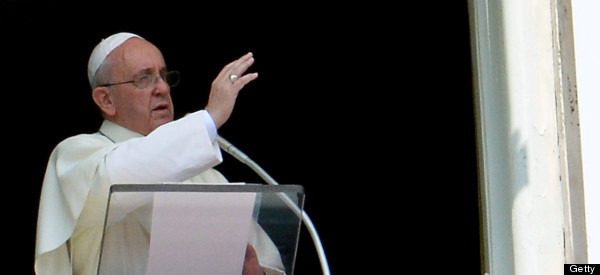
POPE FRANCIS ON SYRIA, "ABANDON THE FUTILE PURSUIT OF A MILITARY SOLUTION"

my source: The Huffington Post

 VATICAN CITY — Pope Francis urged the Group of 20 leaders on Thursday to abandon the "futile pursuit" of a military solution in Syria as the Vatican laid out its case for a negotiated settlement that guarantees rights for all minorities, including Christians. 

 In a letter Thursday to the G-20 host, Russian President Vladimir Putin, Francis lamented that "one-sided interests" had prevailed in Syria, preventing a diplomatic end to the conflict and allowing the continued "senseless massacre" of innocents. 

 "To the leaders present, to each and every one, I make a heartfelt appeal for them to help find ways to overcome the conflicting positions and to lay aside the futile pursuit of a military solution," Francis wrote as the G-20 meeting got under way in St. Petersburg. Francis has ratcheted up his call for peace in Syria amid threatened U.S.-led military strikes following an Aug. 21 chemical weapons attack near Damascus. He will host a peace vigil in St. Peter's Square on Saturday, a test of whether his immense popular appeal will translate into popular support for his peace message. 

 On Thursday, the Vatican summoned ambassadors accredited to the Holy See to outline its position on Syria, with Archbishop Dominique Mamberti, the Vatican's foreign minister, noting that the Aug. 21 attack had generated "horror and concern" from around the world. "Confronted with similar acts one cannot remain silent, and the Holy See hopes that the competent institutions make clear what happened and that those responsible face justice," Mamberti told the 71 ambassadors gathered. He didn't refer explicitly to the threat of military strikes to punish the Syrian regime for the attack. But he said the main priority was to stop the violence which he said risked involving other countries and creating "unforeseeable consequences in various parts of the world." The Vatican, he said, called for a return to dialogue and for the country to not be split up along ethnic or religious lines. Minorities, including Christians, must have their basic rights guaranteed, including their right to profess their religion, he said. And he called for the opposition to distance itself from extremists, isolate them "and openly and clearly oppose terrorism" – a reference to the al-Qaida-affiliated rebels fighting against the government. The Assad family's four-decade iron rule over Syria long has rested on support from the country's ethnic and religious minorities, including Christians, Shiite Muslims and Kurds. The Assad family and key regime figures are Alawites, followers of an offshoot of Shiite Islam, while most rebels and their supporters are Sunni Muslims. As a result, the Catholic Church has toed a careful line on Syria, staying largely silent at the start of the civil war even after the regime's brutal crackdown on dissent.

 As the violence raged, the Vatican stepped up its call for dialogue. And amid the U.S. threat of military intervention, Vatican and church officials have warned that a world war could erupt, with Christians in the region bearing the brunt of the fallout.

 On Wednesday, the head of Francis' Jesuit order, the Rev. Adolfo Nicolas, told a Catholic news agency that military action by the U.S. and France would be an "abuse of power." "I cannot understand who gave the United States or France the right to act against a country in a way that will certainly increase the suffering of the citizens of that country, who, by the way, have already suffered beyond measure," he was quoted as saying in the interview, the text of which was released by a Vatican-affiliated spokesman. 

 This week, Syrian government troops have been battling al-Qaida-linked rebels over Maaloula, a regime-held Christian village in western Syria. Some of its 2,000 residents still speak a version of Aramaic, the ancient language of biblical times believed to have been spoken by Jesus


Robin Barnwell, who directed and produced 'A History of Syria with Dan Snow', explains the challenges of filming amid the conflict, and describes the spirit of the Syrian people he met.
(thanks to Mystagogy)
The Syrian Airlines jet performed an alarming dive on its nighttime approach into Damascus airport in an attempt to avoid any hostile fire. The exterior lights on the aircraft were switched off to make it less visible to any rebel fighters attempting to shoot the plane down. Syrian army artillery rounds were flying through the air, thudding into residential suburbs not far from the airport.

Once we'd landed, I saw little of the Syria I knew from my previous two visits. The airport that had been the gateway to the country for tourists was quiet. The road to the centre of Damascus was eerily empty. Our driver drove as fast as he could, speeding us past signs welcoming us to Syria on a road that regularly comes under attack or is caught in the crossfire in a conflict that has now cost more than 70,000 lives and displaced millions. How, I wondered, had Syria and its people, whom I had such warm memories of, reached such a state?

Like many people, I first travelled to Syria in 1995 to immerse myself in the country's extraordinary and varied history. Now I was in Damascus to direct and film a documentary that would explain how history had helped shape and influence the appalling civil war that is tearing Syria and its different communities apart. It was a strange relief to be in Damascus, as visas for journalists and filmmakers, issued by the Syrian government, are difficult to obtain.

The programme's Middle East producer had doggedly convinced a suspicious Syrian Ministry of Information that now was the right time to make a history of Syria after weeks of officials telling us to come back after the 'current, temporary problems' were over. We persisted in pushing for access because history can help explain the current violence in Syria; violence that has become increasingly incomprehensible for audiences of news programmes around the world.

I was surprised by my own ignorance about the subject. It was only after weeks of reading and meetings with experts before actually arriving in Syria did I map the historical connections, linking present day events with the past. How though, were we to go about making a documentary in a country consumed by civil war?

Permission to film almost anything and anyone was frustratingly difficult to obtain. The official from the Syrian Ministry of Information assigned to take us around kept apologizing for the numerous new restrictions that had been put in place. Getting access to the beautiful Old City of Damascus now involved negotiating a way through sandbagged checkpoints past soldiers who were suspicious of foreigners and visibly on edge.


Surreally, though, Syrians were rushing around going about their daily business, seemingly ignoring the near constant sound of gunfire and fighter jets which screeched overhead to bomb targets in the suburbs. An even stranger sense of normality prevailed in other locations we filmed, particularly in Syria's coastal city Lattakia, where no fighting was taking place. We mingled with couples watching the sunset over the Mediterranean and for a moment one was back in pre-conflict Syria. But the effects of war were never far away.


thanks to Jim Forest

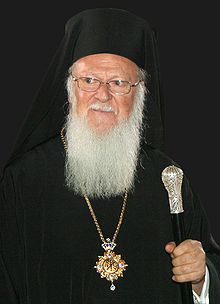
Ecumenical Patriarch Bartholomew I: let us pray for peace in Syria, together with Pope Francis

Istanbul (Agenzia Fides) - Ecumenical Patriarch Bartholomew I of Constantinople welcomes the appeal of the "brother in Christ, Francis Pope" to pray and fast for peace in Syria, asking also international leaders gathered in St. Petersburg for the G20 summit to promote a negotiating solution and not a military intervention with regards to the Syrian conflict. 

"The Ecumenical Patriarchate and us personally - says a note sent to Fides Agency - are anxiously following the developments of the situation in Syria and, more generally, throughout the Middle East. Let us pray that peace prevails. Only peace will also allow 

the Christians of the Middle East to continue to live without any impediment in those lands where they were born"

The Ecumenical Patriarch, to the participants at the G20 summit being held in St. Petersburg, hopes "that the decisions taken there help promote a peaceful solution to the Syrian conflict".

Also, reads the statement issued by the Patriarch, "the Church of Constantinople welcomes the initiative promoted by the Bishop of Rome Francis to appeal to Christians of the whole world so that next Saturday they all join in prayer and fasting, to ask that peace prevails in the martyred land of Syria, in the hope that God may enlighten the minds of policy makers, and thus military action is avoided that would inevitably result in the death of innocent victims".

"We, too," concluded the Ecumenical Patriarch, "welcome the appeal of our brother in Christ, Pope Francis to pray next Saturday for the same intention, as we always have done since the beginning of the bloody conflict in Syria". (GV) 


(Agenzia Fides 06/09/2013)

Monday, 2 September 2013

FATHER. JOHN BEHR ON EPISCOPACY IN THE EARLY CHURCH AND ITS IMPLICATIONS. MIKE AQUILINA ON THE SOCIOLOGY OF THE EARLY CHURCH

FATHER JOHN BEHR ON EPISCOPACY ACCORDING ST IGNATIUS OF ANTIOCH AND ST IRENAEUS & IN MODERN TIMES
A Double Take on Early Christianity
MIKE AQUILINA

Tracking the growth of Christianity 2,000 years ago is an ambitious undertaking for a sociologist. But Rodney Stark found it irresistible. Reading recent histories of early Christianity, he began to do some number-crunching. Soon, he says, it was a consuming "hobby." And, before long, he had written a best-selling book, The Rise of Christianity.


What he found in his study of the first Christian centuries was an astonishing growth rate in the number of Christians of 40 percent per decade. From a small band of twelve, the Church had grown to 6 million people by 300 A.D. Stark maintains that the Emperor Constantine did not so much ensure Christianity's success as acknowledge it. Constantine's edict of toleration in 313 was overdue recognition that the Church had already won the empire.

But Stark is most interested in how the West was won. Contrary to pious histories, he holds that most growth came from individual conversions, and from the merchant and upper classes rather than the poor. Contrary to secular feminist pieties, he makes the case that most converts were women, that women benefited greatly from conversion, and that women were leaders in the early Church.

He also shows the remarkable effects of charity on Church growth. Christians, he demonstrates, were much more likely to survive epidemics because they cared for one another. And the pagans who received Christian care were much more likely to become Christians. In times of epidemic, Stark says, pagan priests and doctors were among the first to leave town.

Stark's book vividly describes the misery of ordinary citizens of the pagan world. Most lived in cramped, smoky tenements with no ventilation or plumbing. Life expectancy was around 30 years for men and perhaps much lower for women. Hygiene was minimal. Medical care was more dangerous than disease, and disease often left its victims disfigured or dead. The human body was host to countless parasites, and tenements were infested by pests. For entertainment, people thronged to the circuses to see other people mutilated and killed.

Pagan marriage was no respite. Greco-Roman women suffered in predatory relationships rife with contraception, abortion, and unnatural sexual acts. But Christian marriage was a different story. Christian husbands and wives tended to love one another, as their religion required. Their mutual affection, Stark says, and their openness to fertility led to more children, and thus to a still higher growth in converts for the early Church.

Stark demonstrates that Christian doctrine, hope and charity transformed the Roman Empire -- one person at a time.

Of The Rise of Christianity, the Vatican's semi-official newspaper said: "It is ironic yet satisfying to find sociology, so often used to attack dogmatic Christianity, now objectively confirming some of the claims that Christianity has made for itself."

An agnostic, Stark teaches at the University of Washington in Seattle and lives nearby with his wife. Stark was interviewed by Mike Aquilina originally for Our Sunday Visitor.


Aquilina: You call The Rise of Christianity a "hobby." What attracted you to church history rather than building ships in bottles?

Rodney Stark: My hobbies -- with the exception of being a sports fan -- always involve books. I read some recent histories and said, "This is nice stuff." I read more and said, "I've got something I can contribute here, because their history is good, but their social science isn't."


Most Christians would find your work iconoclastic. You've undermined a number of received truths of church histories.
RS: I don't think anyone should take offense. My findings make the Christian accomplishment seem all the more wonderful.


One tradition you question is that Christianity was primarily a movement of the poor. Why?
RS: In the upper-class and senatorial families, and even the imperial family, there were many women who were Christians, even early on. In the 1920s we found a paving block dedicated to Erastus, whom Paul mentioned in his Letter to the Corinthians, and the block shows that Erastus was city treasurer. And there's reason to believe that we have in the early Church a quite literate group. When you read the New Testament, for example, ask: Who are these people talking to? The language there is the language used by educated people.


You describe the everyday misery of the ancient world. Did Christianity change that?
RS: It made it a lot more bearable. The Church didn't clean up the streets. Christians didn't put in sewers. So you still had to live with a trench running down the middle of the road, in which you could find dead bodies decomposing. But what Christians did was take care of each other. Their apartments were as smoky as the pagan apartments, since neither had chimneys, and they were cold and wet and they stank. But Christians loved one another, and when they got sick they took care of each other. Someone brought you soup. You can do an enormous amount to relieve those miseries if you look after each other.


You also argue for steady growth by individual conversions rather than by mass conversions. Why?
RS: We don't have a single documented case of mass conversion. Yes, there's the passage in the Book of Acts, and I'm not one of these people who say, "Don't trust the Bible." But you've got to understand what people meant by numbers in those times. Numbers were rhetorical exercises. You'd say a million when you really meant a hundred. What you're really saying is "lots." In Acts, I think the numbers are meant to say, "Look, wonderful things are happening." If the historical demographers are right, Jerusalem had about 25,000 people in it at the time. So if you start talking about eight or ten thousand converts, that's a little bit out of scale.


What about forced conversions?
RS: There weren't any in the time I'm talking about. Constantine didn't cause the triumph of Christianity. He rode off it. In fact, I'll go so far as to say he had many harmful effects. I don't believe establishment is good for churches. It gets them involved in the worldly realm in ways that are unsuitable and corrupting. By the end of Constantine's reign, we see people competing madly to become bishops because of the money. After that, Christianity was no longer a person-to-person movement.


Emperor Constantine did not so much ensure Christianity's success as acknowledge it. Constantine's edict of toleration in 313 was overdue recognition that the Church had already won the empire.


You look at the spread of Christianity beyond the empire, and you see that it was almost entirely by treaty and by baptizing kings. I think one reason medieval church attendance was so bad in Scandinavia and Germany was that these people weren't really Christians. If it hadn't been for the establishment of the Church, they might have been. Their lands would have become Christian because many people would have gone door-to-door to make Christians out of them -- and then baptized the king. It was bad for the Church. I think the current pope would agree with me; I think most medieval popes would have me burned for saying this.

American Catholics can understand it, though. They know how good it was for the Church to have to fight for its life in the United States. The old Protestant story was that the priest met the boat, and you had another boatload of Catholics. But that's not true; those people weren't used to going to church or contributing money. They had to be turned into Catholics. It was a remarkable feat. Posed with a challenge, the Church rose to it very well, and the American Church became a very strong Church, compared to the Latin American Church.


The received tradition is that many Christians were martyred. Yet you say that blood witnesses were few.
RS: There's a consensus among historians that the numbers weren't large at all, and that we may know the name of just about every single martyr. The Romans decided to attack the movement from the top. This would have worked with other religions because there was no bottom to paganism. Paganism was really temples on a shopping mall, and people were very casual about which ones they patronized. If the Romans knocked off the chief priest and took away government subsidy, a pagan temple would fold up.

So the empire went after Christianity the same way, thinking, "If we butcher the bishops, things will take care of themselves." Of course, it didn't work because there were 92 guys waiting in line to be bishop. That's what you get with a mass movement.


Does this minimize the traditional notion that "the blood of the martyrs is the seed of the Church"?
RS: Not at all. One thing about religious truths is that we have to take them on faith, and faith needs reassurance. What's more reassuring than noticing that some other people, whom you admire, are so certain that it's all true that they're willing to go the ultimate mile?


You seem to argue that Christianity was an overwhelmingly good social force for women.

Abortion was a huge killer of women in this period, but Christian women were spared that. And infanticide -- pagans killed little girls left and right. We've unearthed sewers clogged with the bones of newborn girls. But Christians prohibited this.


RS: It was! Christian women had tremendous advantages compared to the woman next door, who was like them in every way except that she was a pagan. First, when did you get married? Most pagan girls were married off around age 11, before puberty, and they had nothing to say about it, and they got married to some 35-year-old guy. Christian women had plenty of say in the matter and tended to marry around age 18.

Abortion was a huge killer of women in this period, but Christian women were spared that. And infanticide -- pagans killed little girls left and right. We've unearthed sewers clogged with the bones of newborn girls. But Christians prohibited this. Consequently, the sex ratio changed and Christians didn't have the enormous shortage of women that plagued the rest of the empire.


What about in the Church itself? How did women find their place?
RS: Women were leaders in the early Church. Paul makes that clear. And we have Pliny's letter in which he says that among the people he's tortured were two "deaconesses." We're not helped by Bible translations that render "deaconess" as "deacon's wife." I'm not saying the Church was ordaining women in those days. Of course it wasn't. But women were leaders, and probably a disproportionate number of the early Christians were women.

Some of their husbands may have been there, but the wives were there. There's another thing we don't understand: In every single society of which we have any evidence at all, women are more religious than men. We're not sure why. But what that has meant is that religious movements are disproportionately female. That's certainly turned up in the nineteenth and twentieth centuries, when we have good numbers. People in the early Church remarked on it back then. The early church fathers noticed that the movement had more women.


Even Christian historians tend to discount stories of the miraculous and minimize the veracity of early Church documents. Yet you accept the record to a remarkable degree.
RS: People in the patristics field recently were hammering me for naively accepting early accounts. One woman in particular mentioned the early Church's rules against abortion and female infanticide. She said that I didn't seem to understand that these prohibitions served all kinds of polemical purposes. Well, of course I know that, but I guess I'm so naive as to believe that groups that constantly hammer against something are more opposed to it than groups that, in their official writings, say that the same thing is laudable and wonderful and that we ought to do it.

From Plato and Aristotle on, the classical philosophers were advocating abortion. And infanticide was fine with them, too. Of course there were Christians who didn't obey, just like there are Mormons who chew tobacco. But the fact of the matter is: most of them don't. The same thing applies here.

And as for miracles: listen, people do get healed -- spontaneously and, it would seem, miraculously. There's not a physician on earth who would deny that. What is the agency? I don't know. But to deny that people in tabernacles around the United States are getting healed is simply wrong. There's no reason to deny that these things happen just because we don't share the definitions put on them by the people of another time or place.

Somebody at Harvard Divinity School might say, "That wasn't a miracle. It was a spontaneous remission." "Spontaneous remission" is the way the experts say, "We don't have the slightest idea what happened." The most hard-nosed scientist has no reason to doubt that miracles took place in the early Church. The opinions of the village atheist are as fundamentalist as anything any Baptist ever believed.


You conclude your book by saying that "what Christianity gave to its converts was nothing less than their humanity." What do you mean?

Christianity told the Greco-Roman world that the definition of "brother" has got to be a lot broader. There are some things you owe to any living human being.


RS: If you look at the Roman world, you have to question whether half the people had any humanity. Going to the arena to enjoy watching people tortured and killed doesn't strike me as healthy. I'm a big football fan, and I see that, when some player gets hurt, they bring out an ambulance and the doctors take twenty minutes to get him off the field. They don't want people hurt out there. But these people did. They'd shout, "Shake him! Jump up and down on him!"


Was Christianity's contribution just the elimination of the circus?
RS: No, it was a new idea. Among the pagans, you get the sense that no one took care of anyone else except in the tribal way. It's what we're seeing today in the Balkans -- you take care of your brothers, and you kill everybody else. Christianity told the Greco-Roman world that the definition of "brother" has got to be a lot broader. There are some things you owe to any living human being.


Does it concern you today that blood sports and violent movies are on the upswing, and that abortion and infanticide are back in force?
RS: It doesn't surprise me. It offends me. For more than a century we managed to have a period of considerable public decency. Now, maybe we're sliding back to what's more typical. I blame the courts, which say we can't censor anything but religion. The fact of the matter is, when I was a kid, there were rules about what you could and couldn't put in the mail or show in the movies.

Some of the rules may have been a bit much, but where do you stop? Where do you put your limits? If you don't set them pretty tight, pretty soon they're blowing people's heads off. It's not, for example, that people didn't get killed in movies in the forties, but there wasn't this enormous immorality. Evil was to be punished before the movie was over. And they didn't show all this gratuitous gore. There are people who get turned on by this stuff, and we are helping to build monsters.


You say that Christianity succeeded in part because of its high moral standards. Today, however, many churches are lowering the bar to make religion more popular. How would you analyze their efforts?
RS: They're death wishes. People value religion on the basis of cost, and they don't value the cheapest ones the most. Religions that ask nothing get nothing. You've got a choice: you can be a church or a country club. If you're going to be a church, you'd better offer religion on Sunday. If you're not, you'd better build a golf course, because you're not going to get away with being a country club with no golf course. That's what happened to the Episcopalians, Methodists, Congregationalists, Unitarians and, indeed, to some sectors of Catholicism.


Are Christians waking up to that?
RS: Most denominations are tightening up, and the reason is they're running out of members. The young clergy have religious motives that their elders didn't necessarily share. It was a much better job forty years ago. If you look at Catholic religious orders, you'll find that some are recovering and some new ones are growing. The only ones growing are those that have joint living arrangements instead of everybody living out on their own; that have organized worship; and that have some distinctive dress, so you can recognize them on the street as not just your average social worker or schoolteacher. That's a QED. If religion gets too cheap, nobody pays the price.

Here's an example: Do you really need to have hamburgers on Friday? Getting rid of meatless Fridays was a dreadful error the Church made. When I was a kid -- in a town that was 40 percent Catholic and 60 percent Protestant -- meatless Friday was an enormously important cultural marker. Every Friday reminded you who was like you and who wasn't like you -- and it did this in a way that wasn't harmful to either side.

Our high-school football games were always played on Friday nights. After the game, you took your girlfriend to the drive-in restaurant. And, around midnight, you could hear the Catholic kids count down to twelve and then shout, "Hamburger!" And everybody would laugh. It was a little social ritual that left Catholics with an enormous sense of solidarity. We thought hamburgers were the big denominational difference.


What do you make of the current pope?

RS: Here's someone who knows what it was like for the first Christians -- who knows what it is to fight for his Church's life. If an Italian bishop wants to know how many Catholics are in his diocese, he looks in the census books for the number of people who live nearby. A bishop in Communist Poland knew that the census and the number of Catholics were not the same number, and that it's important to get yourself some Catholics if you want to have a Church. Whether you agree with him or you don't, it's very clear this pope is a holy man, that he's on a mission.


You once wrote that you're "not religious as that term is conventionally understood."
RS: That's true, though I've never been an atheist. Atheism is an active faith; it says, "I believe there is no God." But I don't know what I believe. I was brought up a Lutheran in Jamestown, North Dakota. I have trouble with faith. I'm not proud of this. I don't think it makes me an intellectual. I would believe if I could, and I may be able to before it's over. I would welcome that.
on the catholic church by evangelical lutherans (good)
not always accurate but generally good


800-348-2440.

Sunday, 1 September 2013

SAINT JOHN CASSIAN ON CHRISTIAN LIFE and FR JOHN BEHR ON CHRISTIAN DEATH & CHURCH ORDER

OUR DIFFERENCE IN PRACTICE CONFORMS OUR UNITY IN FAITH
(ST IRENAEUS)

THE IMMEDIATE AND ULTIMATE GOALS OF THE CHRISTIAN LIFE
by SAINT JOHN CASSIAN
As we bind up another ecclesiastical year with a celebration of the Holy Belt of the Theotokos, and prepare to begin anew, it is fitting we also contemplate the goal not only of each ecclesiastical year, but of our entire Christian life in general.

The following text was written by St. John Cassian and comes from his book The Conferences. His "First Conference" was with Abba Moses the Ethiopian, who began by explaining what the immediate (purity of heart) and ultimate (acquiring the Kingdom of God; that is, the Holy Spirit) goals of the Christian life are for all Christians.

Those familiar with what St. Seraphim of Sarov said about this subject will notice a similarity of teaching.

By St. John Cassian

Book One, Chapter One

When I was in the desert of Scete, where are the most excellent monastic fathers and where all perfection flourishes, in company with the holy father Germanus (who had since the earliest days and commencement of our spiritual service been my closest companion both in the Coenobium and in the desert, so that to show the harmony of our friendship and aims, everybody would say that a single heart and soul existed in our two bodies), I sought out Abbot Moses, who was eminent amid those splendid flowers, not only in practical but also in contemplative excellence, in my anxiety to be grounded by his instruction: and together we implored him to give us a discourse for our edification; not without tears, for we knew full well his determination never to consent to open the gate of perfection, except to those who desired it with all faithfulness, and sought it with all sorrow of heart; for fear lest if he showed it at random to those who cared nothing for it, or only desired it in a half-hearted way, by opening what is necessary, and what ought only to be discovered to those seeking perfection, to unworthy persons, and such as accepted it with scorn, he might appear to lay himself open either to the charge of bragging, or to the sin of betraying his trust; and at last being overcome by our prayers he thus began.

Book One, Chapter Two

All the arts and sciences, said he, have some goal or mark; and end or aim of their own, on which the diligent pursuer of each art has his eye, and so endures all sorts of toils and dangers and losses, cheerfully and with equanimity, e.g., the farmer, shunning neither at one time the scorching heat of the sun, nor at another the frost and cold, cleaves the earth unweariedly, and again and again subjects the clods of his field to his ploughshare, while he keeps before him his goal; viz., by diligent labour to break it up small like fine sand, and to clear it of all briers, and free it from all weeds, as he believes that in no other way can he gain his ultimate end, which is to secure a good harvest, and a large crop; on which he can either live himself free from care, or can increase his possessions. Again, when his barn is well stocked he is quite ready to empty it, and with incessant labour to commit the seed to the crumbling furrow, thinking nothing of the present lessening of his stores in view of the future harvest. Those men too who are engaged in mercantile pursuits, have no dread of the uncertainties and chances of the ocean, and fear no risks, while an eager hope urges them forward to their aim of gain. Moreover those who are inflamed with the ambition of military life, while they look forward to their aim of honours and power take no notice of danger and destruction in their wanderings, and are not crushed by present losses and wars, while they are eager to obtain the end of some honour held out to them. And our profession too has its own goal and end, for which we undergo all sorts of toils not merely without weariness but actually with delight; on account of which the want of food in fasting is no trial to us, the weariness of our vigils becomes a delight; reading and constant meditation on the Scriptures does not pall upon us; and further incessant toil, and self-denial, and the privation of all things, and the horrors also of this vast desert have no terrors for us. And doubtless for this it was that you yourselves despised the love of kinsfolk, and scorned your fatherland, and the delights of this world, and passed through so many countries, in order that you might come to us, plain and simple folk as we are, living in this wretched state in the desert. Wherefore, said he, answer and tell me what is the goal and end, which incite you to endure all these things so cheerfully.

Book One, Chapter Three

And when he insisted on eliciting an opinion from us on this question, we replied that we endured all this for the sake of the kingdom of heaven.

Book One, Chapter Four

To which he replied: Good, you have spoken cleverly of the (ultimate) end. But what should be our (immediate) goal or mark, by constantly sticking close to which we can gain our end, you ought first to know. And when we frankly confessed our ignorance, he proceeded: The first thing, as I said, in all the arts and sciences is to have some goal, i.e., a mark for the mind, and constant mental purpose, for unless a man keeps this before him with all diligence and persistence, he will never succeed in arriving at the ultimate aim and the gain which he desires. For, as I said, the farmer who has for his aim to live free from care and with plenty, while his crops are springing has this as his immediate object and goal; viz., to keep his field clear from all brambles, and weeds, and does not fancy that he can otherwise ensure wealth and a peaceful end, unless he first secures by some plan of work and hope that which he is anxious to obtain. The business man too does not lay aside the desire of procuring wares, by means of which he may more profitably amass riches, because he would desire gain to no purpose, unless he chose the road which leads to it: and those men who are anxious to be decorated with the honours of this world, first make up their minds to what duties and conditions they must devote themselves, that in the regular course of hope they may succeed in gaining the honours they desire. And so the end of our way of life is indeed the kingdom of God. But what is the (immediate) goal you must earnestly ask, for if it is not in the same way discovered by us, we shall strive and wear ourselves out to no purpose, because a man who is travelling in a wrong direction, has all the trouble and gets none of the good of his journey. And when we stood gaping at this remark, the old man proceeded: The end of our profession indeed, as I said, is the kingdom of God or the kingdom of heaven: but the immediate aim or goal, is purity of heart, without which no one can gain that end: fixing our gaze then steadily on this goal, as if on a definite mark, let us direct our course as straight towards it as possible, and if our thoughts wander somewhat from this, let us revert to our gaze upon it, and check them accurately as by a sure standard, which will always bring back all our efforts to this one mark, and will show at once if our mind has wandered ever so little from the direction marked out for it.

Book One, Chapter Five

As those, whose business it is to use weapons of war, whenever they want to show their skill in their art before a king of this world, try to shoot their arrows or darts into certain small targets which have the prizes painted on them; for they know that they cannot in any other way than by the line of their aim secure the end and the prize they hope for, which they will only then enjoy when they have been able to hit the mark set before them; but if it happens to be withdrawn from their sight, however much in their want of skill their aim may vainly deviate from the straight path, yet they cannot perceive that they have strayed from the direction of the intended straight line because they have no distinct mark to prove the skillfulness of their aim, or to show up its badness: and therefore while they shoot their missiles idly into space, they cannot see how they have gone wrong or how utterly at fault they are, since no mark is their accuser, showing how far they have gone astray from the right direction; nor can an unsteady look help them to correct and restore the straight line enjoined on them. So then the end indeed which we have set before us is, as the Apostle says, eternal life, as he declares, "having indeed your fruit unto holiness, and the end eternal life" (Romans 6:22); but the immediate goal is purity of heart, which he not unfairly terms sanctification, without which the aforementioned end cannot be gained; as if he had said in other words, having your immediate goal in purity of heart, but the end life eternal. Of which goal the same blessed Apostle teaches us, and significantly uses the very term, i.e., σκοπός, saying as follows, "Forgetting those things which are behind and reaching forward to those that are before, I press toward the mark, for the prize of the high calling of the Lord" (Philippians 3:13-14): which is more clearly put in Greek κατὰ σκοπὸν διώκω, i.e., I press toward the mark, as if he said, "With this aim, with which I forget those things that are behind," i.e., the faults of earlier life, "I strive to reach as the end the heavenly prize." Whatever then can help to guide us to this object; viz., purity of heart, we must follow with all our might, but whatever hinders us from it, we must shun as a dangerous and hurtful thing. For, for this we do and endure all things, for this we make light of our kinsfolk, our country, honours, riches, the delights of this world, and all kinds of pleasures, namely in order that we may retain a lasting purity of heart. And so when this object is set before us, we shall always direct our actions and thoughts straight towards the attainment of it; for if it be not constantly fixed before our eyes, it will not only make all our toils vain and useless, and force them to be endured to no purpose and without any reward, but it will also excite all kinds of thoughts opposed to one another. For the mind, which has no fixed point to which it may return, and on which it may chiefly fasten, is sure to rove about from hour to hour and minute to minute in all sorts of wandering thoughts, and from those things which come to it from outside, to be constantly changed into that state which first offers itself to it.

Book One, Chapter Six

For hence it arises that in the case of some who have despised the greatest possessions of this world, and not only large sums of gold and silver, but also large properties, we have seen them afterwards disturbed and excited over a knife, or pencil, or pin, or pen. Whereas if they kept their gaze steadily fixed out of a pure heart they would certainly never allow such a thing to happen for trifles, while in order that they might not suffer it in the case of great and precious riches they chose rather to renounce them altogether. For often too some guard their books so jealously that they will not allow them to be even slightly moved or touched by any one else, and from this fact they meet with occasions of impatience and death, which give them warning of the need of acquiring the requisite patience and love; and when they have given up all their wealth for the love of Christ, yet as they preserve their former disposition in the matter of trifles, and are sometimes quickly upset about them, they become in all points barren and unfruitful, as those who are without the charity of which the Apostle speaks: and this the blessed Apostle foresaw in spirit, and "though", says he, "I give all my goods to feed the poor, and give my body to be burned, but have not charity, it profits me nothing" (1 Corinthians 13:3). And from this it clearly follows that perfection is not arrived at simply by self-denial, and the giving up of all our goods, and the casting away of honours, unless there is that charity, the details of which the Apostle describes, which consists in purity of heart alone. For not to be envious, not to be puffed up, not to be angry, not to do any wrong, not to seek one's own, not to rejoice in iniquity, not to think evil, etc., what is all this except ever to offer to God a perfect and clean heart, and to keep it free from all disturbances?

Book One, Chapter Seven

Everything should be done and sought after by us for the sake of this. For this we must seek for solitude, for this we know that we ought to submit to fastings, vigils, toils, bodily nakedness, reading, and all other virtues that through them we may be enabled to prepare our heart and to keep it unharmed by all evil passions, and resting on these steps to mount to the perfection of charity, and with regard to these observances, if by accident we have been employed in some good and useful occupation and have been unable to carry out our customary discipline, we should not be overcome by vexation or anger, or passion, with the object of overcoming which, we were going to do that which we have omitted. For the gain from fasting will not balance the loss from anger, nor is the profit from reading so great as the harm which results from despising a brother. Those things which are of secondary importance, such as fastings, vigils, withdrawal from the world, meditation on Scripture, we ought to practise with a view to our main object, i.e., purity of heart, which is charity, and we ought not on their account to drive away this main virtue, for as long as it is still found in us intact and unharmed, we shall not be hurt if any of the things which are of secondary importance are necessarily omitted; since it will not be of the slightest use to have done everything, if this main reason of which we have spoken be removed, for the sake of which everything is to be done. For on this account one is anxious to secure and provide for one's self the implements for any branch of work, not simply to possess them to no purpose, nor as if one made the profit and advantage, which is looked for from them, to consist in the bare fact of possession but that by using them, one may effectually secure practical knowledge and the end of that particular art of which they are auxiliaries. Therefore fastings, vigils, meditation on the Scriptures, self-denial, and the abnegation of all possessions are not perfection, but aids to perfection: because the end of that science does not lie in these, but by means of these we arrive at the end. He then will practise these exercises to no purpose, who is contented with these as if they were the highest good, and has fixed the purpose of his heart simply on them, and does not extend his efforts towards reaching the end, on account of which these should be sought: for he possesses indeed the implements of his art, but is ignorant of the end, in which all that is valuable resides. Whatever then can disturb that purity and peace of mind— even though it may seem useful and valuable — should be shunned as really hurtful, for by this rule we shall succeed in escaping harm from mistakes and vagaries, and make straight for the desired end and reach it.

Book One, Chapter Eight

This then should be our main effort: and this steadfast purpose of heart we should constantly aspire after; viz., that the soul may ever cleave to God and to heavenly things. Whatever is alien to this, however great it may be, should be given the second place, or even treated as of no consequence, or perhaps as hurtful. We have an excellent illustration of this state of mind and condition in the gospel in the case of Martha and Mary: for when Martha was performing a service that was certainly a sacred one, since she was ministering to the Lord and His disciples, and Mary being intent only on spiritual instruction was clinging close to the feet of Jesus which she kissed and anointed with the ointment of a good confession, she is shown by the Lord to have chosen the better part, and one which should not be taken away from her: for when Martha was toiling with pious care, and was cumbered about her service, seeing that of herself alone she was insufficient for such service she asks for the help of her sister from the Lord, saying: "Do You not care that my sister has left me to serve alone: bid her therefore that she help me" — certainly it was to no unworthy work, but to a praiseworthy service that she summoned her: and yet what does she hear from the Lord? "Martha, Martha, you are anxious and troubled about many things: but few things are needful, or only one. Mary has chosen the good part, which shall not be taken away from her." You see then that the Lord makes the chief good consist in meditation; i.e., in divine contemplation: whence we see that all other virtues should be put in the second place, even though we admit that they are necessary, and useful, and excellent, because they are all performed for the sake of this one thing. For when the Lord says: "You are careful and troubled about many things, but few things are needful or only one," He makes the chief good consist not in practical work however praiseworthy and rich in fruits it may be, but in contemplation of Him, which indeed is simple and "but one"; declaring that "few things" are needful for perfect bliss, i.e., that contemplation which is first secured by reflecting on a few saints: from the contemplation of whom, he who has made some progress rises and attains by God's help to that which is termed "one thing", i.e., the consideration of God alone, so as to get beyond those actions and services of Saints, and feed on the beauty and knowledge of God alone. Mary therefore "chose the good part, which shall not be taken away from her." And this must be more carefully considered. For when He says that Mary chose the good part, although He says nothing of Martha, and certainly does not appear to blame her, yet in praising the one, He implies that the other is inferior. Again when He says "which shall not be taken away from her", He shows that from the other her portion can be taken away (for a bodily ministry cannot last forever with a man), but teaches that this one's desire can never have an end.

Book One, Chapter Nine

To which we, being deeply moved, replied what then? will the effort of fasting, diligence in reading, works of mercy, justice, piety, and kindness, be taken away from us, and not continue with the doers of them, especially since the Lord Himself promises the reward of the kingdom of heaven to these works, when He says: "Come, you blessed of My Father, inherit the kingdom prepared for you from the beginning of the world. For I was an hungred, and you gave Me to eat; I was thirsty and you gave Me to drink" (Matthew 25:34-35). How then shall these works be taken away, which admit the doers of them into the kingdom of heaven?

Book One, Chapter Ten

Moses: I did not say that the reward for a good work would be taken away, as the Lord Himself says: "Whosoever shall give to one of the least of these, a cup of cold water only in the name of a disciple, verily I say unto you, he shall not lose his reward" (Matthew 10:42), but I maintain that the doing of a thing, which either bodily necessity, or the onslaught of the flesh, or the inequalities of this world, compel to be done, will be taken away. For diligence in reading, and self-denial in fasting, are usefully practiced for purifying the heart and chastening the flesh in this life only, as long as "the flesh lusts against the spirit" (Galatians 5:17), and sometimes we see that even in this life they are taken away from those men who are worn out with excessive toil, or bodily infirmity or old age, and cannot be practiced by them. How much more then will they come to an end hereafter, "when this corruptible shall have put on incorruption" (1 Corinthians 15:53), and the body which is now a natural body shall have risen "a spiritual body" (1 Corinthians 15:44) and the flesh shall have begun to be such that it no longer lusts against the spirit? And of this the blessed Apostle also clearly speaks, when he says that "bodily exercise is profitable for a little, but godliness (by which he certainly means love) is profitable for all things, having the promise of the life that now is and of that which is to come" (1 Timothy 4:8). This clearly shows that what is said to be useful for a little, is not to be practiced for all time, and cannot possibly by itself alone confer the highest state of perfection on the man who slaves at it. For the term "for a little" may mean either of the two things, i.e., it may refer to the shortness of the time, because bodily exercise cannot possibly last on with man both in this life and in the world to come: or it may refer to the smallness of the profit which results from exercising the flesh, because bodily austerities produce some sort of beginnings of progress, but not the actual perfection of love, which has the promise of the life that now is and of that which is to come: and therefore we deem that the practice of the aforesaid works is needful, because without them we cannot climb the heights of love. For what you call works of religion and mercy are needful in this life while these inequalities and differences of conditions still prevail; but even here we should not look for them to be performed, unless such a large proportion of poor, needy, and sick folk abounded, which is brought about by the wickedness of men; viz., of those who have grasped and kept for their own use (without however using them) those things which were granted to all by the Creator of all alike. As long then as this inequality lasts in this world, this sort of work will be needful and useful to the man that practices it, as it brings to a good purpose and pious will the reward of an eternal inheritance: but it will come to an end in the life to come, where equality will reign, when there will be no longer inequality, on account of which these things must be done, but all men will pass from these manifold practical works to the love of God, and contemplation of heavenly things in continual purity of heart: to which those men who are urgent in devoting themselves to knowledge and purifying the heart, have chosen to give themselves up with all their might and main, betaking themselves, while they are still in the flesh, to that duty, in which they are to continue, when they have laid aside corruption, and when they come to that promise of the Lord the Saviour, which says "Blessed are the pure in heart for they shall see God" (Matthew 5:8).

Book One, Chapter Eleven

And why do you wonder that those duties enumerated above will cease, when the holy Apostle tells us that even the higher gifts of the Holy Spirit will pass away: and points out that love alone will abide without end, saying whether there be prophecies, they shall fail; "whether there be tongues, they shall cease; whether there be knowledge, it will come to an end," but of this he says "Love never fails". For all gifts are given for a time as use and need require, but when the dispensation is ended they will without doubt presently pass away: but love will never be destroyed. For not only does it work usefully in us in this world; but also in that to come, when the burden of bodily needs is cast off, it will continue in far greater vigour and excellence, and will never be weakened by any defect, but by means of its perpetual incorruption will cling to God more intently and earnestly.

CHRISTIAN DEATH 
BY FATHER JOHN BEHR

Search This Blog

La Virgen de Guadalupe

La Virgen de Guadalupe

Followers

My Blog List

Fr David Bird

Fr David Bird
Me on a good day

Blog Archive