EXPAND YOUR READING!!

"Today the concept of truth is viewed with suspicion, because truth is identified with violence. Over history there have, unfortunately, been episodes when people sought to defend the truth with violence. But they are two contrasting realities. Truth cannot be imposed with means other than itself! Truth can only come with its own light. Yet, we need truth. ... Without truth we are blind in the world, we have no path to follow. The great gift of Christ was that He enabled us to see the face of God".Pope Benedict xvi, February 24th, 2012

The Church is ecumenical, catholic, God-human, ageless, and it is therefore a blasphemy—an unpardonable blasphemy against Christ and against the Holy Ghost—to turn the Church into a national institution, to narrow her down to petty, transient, time-bound aspirations and ways of doing things. Her purpose is beyond nationality, ecumenical, all-embracing: to unite all men in Christ, all without exception to nation or race or social strata. - St Justin Popovitch

Friday, 24 August 2012

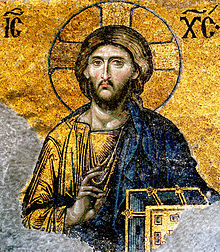
SIX SURPRISING WAYS JESUS CHANGED THE WORLD by John Oltberg/ and a Debate "A GOOD MUSLIM IS A BAD MUSLIM


by John Ortberg, Senior Pastor, Menlo Park Presbyterian Church

Both President Obama and Governor Romney have had to repeatedly address their views about an itinerant rabbi who lived 2000 years ago.

But why does anyone care?

Yale historian Jeroslav Pelikan wrote, "Regardless of what anyone may personally think or believe about him, Jesus of Nazareth has been the dominant figure in the history of Western Culture for almost 20 centuries. If it were possible, with some sort of super magnet, to pull up out of history every scrap of metal bearing at least a trace of his name, how much would be left?"

It turns out that the life of Jesus is a comet with an exceedingly long tale. Here are some shards of his impact that most often surprise people:

Children

In the ancient world children were routinely left to die of exposure -- particularly if they were the wrong gender (you can guess which was the wrong one); they were often sold into slavery. Jesus' treatment of and teachings about children led to the forbidding of such practices, as well as orphanages and godparents. A Norwegian scholar named Bakke wrote a study of this impact, simply titled: When Children Became People: the Birth of Childhood in Early Christianity.

Education

Love of learning led to monasteries, which became the cradle of academic guilds. Universities such as Cambridge, Oxford, and Harvard all began as Jesus-inspired efforts to love God with all ones' mind. The first legislation to publicly fund education in the colonies was called The Old Deluder Satan Act, under the notion that God does not want any child ignorant. The ancient world loved education but tended to reserve it for the elite; the notion that every child bore God's image helped fuel the move for universal literacy.

Compassion

Jesus had a universal concern for those who suffered that transcended the rules of the ancient world. His compassion for the poor and the sick led to institutions for lepers, the beginning of modern-day hospitals. The Council of Nyssa decreed that wherever a cathedral existed, there must be a hospice, a place of caring for the sick and poor. That's why even today, hospitals have names like "Good Samaritan," "Good Shepherd," or "Saint Anthony." They were the world's first voluntary, charitable institutions.

Humility

The ancient world honored many virtues like courage and wisdom, but not humility. People were generally divided into first class and coach. "Rank must be preserved," said Cicero; each of the original 99 percent was a personis mediocribus. Plutarch wrote a self-help book that might crack best-seller lists in our day: How to Praise Yourself Inoffensively.

Jesus' life as a foot-washing servant would eventually lead to the adoption of humility as a widely admired virtue. Historian John Dickson writes, "it is unlikely that any of us would aspire to this virtue were it not for the historical impact of his crucifixion...Our culture remains cruciform long after it stopped being Christian."

Forgiveness

In the ancient world, virtue meant rewarding your friends and punishing your enemies. Conan the Barbarian was actually paraphrasing Ghengis Khan in his famous answer to the question "what is best in life?" -- To crush your enemies, see them driven before you, and hear the lamentations of their women.

An alternative idea came from Galilee: what is best in life is to love your enemies, and see them reconciled to you. Hannah Arendt, the first woman appointed to a full professorship at Princeton, claimed, "the discoverer of the role of forgiveness in the realm of human affairs was Jesus of Nazareth." This may be debatable, but he certainly gave the idea unique publicity.

Humanitarian Reform:

Jesus had a way of championing the excluded that was often downright irritating to those in power. His inclusion of women led to a community to which women flocked in disproportionate numbers. Slaves--up to a third of ancient populations--might wander into a church fellowship and have a slave-owner wash their feet rather than beat them. One ancient text instructed bishops to not interrupt worship to greet a wealthy attender, but to sit on the floor to welcome the poor. The apostle Paul said: "Now there is neither Jew nor Gentile, slave or free, male and female, but all are one in Christ Jesus." Thomas Cahill wrote that this was the first statement of egalitarianism in human literature.

Perhaps as remarkable as anything else is Jesus' ability to withstand the failings of his followers, who from the beginning probably got in his way at least as much as they helped. The number of groups claiming to be 'for' Jesus are inexhaustible; to name a few: Jews for Jesus, Muslims for Jesus, Ex-Masons for Jesus, Road Riders for Jesus, Cowboys for Jesus, even Atheists for Jesus.

The one predictable element of this fall's U.S. presidential campaign is that it will be called "the most important election of our time." As the last one was called, and the next one will be.

Meanwhile, the unpredictable influence of an unelected carpenter continues to endure and spread across the world


A GOOD MUSLIM IS A BAD MUSLIM - A DEBATE AT THOMAS MORE COLLEGE

Thursday, 23 August 2012

FEAST OF ST BARTHOLOMEW, APOSTLE AND PATRON SAINT OF ARMENIA


SOURCE: MYSTAGOGY
The Monastery of Saint Bartholomew (Armenian: Սուրբ Բարթողոմէօս Վանք) was built in the fourth century at the site of the martyrdom of the Apostle Bartholomew. The burial site of the Apostle Bartholomew was inside of the Cathedral, which was an important pilgrimage place for Armenians before the genocide. It is located in what was then the Vaspurakan Province of Greater Armenia, now near the town of Başkale (Albayrak) in the Van Province of southeastern Turkey.

The monastery was built on the traditional site of the martyrdom of the Apostle Bartholomew[1] who is reputed to have brought Christianity to Armenia in the first century. Along with Saint Thaddeus, Saint Bartholomew is considered the patron saint of the Armenian Church.

At an unknown date after the Armenian Genocide in the early 20th century, the monastery came under the control of the Turkish military and its entire site now lies within an army base. The dome of its church was still intact in the early 1960's, but the whole structure is now heavily ruined.

The monastery St. Bartholomew partly was destroyed by the Turkish army using explosives in the 1960s under the Turkish state-sponsored policy of cultural genocide of Armenian monuments. The main Cathedral currently is in ruins and it is turned into a military installation near the Turkish town Albayrak. It is also strictly prohibited to take photos of the monastery and come close to the standing ruins of the Armenian temple because of the regime of high security around the site.

Turkish armed forces still practices using the ruins or preserved constructions of the Armenian churches and temples as a military installations and stores.

THE DIVINE LITURGY OF THE ARMENIAN CHURCH (with English commentary)

OTHER VIDEOS OF THE ARMENIAN LITURGY


THE BASIS OF THE DIVINE LITURGY by ELDER SOPHRONY (RUSSIAN ORTHODOX)
source: Mystagogy


By Metropolitan Hierotheos of Nafpaktos


Before I left the Holy Monastery I found an opportunity in a discussion to ask him [Elder Sophrony] about the Divine Liturgy, and he presented me with the basic teaching about it.

- "The Priesthood is not given to man as a reward for virtues, but as a gift for the edification of the Church. Someone becomes a Priest in order to celebrate the Divine Liturgy and to sanctify the people. Also, the Priesthood has a social significance, since he will deal with the construction of the church and the suffering of the Christians. So he also needs these qualifications, besides the spirituality."

- "The Divine Liturgy occurred one time forever. It has eternality. Every time the Divine Liturgy is celebrated, we rise up to its height. If we live some aspects of the Divine Liturgy, then we will understand its greatness, as happened with St. Seraphim of Sarov who saw angels coming to the church during the Small Entrance. We follow the Divine Liturgy, because we do not live it, or until we live it."

- "The Divine Liturgy teaches us to live with the heart. By celebrating the Divine Liturgy we keep the command of Christ: 'Drink this in remembrance of Me' (Lk. 22:19; 1 Cor. 11:24). That's why we say: 'Remembering this saving command....' This is not a psychological fact, but spiritual. Thus, every time we celebrate the Divine Liturgy, we are obedient to the word of Christ, and we penetrate the Divine Mystagogy in the Liturgy of Christ.

What God did once, remains now forever. This happens with the Divine Liturgy. One time Christ celebrated it in the Upper Room with the Mystical Supper, and this remains forever. The Christian, depending on the sacrifice he makes and his infiltration of Grace with this 'spirit' of the Divine Liturgy, receives Grace from God, and is purified of the passions. The Divine Liturgy in its perfection is the supplication and prayer for the entire world. This is the so-called royal officiation-priesthood. Thus, man reaches the end of the age. He does not wait for the day of the Lord, but this day of the Lord comes to him. So by Grace he becomes timeless."

From I Knew A Man In Christ: The Life and Times of Elder Sophrony, the Hesychast and Theologian (Οίδα άνθρωπον εν Χριστώ: Βίος και πολιτεία του Γέροντος Σωφρονίου του ησυχαστού και θεολόγου) by Metropolitan Hierotheos of Nafpaktos and Agiou Vlasiou. Translation by John Sanidopoulos.

Search This Blog

La Virgen de Guadalupe

La Virgen de Guadalupe

Followers

My Blog List

Fr David Bird

Fr David Bird
Me on a good day

Blog Archive