"Today the concept of truth is viewed with suspicion, because truth is identified with violence. Over history there have, unfortunately, been episodes when people sought to defend the truth with violence. But they are two contrasting realities. Truth cannot be imposed with means other than itself! Truth can only come with its own light. Yet, we need truth. ... Without truth we are blind in the world, we have no path to follow. The great gift of Christ was that He enabled us to see the face of God".Pope Benedict xvi, February 24th, 2012
The Church is ecumenical, catholic, God-human, ageless, and it is therefore a blasphemy—an unpardonable blasphemy against Christ and against the Holy Ghost—to turn the Church into a national institution, to narrow her down to petty, transient, time-bound aspirations and ways of doing things. Her purpose is beyond nationality, ecumenical, all-embracing: to unite all men in Christ, all without exception to nation or race or social strata. - St Justin Popovitch
Pope Benedict XVI consecrating the altar of La Sagrada Familia
"The liturgy is the time of God and space of God, and we must put ourselves there in the time of God, in the space of God, and not look at our watches. The liturgy is nothing less
than entering into the mystery of God, allowing ourselves to be carried to the mystery and to be in the mystery. It is the cloud of God that envelops us all."(Pope Francis)
The church is holy because it houses the gathered Church; and the altar is holy because it is on this table that Mass is celebrated. The real church is the Christian community: the
building is only a "church" by association. Realising this has led many to conclude that the value of the church building lies only in its function, and that it is not a holy place as the Temple in Jerusalem was
holy. They believe that only the community is holy, the building an optional extra. This has been reflected in the architecture of churches which often look like secular buildings; and movements like the Neo-catechumenists have been known
to prefer to celebrate the Eucharist outside church buildings. After all, the earliest christians had no church buildings.
If Le Corbusier defined a house as a "machine for living in", many modern churches look very much like "machines for praying in", sheltering the real Church
from the elements and nothing more, without being holy themselves.
In this post I am going to argue that this is contrary to Catholic Tradition, that a Catholic church is superior in its level of holiness to anything in the Jerusalem Temple, including
the Holy of Holies. If reverence and awe were appropriate in the Temple, as the Old Testament shows us they were, even more are they appropriate wherever the Catholic liturgy is celebrated, even if this holiness is only a reflected glory, its
source in the liturgical celebration of the Christian community.
Genesis gives a cosmic role to Adam and Eve, naming all the animals, giving meaning to Creation. They were made in his image, and so became the means by which God's holiness is poured
out on Creation, giving it meaning, as well as being Creation's voice by which it praises and gives thanks to the Lord. That is why Adam's fall was of cosmic importance, messing up everything. Christ’s salvation would restore us as human beings to this central role in the world’s sanctification.
Salvation, putting things right, is not just about souls: it is about restoring God's proper relationship to Creation as a whole, making it transparent to his divine Presence - making
it holy - through the activity of Christians who share by the Incarnation in the very life of God. In New Testament times, the Temple is replaced by Christ´s body and by Christians who are members of his body and share in the Spirit.
This does not mean that the there are no sacred places or things. The very contrary is true; and they are all over the place. Wherever the Christian life is lived becomes holy by association, far holier than any pre-Christian
site. It is the effect of the Incarnation.
Places are always holy to the degree that God is active in them; and things are holy to the degree that God uses them. God works in and through the Church and its members. Thus prisons
and places of torture become holy because in them Christian martyrs have suffered and died; hospitals become holy because Gods loves the patients through the sisters that run them; the streets of Calcutta became holy through
the activity of Mother Teresa's sisters; Christian homes become holy because of the Christian life that is nurtured there; music becomes holy to the extent that its beauty reflects the divine Glory. Most obvious of all,
churches are holy because, within them, heaven and earth unite in the Eucharist and God acts at every level of church life.
It is the function of Christian architecture and art to reflect this reality and mediate it to those who take part in the liturgy. Salvation in Christ restores to the Church and its members the means to sanctify places and things we use in the Lord's service, because we become Christ's instruments. Only at the Second Coming will the whole cosmos be holy in that way; but we Christians have a foretaste. Because of it, God's revelation, which comes to us as a Word, directed at our hearing, but then takes a myriad of shapes which are directed to all our senses. Thus we say with St John:
We declare to you what was from the beginning, what we have heard, what we have seen with our eyes, what we have looked at and touched with our hands, concerning the word of life - this life was revealed, and we have seen it.
Nowhere is this illustrated more than in a proper Christian church, whether from East or West. It is the function of Church art to manifest the reality that it reflects. Hence, whatever the style, a church that does not look like a church is a failure from the very start. It must proclaim by its design the Gospel that is preached within it and aid the disciples to respond. A church is a place where heaven and earth join together in Christ to gratefully receive and praise the Father in the unity of the Holy Spirit. A church must speak to us of God, the angels and the saints and thus help us to participate in a unity that transcends the local congregation.
It was Pope Benedict’s love of baroque art and architecture that is such a revelation. He explains that
“in line with the tradition of the West, the Council [of Trent] again emphasised the didactic and pedagogical character of art, but, as a fresh start toward interior renewal, it led once more to a new kind of seeing that comes from and returns within. The altarpiece is like a window through which the world of God comes out to us. The curtain of temperately is raised, and we are allowed a glimpse into the inner life of the world of God. This art is intended to insert us into the liturgy of heaven. Again and again, we experience a Baroque church as a unique kind of fortissimo of joy, an Alleluia in visual form.”
Pope Benedict looks at the Baroque church through the eyes that have been opened by an in-depth dialogue with Orthodoxy, a dialogue that is an essential ingredient of the authentic "spirit of Vatican II" and a characteristic of all the popes from Pope Paul VI to our present Pope Francis, and is absolutely pivotal in the theology of Pope Benedict who is, perhaps, one of the greatest Catholic theologians of the last hundred years.
We belong to the New Covenant in which all religious institutions of the Old Testament have been replaced by people. Christ is the temple, the priesthood, the only victim and the altar, and has also replaced the Law of Moses as the Way (). The Blessed Virgin Mary is the Ark of the New Covenant; and, when she was by Christ’s side while he was dying on the cross, she embraced both her Son and the whole human race in her love, and thus she came to represent all those down the ages whose synergy with the Holy Spirit would make them one with Christ on the cross: At the foot of the cross she was personally the Church in its relationship to Christ, the New Eve, and Mother of all the living.. As our icon depicts, she is personally what the Church is collectively: she is the Bride of the Lamb.. No longer is God’s dwelling place among the people on earth a building. Since Christ’s Ascension, the temple has been replaced by us who are participants in Christ; we are his body, the Church, in whom God dwells bodily, reconciling the world to himself. By participating in the Eucharistic fellowship we become “the one temple of his Spirit”. In the Old Testament, the covenanted presence of God depended on the temple and the fulfilment of the purification ritual on the Day of the Atonement; and the altar sanctified the offering so that it could be offered on no other altar; and hence the crisis when the temple was destroyed. In New Testament times, in contrast, it is the presence of God’s People that sanctifies the church; and it is the offering by Christ of himself that sanctifies our offering and the altar on which it is placed.
The Consecration of a Church
Pope Benedict consecrating La Sacrada Familia in Barcelona (2 mins)
When Russians drink a toast, they smash the glass afterwards to indicate that who or what they have toasted is of such importance that the glass should not be used for any inferior purpose. Where God speaks through his word, where the Holy Spirit transforms mere human beings into sons and daughters of God at baptism, where the Father responds to the prayer of the priest and sends the Holy Spirit to transform bread and wine into Christ’s body and blood and the praying congregation into the body of Christ and temple of the Holy Spirit, the Church thinks it appropriate that such a place, together with the chalice and pattern, are so holy that they should not be used for any inferior purpose. Changing uranium into nuclear fuel leaves behind material that remains radioactive for tens of thousands of years. The rite of dedication teaches us that a single Mass can make a building or an altar holy for as long as it exists. Of course, it is often necessary to celebrate the Mass and sacraments in places that cannot be reserved for worship and to use ordinary tables as altars; but it is so easy to underestimate the holiness of the Mass and sacraments if we do not give to those material things most associated with their celebration the kind of respect that human beings have naturally given to holy things throughout history. For this reason, it is better to consecrate the building that is used for Mass and to use it only for liturgical functions. I have a gut feeling that something is wrong when we use a room or a table that has been used for Mass over a period of time for some other purpose. In saying this we recognize that, in practical terms, while the holiness of any Mass can consecrate a building, not every Mass does. There needs to be the intention of the bishop to dedicate the building exclusively for the liturgy for a dedication to take place, and the Mass needs to be celebrated for that purpose.
On entering the church and after greeting the people, the bishop solemnly blesses water which shall be used, he says, to remind the people of their baptism and a “symbol of the cleansing of these walls and this altar”. There we have the parallel between baptism and the sprinkling of holy water on the altar and walls. These are ‘purified’, cleansed of any harmful influences due to sin and dedicated to an unspecified Christian use. Sprinkling them with holy water is a way to lay claim to them on behalf of the Church. From now on they are to be used in the continual passing through death to life that is the very pulse beat and rythm of the body of Christ. After sprinkling, the meaning of this act is summed up as follows:
May God, the Father of mercies, dwell in this house of prayer. May the grace of the Holy Spirit cleanse us, for we are the temple of his presence. Amen
After the readings, the homily, and the Creed, the Litany of the Saints is said in place of the General Intercession. The next main part is the Prayer of Dedication which contains the epiclesis. This is a place in the liturgy where, normally, the purpose of the rite is expressed succinctly. In the epiclesis, what is the Church asking the Father in Jesus’ name? In the solemn prayer of dedication, the bishop first states the purpose of the occasion:
Father in heaven, source of holiness and true purpose (…) today we come before you, to dedicate to your lasting service this house of prayer, this temple of worship, this home in which we are nourished by your word and your sacraments.
It then says that this house reflects the mystery which is the Church. The Church is fruitful and holy by the blood of Christ. It is the Bride made radiant by his glory, a Virgin splendid in the wholeness of her faith, and Mother blessed by the power of the Holy Spirit. We have seen that these are titles given to Mary as a person in her relationship with Jesus. The Church too has thee titles The prayer continues to use metaphor to describe the Church. It is a vineyard with branches all over the world and reaching up to heaven. The Church is a temple, God’s dwelling place on earth, made up of living stones, with Jesus Christ as the corner stone. The Church is a city set on a mountain, a beacon to the whole world, bright with the glory of the Lamb.
Now we come to the invocation (epiclesis) proper:
Lord, send our Spirit from heaven to make this church an ever-holy place, and this altar a ready table for the sacrifice of Christ.
It continues by asking that the sacraments celebrated here will be efficacious, that baptism will overwhelm sin and that the people will truly die to sin, that the people gathered round the altar may celebrate the memorial of the Paschal Lamb and be fed at the table of Christ’s word and Christ’s body. Then the perspective changes; and the prayer goes on to ask that what happens here will have a world-wide effect. It asks that the Eucharist, which is the prayer of the Church, “resound through heaven and earth as a plea for the world’s salvation”. It asks that through it the poor may find justice and the oppressed liberation. It then goes on to ask:
From here may the whole world clothed in the dignity of children of God, enter with gladness your city of peace.
This is a dimension of the Christian life little taught at an ordinary parish level. It asks that as we approach the heavenly Jerusalem with the blood of Christ and pass through the veil which is the body of Christ into the presence of the Father, we may take the whole human race with us. We are Catholics, not just for ourselves but for the salvation of the world, and the unity of the Church is an effective sign of the unity of the human race in the eyes of God The prayer ends with a doxology and the people answer, “Amen”.
Orthodox anointing/dedication of an altar (5 mins)
Next comes the anointing of the altar and the walls of the church with chrism. In the Eastern churches, the altar is often called the “throne” which recalls God’s presence in the Holy of Holies on the “throne of mercy” or “mercy seat”. Here is an ancient prayer at the altar, originally in Aramaic, the language of Our Lord:
“Before the glorious throne of Thy majesty, my Lord, and the high and exalted seat of Thy honour and the awesome judgement seat of the power of Thy love, and the absolving altar which Thy will has established and the place where Thy honour dwells, we, Thy people and the sheep of Thy pasture, with thousands of Cherubim which sing halleluiahs to Thee, ten thousand Seraphim and Archangels which hallow Thee, do kneel and worship and confess and glorify Thee at all times, O Lord of all, Father, Son and Holy Spirit, for ever. Amen.
Symeon of Thessalonica wrote of the anointing of the altar:
The Altar is perfected through Holy Chrism. A prophetic hymn is chanted, signifying the incoming presence and praise of God. “The Lord comes,” says the Bishop, referring to Christ’s First and Second Coming, and the continuous presence of the Spirit with us. …Since the Chrism is poured out in the name of Christ our God, and the Table represents Him Who was buried therein, it is anointed with Chrism; and it becomes Holy Chrism for it receives the Grace of the Spirit. And for this reason, as we have said, the “Alleluia” is chanted, for God dwells in there; and the Altar becomes the workshop of the Gifts of the Spirit. For on it the Awesome and Mystical Sacraments are celebrated: the ordination of priests, the most Holy Chrism, and the Gospel is placed thereon, and beneath it the Holy Relics of the Martyrs are deposited. Thus this table becomes an Altar of Christ, and a Throne of Glory, and the dwelling-place of God, and the Tomb and Grave of Christ and a place of Rest.
Prayer of Dedication 21. The celebration of the eucharist is the most important and the one necessary rite for the dedication of an altar. Nevertheless, in accordance with the universal tradition of the Church in both East and West, a special prayer of dedication is also said. This prayer is a sign of the intention to dedicate the altar to the Lord for all times and a petition for his blessing. Rites of Anointing, Incensing, Covering, and Lighting the Altar 22. The rites of anointing, incensing, covering, and lighting the altar express in visible signs several aspects of the invisible work that the Lord accomplishes through the Church in its celebration of the divine mysteries, especially the eucharist. a) Anointing of the altar: The anointing with chrism makes the altar a symbol of Christ, who, before all others, is and is called ‘The Anointed One’; for the Father anointed him with the Holy Spirit and constituted him the High Priest so that on the altar of his body he might offer the sacrifice of his life for the salvation of all. b) Incense is burned on the altar to signify that Christ’s sacrifice, there perpetuated in mystery, ascends to God as an odour of sweetness, and also to signify that the people’s prayers rise up pleasing and acceptable, reaching the throne of God.20 c) The covering of the altar indicates that the Christian altar is the altar of the eucharistic sacrifice and the table of the Lord; around it priests and people, by one and the same rite but with a difference of function, celebrate the memorial of Christ’s death and resurrection and partake of his supper. For this reason the altar is prepared as the table of the sacrificial banquet and adorned as for a feast. Thus the dressing of the altar clearly signifies that it is the Lord’s table at which all God’s people joyously meet to be refreshed with divine food, namely, the body and blood of Christ sacrificed. d) The lighting of the altar teaches us that Christ is ‘a light to enlighten the nations’;21 his brightness shines out in the Church and through it in the whole human family. D. Celebration of the Eucharist 23. After the altar has been prepared, the bishop celebrates the eucharist, the principal and the most ancient part of the whole rite,22 because the celebration of the eucharist is in the closest harmony with the rite of the dedication of an altar: For the celebration of the eucharistic sacrifice achieves the end for which the altar was erected and expresses this end by particularly clear signs.
The altar is the place where what is depicted in icons is present for real. A crucifix depicts Christ’s sacrifice on the cross, while on the altar is the sacrifice itself. The Blessed Virgin, angels and saints are depicted in icons, but they are present at every Mass, joining with us in crying “Holy, holy, holy.”. Everything that has a visual dimension can be depicted in icons, but the altar is the throne of Him who cannot be depicted. For this reason our attention is not directed towards the structure of the altar, but to its surface and the empty space above it. For this reason the empty space should not be cluttered up with unnecessary books or furniture - it is not a bench to put things on - so that priest and people will have a clear, uninterrupted view of the paten and chalice which are central to the whole action of the Mass.
This cannot happen without the Holy Spirit. As the anointing with chrism is done in silence, we must go to the epiclesis of the consecration of chrism on Maundy Thursday to look further into the significance of the anointing.
Only in the second consecratory prayer over the chrism is there any mention of the intended effect of anointing places and things. It asks:
May the splendour of holiness shine on the world from every place and thing signed with this oil.
The “splendour of holiness” is nothing less than the effect on people and things when God makes his presence felt. When the walls and altar are anointed, the bishop in the name of Christ and the Church is asking the Father to send the Spirit on them so that the church may become a place of contact between God and the world. The “splendour of holiness” may shine from the church building as a reflection of the “glory of the Lamb” which shines from the Church made up of living stones, so that the building will become a true symbol of the living Church.
“The nations will walk by its light. And the city has no need of sun or moon to shine on it, for the glory of God is its light, and its lamp is the Lamb. The nations will walk by its light, and the kings of the earth will bring their glory into it” This can only happen if God takes the initiative; but the bishop anoints them with the confidence that the Father will answer this prayer positively. The church and the altar have become a place of meeting with Christ where we contact him, because he takes the initiative, using this sacred space as his instrument through the power of the Spirit. We enter into the splendour of holiness when we enter a church, and the altar becomes the central point of focus when we celebrate. It is a challenge to the architect and to those who are responsible for the lay-out of the church building, as well as those who organise and celebrate the liturgy, to help people realise the holiness of this place of meeting between God and his people.
Other Parts of the Church
The General Instructions from the Roman Missal have more to say about a church.. There are other focal points in a church, though they all direct our attention eventually to the altar. The first is the ambo which is the desk from which the word of God is proclaimed. The sacredness of this proclamation recalls God’s proclamation of the Law on Mount Sinai and God speaking to Isaiah from his throne in heaven. When the reader says, at the end of the reading, “The word of God”, he is making an enormous claim, the impact of which is normally lost, because it is dismissed as mere ritual. He is saying that GOD is speaking,, as really and as immediately as in any theophany of the Old Testament. When reading the word of God, the reader has lent his voice to Christ who is speaking “whenever the word of God is read in church”. To underline this fact, in the General Instructions for the Roman Missal (272) it lays down that the ambo like the altar, should be permanent and fixed to the ground; it must not be used for any other purpose, except for responsorial psalms and the Prayers of the Faithful who are praying in Christ’s name. The priest is not to read the notices, the monitor is not to makes his admonition, nor the choirmaster direct the choir from the same ambo that is used for the word of God. This ambo must be where everybody can see and hear. Evidently, everything must be done not to give the impression those who read are only fulfilling a ritual, or only reading a not very interesting text, simply because it is written down. Reading the word of God is a ministry and should be reserved to those who have been designated and who know what they are doing and why they are doing it and are prepared spiritually for the task.
Let us now summarize what the liturgy tells about the church building. Firstly, the true temple, altar, priest and sacrifice is Christ, and, by extension, his body the Church. The true Church is the community which we enter by baptism and which is formed into the body of Christ by the Eucharist. The church building is an icon of the Church. It gets its name for this reason. It gets its sacred character from the fact that the word of God is heard there and the sacraments celebrated there, and, most especially, because it is the place where the Church gathers for the Eucharist. By using it we participate in the mystery it represents. However, this dignity does not belong to the building permanently until it is consecrated by the bishop who blesses it with water and anoints it with oil, an analogy with baptism and confirmation. When something is blessed with holy water, it is the Church and Christ through the Church laying claim to whatever is blessed, without necessarily determining its use. The blessing with water is an invitation to those taking part to renew their baptism and is used to purify the building from any contamination by sin. This blessing is also used when the church is merely blest. It is the anointing that gives the church its permanent function. Consecration of a church is not a sacrament because it is of ecclesiastical origin, but it is sacramental, in that the gesture of anointing expresses both the Church’s petition and God’s response. The bishop consecrates, but it is the Holy Spirit who makes the church holy, claiming it on behalf of the risen Jesus who is Lord of heaven and earth. Anyone who enters it with the right dispositions shares in the mystery of the Church. Moreover, the building speaks to the world of God by its very presence in the world. Of course, if it looks like a factory or a space ship, it probably won’t be able to fulfil that function, but that is its function.
Within the church, the altar is the only piece of furniture blessed with water and anointed with oil. It should be fixed and in a prominent place, so that all eyes are drawn to it. In a church of the Latin Rite, it is the only object that is so blessed and anointed. On its surface, the Holy Trinity is manifested in the consecration of the bread and wine, the Church is identified with Christ in his sacrifice to the Father, and is taken up through Christ’s death, resurrection and ascension into the presence of the Father, passing through the veil of the Holy of Holies by communion in Christ’s body. It is from the altar that the people are sent forth to be witnesses to “what we have heard, what we have seen with our eyes, what we have looked at and touched with our hands."
The day on which Pope Francis moved on from Chile to Peru marked the beginning all around the world of the annual week of prayer for Christian unity, which culminates on January 25 with the feast of the conversion of Saint Paul.
Half a century ago, on July 25, 1967, in Istanbul, the ecumenical journey passed a historic milestone: the second meeting between Paul VI and the ecumenical patriarch of Constantinople, Athenagoras. And on the occasion of this anniversary, Eliana Versace, a Church historian, has published in the “Notiziario” of the Paul VI Institute in Brescia two documents of exceptional interest.
These are two reports sent by the Italian ambassador to Turkey at the time, Mario Mondello, to the Italian foreign minister, Senator Amintore Fanfani.
The first report is a detailed account of that voyage of Pope Giovanni Battista Montini to Turkey.
While the second, a dozen pages or so in length, reports the long conversation that the ambassador had with Athenagoras around ten days after the meeting with Paul VI.
A conversation that the ambassador himself was the first to find “surprising” and “troubling,” beginning with the character he found before him: “picturesque,” “ardent and affable,” “perhaps a bit awkward and perhaps a bit histrionic.”
And this character profile itself leads one to associate the figure of Athenagoras with that of pope Jorge Mario Bergoglio.
But there’s more, much more. We now know that there is an extraordinary proximity between the two precisely in their manner of conceiving of the ecumenical journey.
To grasp this proximity it is enough to read this passage from the ambassador’s report:
“To the question from the Italian diplomat on the importance of the theological differences among the various Churches, the patriarch responded vigorously, and said: ‘And how could I attribute importance to them, if there are none?’ To explain the meaning of his words to his surprised interlocutor, he compared himself to a diplomat: ‘You know, theologians are like jurists. Do you diplomats listen to the jurists when you feel that you must carry out some gesture or some important act of international politics? Of course not. Well then, I am a diplomat. Besides, out of scruples of conscience, I asked a few theologians to study in what these differences would consist. Well then, you know what they found? That there are none. That’s it. On the contrary, they realized that our Churches separated without any motives for conflict, without any reason, but only because of a succession of actions carried out by one side and the other, imperceptibly. In short, a ‘querelle d’évêques’.”
And further on:
“So there was only path for the patriarch of Constantinople to follow: ‘There is only one Blessed Mother, the same for all. Just as there is only one Christ, the same for all. And we all use the same baptism, which makes us all Christians. Enough with the differences: let us draw near to each other with ‘acts.’ The only path to follow is that of love and of charity, and love and charity impose the way of union.”
And now compare this with what Pope Francis said on February 26, 2017 in a question-and-answer session at the “All Saints” Anglican Church in Rome:
This was the question:
"Your Predecessor, Pope Benedict XVI, warned against the risk, in ecumenical dialogue, of giving priority to cooperation in social initiatives rather than following the more demanding path of theological agreement. It appears that you prefer the contrary, that is, to 'walk and work' together in order to reach the goal of Christian unity. Is this true?"
And this was Francis’s response:
"I do not know the context in which Pope Benedict said this. I don’t know, and so it is a little difficult for me. I cannot really answer this.... Whether he meant to say this or not?... Perhaps it was during a conversation with theologians.... But I am sure that both aspects are important. This is certain. Which of the two has priority?... And on the other hand, Patriarch Athenagoras’ famous comment – which is true because I asked Patriarch Bartholomew and he said: 'This is true' – when he said to Blessed Pope Paul VI: 'Let us make unity together and leave the theologians on an island to think about it'. It was a joke, but historically, it is accurate. I had doubts but Patriarch Bartholomew told me that it was true. But what is the heart of the matter, because I believe that what Pope Benedict said is true: we must seek a theological dialogue in order to also seek the roots... of the Sacraments .. of many issues on which we are still not in agreement. But this cannot be done in a laboratory: it must be done as we advance, along the way. We are on a journey, and as we journey, we also have these discussions. Theologians do this. But in the meantime, we help each other, we, one with the other, with our needs, in our lives; also spiritually we help each other. For example, in the ‘twinning’ [of the parishes] there was the fact of studying Scripture together, and we help each other in our charitable service, in service to the poor, in hospitals, in wars.... It is very important. This is very important. It is not possible to have ecumenical dialogue while standing still. No. Ecumenical dialogue is carried out as we walk, because ecumenical dialogue is a journey, and theological matters are discussed along the way. I believe this betrays neither the thought of Pope Benedict, nor the reality of ecumenical dialogue. This is my interpretation. If I knew the context in which that thought was expressed, I might say something different, but this is what comes to mind to say."
Or again, compare it with what Pope Francis said on November 30, 2014, on the flight back from Turkey:
"I believe we are moving forward in our relations with the Orthodox; they have the sacraments and apostolic succession... we are moving forward. What are we waiting for? For theologians to reach an agreement? That day will never come, I assure you, I'm sceptical. Theologians work well but remember what Athenagoras said to Paul VI: 'Let's put the theologians on an island to discuss among themselves and we’ll just get on with things!' I thought that this might not have been true, but Bartholomew told me: 'No, it's true, he said that'. We mustn't wait. Unity is a journey we have to take, but we need to do it together. This is spiritual ecumenism: praying together, working together. There are so many works of charity, so much work.... Teaching together.... Moving forward together. This is spiritual ecumenism. Then there is an ecumenism of blood: when they kill Christians, we have so many martyrs.... starting with those in Uganda, canonized 50 years ago: half were Anglican, half Catholic, but the ones [who killed them] didn't say: 'You're Catholic.... you're Anglican….' No: 'You are Christian', and so their blood mixed. This is the ecumenism of blood. Our martyrs are crying out: 'We are one! We already have unity, in spirit and in blood'. […] This is ecumenism of blood, which helps us so much, which tells us so much. And I think we have to take this journey courageously. Yes, share university chairs, it's being done, but go forward, continue to do so.... I’ll say something that a few, perhaps, are not able to understand: the Eastern Catholic Churches have a right to exist, but uniatism is a dated word. We cannot speak in these terms today. We need to find another way."
It is not known for sure where and when Athenagoras is thought to have made his quip about the theologians to be marooned on an island. Certainly not during his first historic encounter with Paul VI in Jerusalem on January 5, 1964, the entire audio recording of which has been made public:
The fact is, however, that the quip has entered the oral tradition, and Francis has resorted to it a number of times for confirmation of his own vision of ecumenism.
Returning to the report of Ambassador Mondello, Eliana Versace has also published a summary of it in "L'Osservatore Romano":
And it is a letter that has other surprises in store, for example where Athenagoras tells the ambassador that he is in the habit of calling pope Montini by the name of “Paul II,” because he is the true “successor of Saint Paul, updated for the present time,” or better yet, by the name of “Paul II the Victorious,” “imitating with his hand the gesture that Churchill used to indicate victory.”
In the run-up to the present week of ecumenical prayer, Cardinal Kurt Koch, president of the pontifical council for Christian unity, recalled in “L'Osservatore Romano” that there are two paths that feed into the ecumenical way, from its origin until today.
The first, begun in 1910, took the name of “Faith and Order,” and has “as its primary objective the search for unity in faith,” on the terrain of doctrine and theology.
The second, opened in 1914, took the name of “Life and Work,” and is intended to unify the various Christian denominations, regardless of their doctrinal divisions, in a shared “effort on behalf of understanding and peace among peoples.”
It is patently clear that of these two paths only the second interests Pope Francis. Just as, we now know, it did Patriarch Athenagoras before him.
(English translation by Matthew Sherry, Ballwin, Missouri, U.S.A.)
David Bentley Hart: Francis Is Just Alright With Me
While the Douthats, Doughertys and Drehers of this world continue to accuse Pope Francis of everything from heresy to conspiracy to provoking schism, who should come to the pope’s defense (and at First Things, no less) but the formidable Orthodox theologian David Bentley Hart?
In “Habetis Papam” (roughly, “You’ve got yourself a pope”), Hart first expresses “a wholly unqualified admiration for Francis,” adding that “nothing he has done, said, or written since assuming office has had any effect on me but to deepen that esteem.” But, controversialist that he is, Mr Hart does not leave it at that; instead, he goes on to say:
“I am utterly baffled by the anxiety, disappointment, or hostility he clearly inspires in certain American Catholics of a conservative bent (using “conservative” in its distinctly American acceptation). And frankly, I find it no more inexplicable in its most extreme expressions—which at their worst verge on sheer hysteria—than in its mildest—an almost morbid oversensitivity to every faint hint of hidden meanings in every word, however innocuous, that escapes the pope’s lips or pen.”
Hart says nothing about either the recent Synod on the Family or the even more recent “Lutheran communion” imbroglio. His bafflement here is focused on the conservative Catholic reaction to the papal encyclical Laudato Si, and (characteristically) he minces no words in saying so:
My perplexity achieved a kind of critical mass after the promulgation of the most recent papal encyclical. For myself, I can quite literally find not a single sentence or sentiment in Laudato Si to which it seems to me possible for any Christian coherently to object…I simply cannot find an assertion anywhere in its pages that strikes me as anything other than either a plain statement of fact or a reasonable statement of Christian principle.
Hart also insists that Laudato Si is very much in the Catholic tradition and that, critics to the contrary notwithstanding, Pope Francis has clearly been influenced by a variety of respectably Catholic sources:
Laudato Si positively trembles from all the echoes it contains of G. K. Chesterton, Vincent McNabb, Hilaire Belloc, Elizabeth Anscombe, Dorothy Day, E. F. Schumacher, Leo XIII, John XXIII, John Paul II, Benedict XVI, and (above all) Romano Guardini; its native social and political atmosphere is that rich combination of Christian socialism, social democratism, subsidiarism, distributism, and anti-materialism that constitutes the best of the modern Catholic intellectual tradition’s humane alternative to all the technologisms, libertarianisms, corporatisms, and totalitarianisms that in their different ways reduce humanity to nothing more than appetent machines and creation to nothing more than industrial resources.
A word to the wise, Messrs. Douthat, Dougherty and Dreher: you do not want to get into the rhetorical ring against an opponent who comes up with phrases such as “appetent machines”.
As for Laudato Si’s emphasis on the environment and on climate change, Hart observes:
Francis has the temerity to take the science of climate change seriously, which is the sort of thing that can send a Wall Street Journal conservative frantically groping for his smelling salts, but which I cannot help thinking is slightly saner than clinging to the politically inflected obfuscations of the data that so many in the developed world use to calm their digestions and consciences. But, leaving that aside, I again have to ask what the encyclical says that could possibly offend against reason. That the incessant pollution of soil and water by the heavy metals and other toxins produced by the monstrous consumerist voracity of our way of life is a devastating reality? That local ecologies despoiled and poisoned are impossible to recover, and that the poor of the developing world constitute the vast majority of its immediate victims? That stewardship of creation is a long-acknowledged moral requirement of Catholic Christians? That creation declares God’s glory and is an intrinsic good, and that only a depraved moral imagination allied to a petrified heart could fail to see the moral claim made on us by other creatures?
David Bentley Hart acknowledges that he is not a member of the Roman Catholic Church (he belongs to the Eastern Orthodox Church), and so his comments may be taken as unwarranted intrusions; in fact, he begins “Habetis Papam” by declaring “Far be it from me—not being a Roman Catholic—to tell Catholics what they should think of their pontiff.” That caveat aside, Mr. Hart’s “amicus curiae” for Pope Francis is a direct challenge to those Catholics who find, in Laudato Si and in almost every word this pope utters, either naiveté, heresy, or a sort of implicit apostasy from Catholic teachings.
It is, as I have said elsewhere, a fearful thing to fall into the hands of David Bentley Hart. If Messrs. Douthat, Dougherty and Dreher care to respond to Hart, they had best bring their “A” games—and even that may not be enough.
In order to understand Patriarch Athenagoras or Pope Francis, you have to bear in mind the fundamentally apophatic nature of our understanding of God. As St Thomas Aquinas wrote,
God is greater than all we can say, greater than all that we can know; and not merely does he transcend our language and our knowledge, but he is beyond the comprehension of every mind whatsoever, even of angelic minds, and beyond the being of every substance.(De Div. Nom. I.3.77; quoted in Fran O’Rourke, Pseudo-Dionysius and the Metaphysics of Aquinas, p. 49)
Thus there is an inherent paradox in any attempt to formulate doctrine. From our point of view, there is the necessity for clarity of thought and of precise formulation. The only alternative is wishy-washy thought leading to the formulation of pious platitudes. However, precise formulation inevitably leads to a clear distinction between what we believe and that is believed by others: it leads to frontiers and borderlines and, hence, to divisions.
On the other hand, God's truth transcends particular truths, is not one truth over against another: it is Truth itself, and our truths are only true in so far as they inadequately and hesitatingly participate in that Truth.
According to the late Bernard Lonergan S.J., "Faith is the knowledge born of religious love," not just any love, but God's love for us revealed in Christ on the Cross, a love which crosses every barrier and meets the human race at its worst, at its most destructive, when human beings are intent on killing the God who created them and holds them in being. This is not a theology: it is the reality about which theology is written. We can respond to it because it happened in our visible world; but because it is a theophany, it leads us into a Truth and a Love that are beyond our comprehension. This Mystery of Christ is what the Greeks call the "economia" Our positive response to it, our answering "yes" is faith and our participation in it leads to our understanding.
Every Good Friday, we put everything else aside to confront the Church with the naked Cross, God's supreme revelation of his nature as self-giving Love, a love which is beyond our comprehension but which is made visible so that we can respond.
Christianity can only be understood within the context of that Love which breaks down every barrier and reaches out to every soul. When this is forgotten, then we forget the limitations of our own success. For those of us who do theology, God becomes the Great Theologian in the sky who always acts in line with our theology. For canonists like Cardinal Burke, our salvation becomes God's solution to a legal problem of how human beings can give adequate recompense for sin against an infinite God and who believe that, among others things, Christ came to give us a revised edition of the Mosaic Law, especially on marriage. Liberals see God as the Great Liberal in the sky who ignores the concerns of the theologians and the lawyers in favour of white western values. The inescapable apophatic nature of our understanding of God and the things of God has been lost. The media seems to hold that because the late Patriarch Athenagoras and our Pope Francis believe that neither theologians nor lawyers can have the last word, they are really liberals, and nothing could be further from the truth. Liberals urge tolerance because theological truth is not all that important. True ecumenical agreement among Catholics and Orthodox is realised when they joyfully discover that their different formulations, in spite of their limitations, arise out of a real participation in the same ecclesial reality and basically express the same faith. I would like to add, not only Patriarch Bartholomew to Athenagoras and Pope Francis suggested by Sandro Magister, but also Patriarch Kirill of Moscow. He seems quite rightly terrified by the possibility of a doctrinal agreement by the theologians engaged in ecumenical dialogue before links of ecclesial charity can be established within the ordinary community life of our separated churches. This would mean that the ecumenical agreement would be understood outside the context of ecclesial love which reflects the presence of the incomprehensible Love of God that challenges us to think outside out intellectual boxes. In other words, the ecumenical agreement would not be understood at all. There is a real possibility that a substantial agreement could be reached very soon between Greek Orthodox and Catholic theologians, but they live and work within an academic environment that has little to do with the lives of the ordinary Orthodox and the Catholic faithful. What would happen if they were to present to their respective churches a full doctrinal agreement? In many places, the faithful of both churches would erupt and reject the agreement that has been made, and other theologians would rush in to support the popular will, finding in the agreements all kinds of errors. Years of work would be trashed and unity between Catholicism and Orthodoxy would be put off for another few centuries. Patriarch Athenagoras and Pope Francis share the same faith but different ecclesial allegiance. They know that what separates them isn't a difference of belief, only years of living as though the other side doesn't exist. They know that this unity of faith will only become apparent, not when the theologians come to a reluctant agreement, but when Catholics and Orthodox love one another. When this happens, their common faith will hit them with all the force of revelation, and both sides will bow the knee in humble acceptance. First, we need to love one, which is why the Byzantine rite puts the kiss of peace before the common recitation of the Creed so that they can say it "with one heart and one mind." To love one another we must know one another, which is why Patriarch Athenagoras and Pope Francis and the present Archbishop of Canterbury put sharing before a theological agreement. As Pope Francis said to the Anglicans:
Ecumenical dialogue is carried out as we walk, because ecumenical dialogue is a journey, and theological matters are discussed along the way.
On eight occasions during his Pontificate, Pope Benedict XVI delivered reflections on the Third Sunday of Advent, on 11 December 2005, 17 December 2006, 16 December 2007, 14 December 2008, 13 December 2009, 12 December 2010, 11 December 2011, and 16 December 2012. Here are the texts of eight brief reflections before the recitation of the Angelus and two homilies delivered on these occasions.
BENEDICT XVI
ANGELUS
St Peter’s Square, Third Sunday of Advent, 11 December 2005
Dear Brothers and Sisters,
After celebrating the Solemnity of the Immaculate Conception of Mary, we enter during these days into the evocative atmosphere of immediate preparation for Holy Christmas, and we already see the tree set up here. In today’s consumer society, this period has unfortunately suffered a sort of commercial “pollution” that risks changing its authentic spirit, marked by recollection, moderation and joy, which is not external but intimate.
It is thus providential that almost as a portal to Christmas there should be the feast of the one who is the Mother of Jesus and who, better than anyone else, can lead us to know, love and adore the Son of God made man.
Let us therefore allow her to accompany us; may her sentiments prompt us to prepare ourselves with heartfelt sincerity and openness of spirit to recognize in the Child of Bethlehem the Son of God who came into the world for our redemption. Let us walk together with her in prayer and accept the repeated invitation that the Advent liturgy addresses to us to remain in expectation - watchful and joyful expectation -, for the Lord will not delay: he comes to set his people free from sin.
Following a beautiful and firmly-rooted tradition, many families set up their Crib immediately after the Feast of the Immaculate Conception, as if to relive with Mary those days full of trepidation that preceded the birth of Jesus. Putting up the Crib at home can be a simple but effective way of presenting faith, to pass it on to one’s children.
The Crib helps us contemplate the mystery of God’s love that was revealed in the poverty and simplicity of the Bethlehem Grotto. St Francis of Assisi was so taken by the mystery of the Incarnation that he wanted to present it anew at Greccio in the living Nativity scene, thus beginning an old, popular tradition that still retains its value for evangelization today.
Indeed, the Crib can help us understand the secret of the true Christmas because it speaks of the humility and merciful goodness of Christ, who “though he was rich he made himself poor” for us (II Cor 8: 9).
His poverty enriches those who embrace it and Christmas brings joy and peace to those who, like the shepherds in Bethlehem, accept the Angel’s words: “Let this be a sign to you: in a manger you will find an infant wrapped in swaddling clothes” (Lk 2: 12). This is still the sign for us too, men and women of the third millennium. There is no other Christmas.
Soon, as did beloved John Paul II, I too will bless the figurines of the Baby Jesus that the children of Rome will place in the Crib in their homes. With this act of Blessing, I would like to invoke the help of the Lord so that all Christian families will prepare to celebrate the coming Christmas celebrations with faith. May Mary help us enter into the true spirit of Christmas.
BENEDICT XVI
ANGELUS
Saint Peter’s Square, Third Sunday of Advent, 17 December 2006
Dear Brothers and Sisters,
On this Third Sunday of Advent, the liturgy invites us to the joy of the spirit. It does so with the famous antiphon as part of an exhortation of the Apostle Paul: “Gaudete in Domino”, “Rejoice in the Lord always... the Lord is at hand” (see Phil 4: 4, 5).
The first Reading of Mass is also an invitation to joy. The Prophet Zephaniah at the end of the seventh century B.C. spoke to the city of Jerusalem and its people with these words: ”Sing aloud, O daughter of Zion; shout, O Israel! Rejoice and exult with all your heart, O daughter of Jerusalem...! [T]he Lord your God is in your midst, a warrior who gives victory” (Zep 3: 14, 17).
God himself is portrayed with similar sentiments, as the prophet says: ”The Lord... will rejoice over you with gladness, he will renew you in his love... as on a day of festival” (Zep 3: 17-18). This promise was fully brought about in the mystery of Christmas, which we shall be celebrating in a week and which asks to be renewed in the “today” of our lives and of history.
The joy that the liturgy reawakens in the hearts of Christians is not reserved for us alone: it is a prophetic proclamation destined for all humanity and for the poorest of the poor in particular, in this case, those poorest in joy!
Let us think of our brothers and sisters who, especially in the Middle East, in several regions of Africa and other parts of the world, are experiencing the drama of war: what joy can they live? What will their Christmas be like?
Let us think of all the sick and lonely people who, in addition to being tried in their body, are also sorely tried in their soul because they often feel abandoned: how can we share joy with them without disrespecting their suffering?
But let us also think of those people, especially the young, who have lost their sense of true joy and seek it in vain where it is impossible to find it: in the exasperated race to self-affirmation and success, in false amusements, in consumerism, in moments of drunkenness, in the artificial paradise of drugs and every form of alienation. We must obviously face the liturgy today and its “Rejoice” with these tragic realities.
As in the times of the Prophet Zephaniah, it is particularly to those being tested and to “life’s wounded and orphans of joy” that God’s Word is being addressed in a special way.
The invitation to rejoice is not an alienating message nor a sterile palliative, but on the contrary, it is a salvific prophecy, an appeal for rescue that starts with inner renewal.
To transform the world, God chose a humble young girl from a village in Galilee, Mary of Nazareth, and challenged her with this greeting: “Hail, full of grace, the Lord is with you”. In these words lies the secret of an authentic Christmas. God repeats them to the Church, to each one of us: Rejoice, the Lord is close! With Mary’s help, let us offer ourselves with humility and courage so that the world may accept Christ, who is the source of true joy.
BENEDICT XVI
ANGELUS
St Peter’s Square, Third Sunday of Advent, 16 December 2007
Dear Brothers and Sisters,
“Gaudete in Domino semper - Rejoice in the Lord always (Phil 4: 4). Holy Mass of the Third Sunday of Advent opens with these words of St Paul and is therefore called “gaudete” Sunday. The Apostle urges Christians to rejoice because the Lord’s coming, that is, his glorious return, is certain and will not be delayed. The Church makes this invitation her own while she prepares to celebrate Christmas and her gaze is focused ever more intently on Bethlehem. Indeed, we wait with hope, certain of Christ’s second coming because we have experienced his first. The mystery of Bethlehem reveals to us God-with-us, the God close to us and not merely in the spatial and temporal sense; he is close to us because he has, as it were, “espoused” our humanity; he has taken our condition upon himself, choosing to be like us in all things save sin in order to make us become like him. Christian joy thus springs from this certainty: God is close, he is with me, he is with us, in joy and in sorrow, in sickness and in health, as a friend and faithful spouse. And this joy endures, even in trials, in suffering itself. It does not remain only on the surface; it dwells in the depths of the person who entrusts himself to God and trusts in him.
Some people ask: but is this joy still possible today? Men and women of every age and social condition, happy to dedicate their existence to others, give us the answer with their lives! Was not Bl. Mother Teresa of Calcutta an unforgettable witness of true Gospel joy in our time? She lived in touch daily with wretchedness, human degradation and death. Her soul knew the trials of the dark night of faith, yet she gave everyone God’s smile. In one of her writings, we read: “We wait impatiently for paradise, where God is, but it is in our power to be in paradise even here on earth and from this moment. Being happy with God means loving like him, helping like him, giving like him, serving like him” (The Joy of Giving to Others, 1987, p. 143). Yes, joy enters the hearts of those who put themselves at the service of the lowly and poor. God abides in those who love like this and their souls rejoice. If, instead, people make an idol of happiness, they lose their way and it is truly hard for them to find the joy of which Jesus speaks. Unfortunately, this is what is proposed by cultures that replace God by individual happiness, mindsets that find their emblematic effect in seeking pleasure at all costs, in spreading drug use as an escape, a refuge in artificial paradises that later prove to be entirely deceptive.
Dear brothers and sisters, one can lose the way even at Christmas, one can exchange the true celebration for one that does not open the heart to Christ’s joy. May the Virgin Mary help all Christians and people in search of God to reach Bethlehem, to encounter the Child who was born for us, for salvation and for the happiness of all humanity.
BENEDICT XVI
ANGELUS
St Peter’s Square, Third Sunday of Advent, 14 December 2008
Dear Brothers and Sisters,
This Sunday, the Third Sunday in the Season of Advent, is called “Gaudete Sunday”: “rejoice”, because the Entrance Antiphon of Holy Mass takes up St Paul’s words in the Letter to the Philippians where it says: “Rejoice in the Lord always; again, I will say, Rejoice”. And immediately after he explains the reason, because “The Lord is at hand” (Phil 4: 4-5). This is the reason for joy. But what does “the Lord is at hand” mean? In what sense must we understand this “closeness” of God? The Apostle Paul, writing to the Christians of Philippi, is evidently thinking of Christ’s return and invites them to rejoice because it is certain. Yet, St Paul in his Letter to the Thessalonians, warns that no one can know the moment of the Lord’s coming (see 1 Thes 5: 1-2) and puts people on guard against any kind of alarmism, as if Christ’s return were imminent (see 2 Thes 2: 1-2). Thus the Church, illumined by the Holy Spirit, already at that time understood increasingly better that God’s “closeness” is not a question of space and time but rather of love: love brings people together! This coming Christmas will remind us of this fundamental truth of our faith and in front of the manger we shall be able to savour Christian joy contemplating in the newborn Jesus the Face of God who made himself close to us out of love.
In this light, it gives me real pleasure to renew the beautiful tradition of the Blessing of the Christ Child figurines, the miniature statues of the Baby Jesus to be placed in the manger. I address you in particular, dear boys and girls of Rome, who have come this morning with your Baby Jesus figurines that I now bless. I invite you to join me, following attentively this prayer:
God, our Father
you so loved humankind
that you sent us your only Son Jesus,
born of the Virgin Mary,
to save us and lead us back to you.
We pray that with your Blessing
these images of Jesus,
who is about to come among us,
may be a sign of your presence and
love in our homes.
Good Father,
give your Blessing to us too,
to our parents, to our families and
to our friends.
Open our hearts,
so that we may be able to
receive Jesus in joy,
always do what he asks
and see him in all those
who are in need of our love.
We ask you this in the name of Jesus,
your beloved Son
who comes to give the world peace.
He lives and reigns forever and ever.
Amen.
And now let us recite together the prayer of the Angelus Domini, invoking Mary’s intercession so that Jesus, whose birth brings God’s Blessing to mankind, may be lovingly welcomed in all homes, in Rome and throughout the world.
BENEDICT XVI
ANGELUS
St Peter’s Square, Third Sunday of Advent, 13 December 2009
Dear Brothers and Sisters,
We have now reached the Third Sunday of Advent. Today in the liturgy the Apostle Paul’s invitation rings out: “Rejoice in the Lord always; again I will say, Rejoice.... The Lord is at hand!” (Phil 4: 4-5). While Mother Church accompanies us towards Holy Christmas she helps us rediscover the meaning and taste of Christian joy, so different from that of the world. On this Sunday, according to a beautiful tradition, the children of Rome come to have the Pope bless the Baby Jesus figurines that they will put in their cribs. And in fact, I see here in St Peter’s Square a great number of children and young people, together with their parents, teachers and catechists. Dear friends, I greet you all with deep affection and thank you for coming. It gives me great joy to know that the custom of creating a crib scene has been preserved in your families. Yet it is not enough to repeat a traditional gesture, however important it may be. It is necessary to seek to live in the reality of daily life that the crib represents, namely, the love of Christ, his humility, his poverty. This is what St Francis did at Greccio: he recreated a live presentation of the nativity scene in order to contemplate and worship it, but above all to be better able to put into practice the message of the Son of God who for love of us emptied himself completely and made himself a tiny child.
The blessing of the “Bambinelli” [Baby Jesus figurines] as they are called in Rome, reminds us that the crib is a school of life where we can learn the secret of true joy. This does not consist in having many things but in feeling loved by the Lord, in giving oneself as a gift for others and in loving one another. Let us look at the crib. Our Lady and St Joseph do not seem to be a very fortunate family; their first child was born in the midst of great hardship; yet they are full of deep joy, because they love each other, they help each other and, especially, they are certain that God, who made himself present in the little Jesus, is at work in their story. And the shepherds? What did they have to rejoice about? That Newborn Infant was not to change their condition of poverty and marginalization. But faith helped them recognize the “babe wrapped in swaddling clothes and lying in a manger” as a “sign” of the fulfilment of God’s promises for all human beings, “with whom he is pleased” (Lk 2: 12, 14).
This, dear friends, is what true joy consists in: it is feeling that our personal and community existence has been visited and filled by a great mystery, the mystery of God’s love. In order to rejoice we do not need things alone, but love and truth: we need a close God who warms our hearts and responds to our deepest expectations. This God is manifested in Jesus, born of the Virgin Mary. Therefore that “Bambinello” which we place in a stable or a grotto is the centre of all things, the heart of the world. Let us pray that every person, like the Virgin Mary, may accept as the centre of his or her life the God who made himself a Child, the source of true joy.
BENEDICT XVI
ANGELUS
St Peter’s Square, Third Sunday of Advent, 12 December 2010
Dear Brothers and Sisters,
On this Third Sunday of Advent, the Liturgy presents to us a passage from the Letter of St James, which opens with this exhortation: “Be patient, therefore, brethren, until the coming of the Lord” (Jas 5:7). It seems to me especially important, in our day, to underline the value of constancy and persistence, virtues which belonged to the normal baggage of our ancestors but today are less popular, in a world which exalts, rather, the change and capacity to adapt oneself to ever new and diverse situations.
Taking nothing from these features, which are also human qualities, Advent calls us to develop inner tenacity, resistance of the spirit, which enables us not to despair while waiting for a good that is slow in coming, but on the contrary to prepare for its coming with active trust.
“Behold,” James writes, “the farmer waits for the precious fruit of the earth, being patient over it until it receives the early and the late rain. You also be patient. Establish your hearts, for the coming of the Lord is at hand” (Jas 5:7-8).
The comparison drawn with the farmer is very expressive, he has sown the field and has before him several months of patient and constant waiting, but he knows that in the meantime the seed completes its cycle, thanks to the autumn and spring rains. The farmer is not a fatalist but the model of a mentality which unites faith and reason in a balanced way. For on the one hand he knows the laws of nature and does his work well, and on the other, he trusts in Providence, because certain fundamental things are not in his hands but in the hands of God. Patience and constancy are truly a synthesis between human commitment and confidence in God.
“Establish your hearts”, Scripture says. How can we do this? How can we strengthen our hearts, already somewhat frail in themselves and rendered even more unstable by the culture in which we are immersed. Help is not lacking; it is the Word of God. In fact, while everything else passes and changes, the Word of the Lord is not transient. If the events of life make us feel bewildered and every certainty seems to crumble, we have a compass to guide us, we have an anchor to prevent us from drifting away.
Here the model offered to us is that of the prophets, namely those people whom God called so that they might speak in his name. The prophet finds his joy and strength in the word of God and while humans often search for happiness in ways that prove erroneous, he announces true hope, which does not disappoint because it is founded on the fidelity of God.
Every Christian, by virtue of Baptism, has received prophetic dignity. May each one rediscover and nourish it, by listening assiduously to the divine Word. May the Virgin Mary, whom the Gospel calls blessed because she believed in the fulfilment of the words of the Lord, obtain this for us (Lk 1:45).
PASTORAL VISIT TO THE PARISH
OF SAINT MAXIMILIAN KOLBE IN ROME
HOMILY OF HIS HOLINESS BENEDICT XVI
Third Sunday of Advent, 12 December 2010
Dear Brothers and Sisters of the Parish of San Massimiliano Kolbe,
You are deeply living your personal and community commitment to follow the Lord. Advent is a strong invitation to everyone to let God come increasingly into our lives, our houses, our neighbourhoods and our communities in order to have light in the midst of the many shadows, in the numerous daily efforts.
Dear friends, I am very glad to be with you today to celebrate the Lord’s Day, the Third Sunday of Advent, the Sunday of joy.
I cordially greet the Cardinal Vicar, the Auxiliary Bishop of the Sector, your Parish Priest, whom I thank for his words on behalf of you all, and the Parochial Vicar.
I greet all those who are active in the parish context: the catechists and the members of various groups including the Neocatechumenal Way. I deeply appreciate your decision to make room for Eucharistic adoration and I thank you for the prayers you say for me before the Most Blessed Sacrament.
I would like to extend my thoughts to all the inhabitants of the district, especially the elderly, the sick and those who are alone or in difficulty. I remember each and every one at this Mass.
I join you in admiring your new church and the parish buildings, and I wish to encourage you by my presence to bring ever better into being that Church of living stones which you yourselves are.
I know of the many important evangelization projects that you are carrying out. I urge all the faithful to make their own contribution to the edification of the community, in particular in the field of catechesis, the liturgy and charity — pillars of Christian life — in communion with the whole Diocese of Rome. No community can live as a cell isolated from the diocesan context; instead the community must be a living expression of the beauty of the Church which, under the guidance of the Bishop — and in the parish, under the guidance of the Parish Priest who acts in his place — journeys on in communion towards the Kingdom of God.
I address a special thought to families, accompanying them with the wish that they may totally fulfil their vocation to love, and with generosity and perseverance. Even when difficulties arise in conjugal life and in the relationship with their children, married couples must never cease to stay faithful to that fundamental “yes” which they said before God and to each other on their wedding day, remembering that faithfulness to one’s vocation demands courage, generosity and sacrifice.
Your community includes many families from Central and Southern Italy who have come in search of work and better standards of living. As time has passed the community has grown and has changed, to a certain extent, with the arrival of many people from the Eastern European countries and from many other countries.
On the basis of this practical situation in the parish, make an effort to grow constantly in communion with all: it is important to create opportunities for dialogue and to foster understanding among people from different cultures, backgrounds and social conditions.
Yet, above all, it is necessary to try to involve them in Christian life, through a pastoral care attentive to the true needs of each person. Here, as in every parish, it is necessary to start with those who are “close” in order to reach out to those who are “distant” so as to bring an evangelical presence to the milieus of life and work.
All must be able to find in the parish an adequate means of formation and must be able to experience that community dimension which is a fundamental characteristic of Christian life. In this way they will be encouraged to rediscover the beauty of following Christ and of belonging to his Church.
May you therefore be able to make a community with them all, united in listening to the Word of God and in the celebration of the sacraments and of the Eucharist in particular. In this regard the pastoral verification of the diocese that is under way, on the theme: “Sunday Eucharist and the witness of charity”, is a propitious opportunity to examine deeply and live better these two fundamental components of the life and mission of the Church and of every individual believer, that is, the Sunday Eucharist and the practice of charity.
Gathered round the Eucharist, it is easier to feel that the mission of every Christian community is to take the message of God’s love to all human beings. This is why it is important that the Eucharist always be at the heart of the faithful’s life.
I would also like to address a special word of affection and friendship to you, dear children and young people who are listening to me, and to your peers who live in this Parish. The Church expects much of you, of your enthusiasm, of your capacity for looking ahead and of your desire for radicalism in life’s decisions. May you feel you are real protagonists in the parish, putting your fresh energies and your whole life at the service of God and of the brethren.
Dear brothers and sisters, next to the invitation to rejoice, today’s Liturgy, with the words of St James that we have heard, also asks us to be constant and patient in waiting for the Lord who comes and to be so together, as a community, avoiding complaints and criticism (see Jas 5:7-10).
In the Gospel we heard the question asked by John the Baptist who was in prison: John, who had proclaimed the coming of the Judge who would change the world, and now felt had that the world has remained the same. Thus he sends word to Jesus asking: “Are you ‘He who is to come’, or shall we look for another?”. Is it you or should we expect another?
In the past two or three centuries many have asked: “But is it really you? Or must the world be changed in a more radical manner? Will you not do it?”.
And a great tide of prophets, ideologists and dictators have come and said: “It is not him! He did not change the world! It is we!”. And they created their empires, their dictatorships, their totalitarianism which was supposed to change the world. And they changed it, but in a destructive manner. Today we know that of these great promises nothing remained but a great void and great destruction. It was not they.
And thus we must see Christ again and ask Christ: “Is it you?” The Lord, in his own silent way, answers: “You see what I did, I did not start a bloody revolution, I did not change the world with force; but lit many I, which in the meantime form a pathway of light through the millenniums”.
Let us start here in our Parish with St Maximilian Kolbe, who offered to die of hunger himself in order to save the father of a family. What a great light he became! How much light shone from this figure and encouraged others to give themselves, to be close to the suffering and the oppressed!
Let us think of Damien de Veuster who was a father to lepers, and who lived and died with and for lepers, and has thus brought light to this community.
Let us think of Mother Teresa, who gave so much light to people that, after a life without light, they died with a smile because they were touched by the light of God’s love.
And thus we shall be able to continue and we shall see, as the Lord said in his answer to John, that it is not the violent revolution of the world, but rather the silent light of the truth, of the goodness of God that is the sign of his presence and gives us the certainty that we are loved to the end and are not forgotten, that we are not a product of chance but of a will to love.
Thus we may live, we may feel God’s nearness. “God is close”, says today’s First Reading, he is near us but we are often distant. Let us draw near, let us move into the presence of his light, let us pray the Lord that through contact with him in prayer we ourselves will become light for others.
And this is precisely also the meaning of the parish church: to enter here, to enter into conversation, into contact with Jesus, with the Son of God, so that we ourselves may become one of the smallest lights that he has lit to carry his light into the world which feels it must be redeemed.
Our spirit must be open to this invitation and let us thus walk joyfully towards Christmas, like the Virgin Mary who awaited the Redeemer’s birth in prayer, with intimate and joyful trepidation. Amen!
BENEDICT XVI
ANGELUS
Saint Peter’s Square, Third Sunday of Advent, 11 December 2011
Dear Brothers and Sisters,
The liturgical texts for this Season of Advent renew the invitation to us to live in expectation of Jesus and not to stop looking forward to his coming so as to keep ourselves open and ready to encounter him. Heartfelt watchfulness, which Christians are always called to practise in their daily life, characterizes in particular this season in which we prepare joyfully for the mystery of Christmas (see Preface of Advent II).
The external environment proposes the usual commercial messages, although perhaps to a lesser degree because of the economic crisis. Christians are asked to live Advent without allowing themselves be distracted by the bright lights but knowing how to give things their proper value and how to fix their inner gaze on Christ. Indeed if we persevere in “watching in prayer, our hearts filled with wonder and praise” (ibid.), our eyes will be able to recognize in him the true light of the world that comes to dispel our gloom.
The liturgy of this Sunday, known as “Gaudete” Sunday, is a special invitation to us to joyfulness, to a vigilance that is not sad but happy. “Gaudete in Domino semper”, St Paul wrote: “Rejoice in the Lord always” (Phil 4:4). True joy is not a fruit of “divertirsi” [having a good time] understood in the etymological sense of the word di-vertere (di-version), that is, shirking the commitments of life and one’s responsibilities.
True joy is linked to something deeper. Of course, in the all too often frenetic pace of daily life it is important to find time for rest and relaxation, but true joy is linked to our relationship with God. Those who have encountered Christ in their own lives feel a serenity and joy in their hearts that no one and no situation can take from them. St Augustine understood this very well; in his quest for truth, peace and joy, after seeking them in vain in many things he concluded with his famous words: “and our heart is restless until it rests in God” (see Confessions, I, 1, 1).
True joy is not merely a passing state of mind or something that can be achieved with the person’s own effort; rather it is a gift, born from the encounter with the living Person of Jesus and, making room within ourselves, from welcoming the Holy Spirit who guides our lives. It is the invitation of the Apostle Paul who says: “May the God of peace himself sanctify you wholly; and may your spirit and soul and body be kept sound and blameless at the coming of our Lord Jesus Christ (1 Thess 5:23).
In this Season of Advent let us reinforce our conviction that the Lord has come among us and ceaselessly renews his comforting, loving and joyful presence. We should trust in him; as St Augustine says further, in the light of his own experience: the Lord is closer to us than we are to ourselves: “interior intimo meo et superior summo meo” (“higher than my highest and more inward than my innermost self”) (Confessions III, 6, 11).
Let us entrust our journey to the Immaculate Virgin whose spirit is exulted in God our Saviour. May she guide our hearts in joyful expectation of the coming of Jesus, an expectation full of prayer and good works.
PASTORAL VISIT TO THE ROMAN PARISH
OF “SANTA MARIA DELLE GRAZIE” IN CASAL BOCCONE
HOMILY OF HIS HOLINESS BENEDICT XVI
Third Sunday of Advent, 11 December 2011
Dear Brothers and Sisters of the Parish of Santa Maria della Grazie,
We have heard Isaiah’s prophesy, “The Spirit of the Lord God is upon me, because the Lord has anointed me to bring good tidings to the afflicted... to proclaim the year of the Lord’s favour” (Is 61:1-2). These words spoken so many centuries ago, ring out, in a very up-to-date way for us too, today, while we are halfway through Advent and already look forward to the great Solemnity of Christmas. These are words that revive hope, that prepare us to welcome the Lord’s salvation and announce the inauguration of a season of grace and liberation.
Advent is precisely a time of waiting, of hope and of preparation for the Lord’s coming. The figure and preaching of John the Baptist invite us to make this commitment, as we heard in the Gospel that has just been proclaimed (see Jn 1:6-8, 19-28). John had withdrawn into the wilderness to live a very austere life and to invite people to conversion, also by the example of his life. He conferred on them a baptism of water, a single rite of penance which distinguished it from the many rites of external purification of the sects of that time.
So who was this man? Who was John the Baptist? The response he himself gave is surprisingly humble. He was not the Messiah, he was not the light. He was neither Elijah come back to the earth nor the great prophet awaited. He was the Forerunner, a simple witness, totally subordinate to the One he proclaimed; a voice in the wilderness, as in our day too, in the wilderness of the great cities of this world, of the great absence of God, we need voices that simply announce to us “God exists. He is always near, even if he seems absent”.
John the Baptist was a voice in the wilderness and a witness to the light; and this moves our hearts, for in this world where there are so many shadows, so much darkness, we are all called to be witnesses of light. This is the mission of the Season of Advent itself: to be witnesses of light, and we can only be this if we carry the light within us, if we are not only certain that the light exists, but also that we have seen a ray of light.
In the Church, in God’s word, in the celebration of the sacraments, in the Sacrament of Confession with the forgiveness that we receive, in the celebration of the Blessed Eucharist where the Lord gives himself into our hands and hearts, we touch the light and receive this mission: to bear witness today that there is light, and to carry the light in our time.
Dear brothers and sisters, I am very glad to be with you on this beautiful, “Gaudete” Sunday, the Sunday of joy that tells us that “even in the midst of so many doubts and difficulties, joy exists because God exists and is with us!”.
I cordially greet the Cardinal Vicar, the Auxiliary Bishop of the sector, your parish priest, Fr Domenico Monteforte, whom I thank not only for his kind words to me on behalf of you all, but also for the beautiful gift of the parish history. And I greet the parochial vicar. I also greet the religious communities, the Sisters, Apostles of the Consolata, the Religious Teachers Venerini and the Guanellians; they are a precious presence in your parish and an important spiritual and pastoral resource for the life of the community as witnesses of light!
I also greet all those who are involved in the parish context. I am referring to the catechists — I thank them for their work — the members of the prayer group inspired by the Renewal in the Holy Spirit and the young people of the Gioventù Ardente Mariana Movement.
Next I would like to extend my thoughts to all the inhabitants of the neighbourhood, especially the elderly, the sick, those who are lonely or in difficulty, without forgetting the large Filipino community which is well integrated and plays an active part in the fundamental moments of community life.
Your parish came into being in one of the typical suburbs of the Agro Romano. It was canonically established in 1985 with this beautiful title: Santa Maria delle Grazie [St Mary of Grace], it took its first steps in the 1960s when, at the initiative of a group of Dominican Fathers led by the memorable Fr Gerard Reed, a small chapel was set up in a family home that was later moved to larger premises and served as the parish church until 2010, last year. In that year, in fact, as you know the building in which we are celebrating the Eucharist was dedicated precisely on 1 May. This new church is a privileged space for growing in the knowledge and love of the One whom we shall welcome in a few days’ time in the joy of his Birth.
As I look at this church and at the parish buildings, I see them as the result of your patience, dedication and love and I would like to encourage you with my presence to bring into being, better and better, the Church of living stones which you yourselves are.
Each one of you must feel you are an element of this living building. The community is built with the contribution that each one makes, with the commitment of all; and I am thinking in a special way of the field of catechesis, that of the liturgy and that of charity: pillars that support Christian life.
Yours is a young community, I saw it in greeting your children. It is young because it is made up of young families — especially with regard to the new settlements — and because so many children and boys and girls live in it, thanks be to God! I warmly hope that through the contribution of competent and generous people, your educational commitment may develop ever better and that your parish, also with the help of the Vicariate of Rome, may set up as soon as possible a well-structured after-school recreation and prayer centre with sufficient space for games and meeting-rooms, so as to meet the need of the young generations to develop in faith and in a healthy sociability.
I congratulate you on your work in preparing the boys and girls and young people to receive the sacraments. The challenge we are facing consists in planning and proposing a true and proper itinerary of formation in faith which involves all those who are receiving Christian initiation, helping them not only to receive the sacraments but to live them out, in order to be true Christians. This aim, to receive, must be to live, as we heard in the First Reading: justice must sprout, just as the seed sprouts from the ground. Live the sacraments so that justice, law and love will sprout likewise.
In this regard, the diocesan pastoral work that is currently being reviewed and that concerns, precisely, Christian initiation, is a favourable opportunity to deepen and live the Sacraments we have already received — such as Baptism and Confirmation — and those we continue to receive for nourishment on our journey of faith, Penance and the Eucharist. For this reason, necessary in the first place is attention to the relationship with God through listening to his word, through your response to the word in prayer and through the gift of the Eucharist.
I know that in your parish prayer meetings take place and lectio divina and that Eucharistic adoration is organized. These are precious initiatives for spiritual growth at the personal and community levels. I warmly urge more and more of you to take part in them. In a special way I would like to recall the importance and centrality of the Eucharist. May the centre of your Sunday be Holy Mass which should be rediscovered and lived as a day of God and of the community, a day on which to praise and celebrate the One who was born for us, who died and rose for our salvation and asks us to live together joyfully and to be a community open and ready to receive every person who is lonely or in difficulty.
Do not lose your sense of Sunday and be faithful to the Eucharistic gathering. The early Christians were prepared to give their lives for this. They realized that this is life and gives life.
In coming to see you I cannot but know that a great challenge is posed to your territory by religious groups who claim to be the depositaries of the Gospel truth. In this regard it is my duty to recommend you to be alert and to deepen your knowledge of the reasons for faith and for the Christian message; so that you may transmit it in a way that guarantees the authentic millenary tradition of the Church. May you — as St Peter says — always be prepared “to make a defence to any one who calls you to account for the hope that is in you” (1 Pet 3:15); put into practice the language of love and brotherhood that is comprehensible to all, but without forgetting the commitment to purifying and strengthening your own faith in the face of the dangers and snares that may threaten it in these times.
Overcome the limitations of individualism, withdrawal into self and the fascination of relativism that views any kind of behaviour as licit, and of the attraction exercised by forms of religious sentiment that exploit the deepest needs and aspirations of the human soul, offering prospects of easy but deceptive gratification. Faith is a gift of God but demands of us a response, a decision to follow Christ, not only when he heals and alleviates but also when he speaks of love even to the point of self-gift.
Another point on which I want to insist is the witnessing to charity that must characterize your community life. In recent years you have seen it increase rapidly, in the number of its members too, but you have also seen it help many people in difficulty and in situations of hardship who need you, who need your material aid, but also and above all need your faith and your testimony as believers. Make sure that the face of your community is always able to express in practice the love of God, who is rich in mercy, and invite people to approach him with trust.
I would like to address a special word of affection and friendship to you, dear boys and girls and young people who are listening to me, as well as to your peers who live in this parish. History’s today and tomorrow and the future of faith are entrusted especially to you who are the new generations. The Church expects much of your enthusiasm, your ability to look ahead, to be inspired by ideals and your desire for radicalism in the decisions of life. The parish is accompanying you and I would like you also to feel my encouragement.
“Brethren.... Rejoice always” (1 Thes 5:16). This invitation to joy which St Paul addressed to the Christians of Thessalonica in that time, also characterizes this Sunday, commonly known as “Gaudete” Sunday. It resonates from the very first words of the Entrance Antiphon: “Rejoice in the Lord always; again I say, rejoice! The Lord is at hand”; St Paul, in prison, wrote these words to the Christians of Philippi (see Phil 4:4-5) and also addresses them to us.
Yes, we are glad because the Lord is near us and in a few days, on Christmas night, we shall be celebrating the mystery of his birth. Mary, who was the first to hear the Angel’s invitation: “Hail, full of grace, the Lord is with you!” (Lk 1:28), points out to us the way to reach true joy, which comes from God. St Mary of Grace, Mother of Divine Love, pray for us all. Amen!
BENEDICT XVI
ANGELUS
Saint Peter’s Square, Third Sunday of Advent, 16 December 2012
Dear Brothers and Sisters,
The Gospel for this Sunday of Advent presents once again the figure of John the Baptist, and it depicts him while he is speaking to the people who come to him at the River Jordan to be baptized. Since John, with incisive words, urges them all to prepare themselves for the Messiah’s coming, some ask him, “What then shall we do?” (Lk 3:10, 12, 14). These exchanges are very interesting and prove to be of great timeliness.
The first answer is addressed to the crowd in general. The Baptist says, “He who has two coats, let him share with him who has none; and he who has food, let him do likewise” (v. 11). Here we can see a criterion of justice, motivated by charity. Justice requires that the imbalance between the one who has more than enough and the one who lacks the necessary be overcome; charity prompts us to be attentive to others and to meet their needs, instead of seeking justification to defend one’s own interests. Justice and charity are not in opposition, but are both necessary and complete each other. “Love — caritas — will always prove necessary, even in the most just society”, because “There will always be situations of material need where help in the form of concrete love of neighbour is indispensable” (Encyclical Deus Caritas Est, no. 28).
Then we see the second answer, which is directed at some “publicans”, that is, tax-collectors on behalf of the Romans. The publicans were already despised for this, and also because they often made the most of their position to steal. The Baptist does not ask them to change their profession, but to exact no more than what has been established (see v. 13). The prophet, in the name of God, does not demand exceptional acts, but first and foremost the just fulfilment of one’s duty. The first step towards eternal life is always the observance of the Commandments; in this case, the seventh one: You shall not steal (cf Ex. 20:15).
The third reply concerns the soldiers, another class that enjoyed a certain authority, and was thus tempted to abuse it. John says to the soldiers: “Rob no one by violence, and be content with your wages” (v. 14). Here too the conversation begins with honesty and with respect for others: an instruction that applies to everyone, especially for those with greater responsibility.
On considering this dialogue as a whole, we are struck by the great concreteness of John’s words: since God will judge us according to our works, it is there, in our behaviour, that we must show that we are doing his will. For this very reason, the Baptist’s instructions are ever timely: even in our very complex world, things would go much better if each person observed these rules of conduct. Therefore let us pray to the Lord, through the intercession of Mary Most Holy, that he may help us to prepare ourselves for Christmas, bearing the good fruits of repentance (see Lk 3:8).
VISIT TO THE ROMAN PARISH OF
“SAN PATRIZIO AL COLLE PRENESTINO”
HOMILY OF HIS HOLINESS POPE BENEDICT XVI
Third Sunday of Advent, 16 December 2012
Dear Brothers and Sisters of San Patrizio,
I am very happy to visit you and to celebrate the Blessed Eucharist with you and for you. I would first like to offer you a few thoughts in the light of the word of God that we have heard. On this Third Sunday of Advent, known as “Gaudete” Sunday, the Liturgy invites us to rejoice. Advent is a season of commitment and conversion in preparation for the Lord’s coming, but today the Church gives us a foretaste of the joy of Christmas that is now at hand. In fact Advent is also a time of joy, because in this season expectation of the Lord’s coming is awakened in the hearts of believers; looking forward to a person’s arrival is always a cause of joy. This joyful dimension is present in the First of the Bible Readings of this Sunday. The Gospel on the other hand, corresponds to the other dimension that is characteristic of Advent: that of conversion with a view to the epiphany of the Lord proclaimed by John the Baptist.
The First Reading we have heard is an insistent invitation to rejoice. The passage begins with the words “Sing aloud, O daughter of Zion... Rejoice and exult with all your heart, O daughter of Jerusalem” (Zeph 3:14); which is similar to that of the Angel’s annunciation to Mary: “Hail, full of grace” (Lk 1:28). The essential reason why the daughter of Zion can be joyful is expressed in the affirmation we have just heard: “the Lord is in your midst” (Zeph 3:15, 17); this means literally “is in your womb”, with a clear reference to the dwelling place of God in the Ark of the Covenant, always set in the midst of the People of Israel. The prophet wishes to tell us that there is no longer any reason for distrust, discouragement, sorrow, whatever the situation that must be faced, because we are certain of the Lord’s presence which alone suffices to calm and cheer hearts.
The Prophet Zephaniah, in addition, lets us know that this joy is reciprocal: we are invited to rejoice, but the Lord also rejoices in his relationship with us; indeed, the prophet writes: “he will exult over you with gladness, he will renew you in his love; he will exult over you with loud singing” (v. 17). The joy that is promised in this prophetic text, will find its fulfilment in Jesus, who is in the womb of Mary, the “Daughter of Zion”, and in this way dwelt among us (cf Jn 1: 14). Indeed, in coming into the world he gives us his joy, just as he himself confides to his disciples: “These things I have spoken to you, that my joy may be in you, and that your joy may be full (Jn 15:11). Jesus brings people salvation, a new relationship with God that overcomes evil and death, and brings true joy in this presence of the Lord who comes to lighten our paths that are all too often engulfed in shadows and in selfishness.
We can reflect on whether we are really aware of this fact that the Lord is present among us, that he is not a distant God but a God-with-us, a God in our midst who is with us here, who is in the Blessed Eucharist, he is with us in the living Church and we must be heralds of this presence of God. Thus God rejoices in us and we can attain joy: God exists, God is good and God is close.
In the Second Reading we have heard, St Paul invites the Christians of Philippi to rejoice in the Lord. Can we rejoice? And why should we rejoice? St Paul answers: because “the Lord is at hand” (Phil 4:5). In a few days we shall be celebrating Christmas, the Feast of the coming of God who made himself a child and our brother so as to be with us and to share in our human condition. We must rejoice in his closeness, in his presence, and must seek ever better to understand that he really is close, and thus be penetrated by the reality of God’s goodness, joy at Christ being with us.
Paul says forcefully in another of his Letters that nothing can separate us from the love of God which was expressed in Christ. Sin alone can distance us from him, but this is a factor of separation that we ourselves introduce into our relationship with the Lord. Yet, even when we cut ourselves adrift, he does not cease to love us and continues to be close with his mercy, with his readiness to forgive and to embrace us in his love. Therefore, St Paul continues, we must never be anxious, we can always set our requests, our needs, our worries before the Lord “by prayer and supplication” (4:6). This is a great cause for joy: knowing that it is always possible to pray to the Lord and that the Lord hears us, that God is not distant, but really listens, he knows us; and knowing that he never rejects our prayers even if he does not always answer as we would like, but that he does answer. And the Apostle adds: pray “with thanksgiving” (ibid.).
The joy the Lord communicates to us must encounter grateful love in us. Indeed, our joy is complete when we recognize his mercy, when we become attentive to the signs of his goodness, if we truly perceive that this goodness of God is with us and thank him for all that we receive from him every day. Those who selfishly welcome God’s gifts fail to find true joy; but the hearts of those who make God’s gifts an opportunity to love him with sincere gratitude and to communicate his love to others, are truly filled with joy. Let us remember that!
After the two Readings, let us come to the Gospel. Today’s Gospel tells us that to receive the Lord who comes we must prepare ourselves by looking clearly at our behaviour in life. John the Baptist replies to the different people who ask him what they should do to be ready for the Messiah’s coming (see Lk 3:10, 12, 14) that God asks for nothing extraordinary but that each one live in accordance with the criteria of solidarity and justice; without them we cannot prepare properly for the encounter with the Lord. Therefore let us too ask the Lord what he expects of us and what he wants us to do, and begin to understand that he does not demand anything extraordinary but rather that we live our normal life with rectitude and goodness.
Finally John the Baptist points out that we must follow with faithfulness and courage. First of all he denies that he himself is the Messiah and firmly proclaims: “I baptize you with water; but he who is mightier than I is coming, the thong of whose sandals I am not worthy to untie (v. 16). Here we note John’s deep humility in recognizing that his mission is to prepare the way for Jesus. Saying “I baptize you with water” cannot but make it clear that his action is symbolic. In fact he cannot eliminate and forgive sins: baptizing with water can only indicate that it is necessary to change one’s life. At the same time, John proclaims the coming of the one who is “mightier than he” who “will baptize you with the Holy Spirit and with fire” (ibid.). And, as we have heard, this great prophet uses strong images to invite people to conversion; however this is not in order to instil fear but rather to encourage them to receive God’s love in the best possible way, as it alone can truly purify life. God makes himself a man like us to give us a hope that is sure: if we follow him, if we are consistent in living our Christian life, he will draw us to him, he will lead us to communion with him; and there will be in our hearts true joy and true peace, even in difficulty, even in moments of weakness.
Dear friends, I am glad to pray with you to the Lord who makes himself present in the Eucharist to be with us always. I cordially greet the Cardinal Vicar, the Auxiliary Bishop of the Sector, Fr Fabio Fasciani, your parish priest, whom I thank for his kind words to me on behalf of the community in which he explained to me the situation of the parish and the spiritual wealth of parish life. I greet all the priests present. I greet all those who promote the work of the parish: the catechists, the choir members and the members of the various groups, and likewise those who adhere to the Neocatechumenal Way, committed to the mission here. I see with joy so many children who are following God’s word at various levels, preparing for First Communion, for Confirmation and, after Confirmation, for life. Welcome! I am happy to see a living Church here! I extend my thoughts to the Oblates of Our Lady of the Rosary who live in the parish territory, and to all the inhabitants of the neighbourhood, especially the elderly, the sick and those in difficulty. I pray for each and every one in this Holy Mass.
Your parish that developed on the Prenestino Hill between the end of the 1960s and the mid-1980s, after the initial difficulties due to the lack of structures and services, equipped itself with a beautiful new church, inaugurated in 2007 after a long wait. May this sacred building therefore be a privileged space for growing in knowledge and love of the One whom in a few days we shall welcome in the joy of Christmas as Redeemer of the world and our Saviour. Do not fail to come to see him often, to feel more forcefully his presence that gives strength.
I rejoice in the sense of belonging to your parish community which in the course of these years has become ever more mature and consolidated. I encourage you to continue to develop your pastoral co-responsibility in a perspective of authentic communion among all those present, who are called to live complementarity in diversity. In a special way I would like to remind you all of the importance and the centrality of the Eucharist in personal and community life. May Holy Mass be the centre of your Sunday. It should be rediscovered and lived as a day of God and of the community, a day in which to praise and celebrate the One who died and rose for our salvation and asks us to live together in the joy of a community open and ready to accept every person who is lonely or in a difficult situation. Likewise, I urge you to receive the sacrament of Reconciliation regularly, especially in this season of Advent.
I know all that you do to prepare children and young people for the sacraments of Christian life. The Year of Faith, which we are living, must become an opportunity to increase and consolidate the experience of catechesis, in such a way as to permit the whole district to know and to deepen its knowledge of the Creed of the Church and to meet the Lord as a living Person. I address a special thought to families, in the hope that they may fulfil their vocation to love with generosity and perseverance.
The Pope also wishes to address a special word of affection and friendship to you, dear boys and girls and young people who are listening to me, and to your peers who live in this parish. May you feel you have lead roles to play in the new evangelization, putting your young energy, your enthusiasm and your talents at the service of God and of others in the community.
Dear brothers and sisters, as we said at the beginning of this celebration, today’s liturgy calls us to joy and conversion. Let us open our spirit to this invitation; and let us hurry to meet the Lord who comes, invoking and imitating St Patrick, a great evangelizer, and the Virgin Mary who awaited and prepared silently and prayerfully for the Redeemer’s birth. Amen!
Sorry for being late. There was no electricity, and hence no wi-fi, all morning. Some minutes after the electricity returned, a group of people came for confessions. Such is life!! THE "O" ANTIPHONS: O SAPIENTIA (O WISDOM) SUNDAY 17th Guadete Sunday, 2017. Tonight, we began a more discernible and final stretch in our preparations, our keeping watch, for the Nativity of the Lord with the singing of the “O” Antiphons at Vespers. There are seven special texts –antiphons– sung at the time we sing the Magnificat. The monks of Pachacamac sing the O antiphons and Magnificat in Latin but here it the first antiphon in English:
O Wisdom,You came forth from the mouth of the Most High, You reach from beginning to end, ordering all things mightily and sweetly: COME, and teach us the way of prudence!
For your time in Lectio I would recommend praying with the O Antiphons. Even sing them as a way of praying with the text. If you need the music go to the Advent hymn “O Come, O Come Emmanuel.” Please keep in mind, that each antiphon contains one or more Old Testament type or figure; and that each allusion has a message for those of us in the New Covenant. The OT shapes, it forms and informs our understanding of the person of Jesus we come to know in the NT. Biblical typology is crucial for Christians when reading, praying and studying the sacred Scriptures.
The following commentary adapted from The Church’s Year of Grace, Fr Pius Parsch (The Liturgical Press, Collegeville, 1959) with the assistance of JM Thompson:
In today’s O, we are pointed to the many praises of “Wisdom” in the Old Testament. One of the various senses in which the word is used refers to the divine attribute of wisdom, which is at times personified. Accordingly, we read of wisdom as proceeding from God, as being begotten of Him, as the breath of His power, the effusion of His glory. Wisdom is the beloved daughter who at the beginning of creation stood before God, assisting in the creation of the visible universe. From this concept of Wisdom, there later developed the doctrine of the LOGOS (the Word) in St. John’s Gospel. But wisdom is also represented as a human attribute, as the foundation of all virtue. It is not so much knowledge and human prudence as knowing how to live—that is, true holiness. Its ultimate root is the fear of God (“The fear of the LORD is the beginning of wisdom”), its final goal is divine knowledge and love. The first part of today’s antiphon is from the book of Sirach (24:3); the second part is from the Book of Wisdom (8:1). In highly poetic phraseology, the origin and co-creative activity of wisdom are portrayed. The text continues with the creative activity of the Son of God. St. John says in the Prologue to his Gospel: “All things were made by Him (the LOGOS) and without Him was made nothing that was made.” And St. Paul wrote to the Colossians: “In Him (i.e., Christ) were all things created in heaven and on earth, visible and invisible.” (Col. 1:16) Hence, according to the NT, Christ (as the pre-mundane LOGOS) is the Creator and archetype of the material universe. How beautifully our antiphon describes the LOGOS as wisdom, encompassing and ordering all things! It is the object of this antiphon to portray the NT Creator of the invisible spiritual world, rather than the Maker of the visible universe around us. In His Church and in the soul, “He reaches from beginning to end!” “Come, teach us the way of prudence!” What an all-embracing petition! Make us perfect Christians—Christians who are wholly penetrated with the leaven of Christ…who combine strength with gentleness, strong in battle against the world and ourselves. We will continue to publish a commentary on the O antiphons tomorrow from the same source. My source is the blog Communio
St Gregory of Nazianzus: Divinizing the Eikon
-
When I became Orthodox, I spent the following year reading the orations of
St Gregory the Theologian. I was entranced by his eloquence, theological
depth, ...
The Territory of Creativity
-
[image: Holy Martyr Elizabeth Feodorovna, 2017. Wood, gesso, relief gesso,
egg tempera.]This article was originally published in the magazine “Slovo i
Kame...
You Can't Give What You Don't Have?
-
Father Matthew Gonzalez, a priest in the Archdiocese of Newark, New Jersey,
had the idea to create a group for boys in grades eight to 12 that focuses
on...
It’s Time to Say Goodbye
-
Christ is Risen! After almost 20 years of keeping a blog, I’ve decided I
will close down this site at the end of summer, 2022. You can find my
posts on th...
When America Met Thich Nhat Hanh
-
. by Jim Forest I first met Thich Nhat Hanh in May 1966. At the time Lyndon
Johnson was America’s president. The steadily rising level of US troops in
Viet...
The Byzantine Gender Reveal
-
When I see the way my wife comforts our children, I see God as the Mother
loving them through her. I may not see this image of God perfectly, but I
kn...
Certain brethren of good repute and holy life (XXI)
-
CHAPTER XXI. Of the Deans of the Monastery 26 Feb. 28 June. 28 Oct. Should
the community be large, let there be chosen from it certain brethren of
good rep...
Why Not Use Ancient Rites?
-
*It's been more than 2 years since I last posted. So I'll try to revive
things here with this post.*
As the Apostles and their successors evangelized thr...
Get It
-
I haven’t updated this blog in over six years, so probably no one is going
to read this post, since all my former readers gave up on me a long time
ago. Bu...
The Diligent Pastor
-
"O you pastors, be made like that diligent pastor, the chief of the whole
flock, who cared so greatly for his flock. He brought near those that were
a...
The Big Picture - ISIS, NATO and Russia
-
Clarion: Journal of Spirituality and Justice - The Big Picture ~ ISIS, NATO
and Russia
The civilized world, especially those in the West and in Russia, i...
Temporarily – No Comment
-
God willing, the content of this blog will be migrated to its new site,
starting sometime after midnight (here in East Coast America). I have been
asked to...


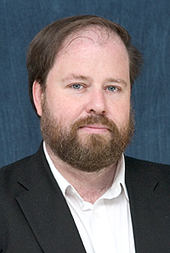

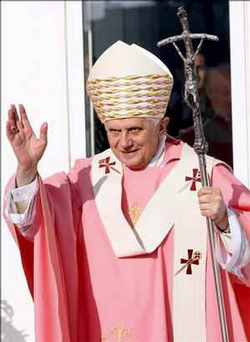
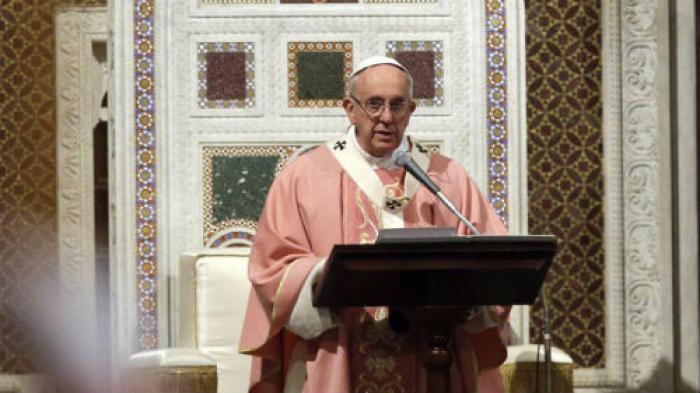


 Posts

